-
 Absolutes
-
 Active Complexes
-
 Actives & Peptides
-
 Amino Acids & Proteins
-
 Food Flavors
-
 Ayurvedic Ingredients & Herbs
-
 Vitamins & Coenzymes
-
 Chocolate Making Supplies
-
 Thickeners & Gelling Agents
-
 Hydrosols & Floral Waters
-
 Hydrolyzed Proteins
-
 Fragrance Ingredients
-
 Nutraceutical Ingredients
-
 Acids, Salts, Alcohols & Alkalis
-
 Preservatives & Antioxidants
-
 Cosmetic Ingredients
-
 Colorants, Micas & Glitters
-
 Masks, Scrubs & Botanicals
-
 Oils & Butters
-
 Candle Making Supplies
-
 Melt and Pour Soap Bases
-
 Cream, Lotion & Hair Care Bases
-
 Fragrance Oils & Industrial Aromatics
-
 Cleansing Agents & Surfactants
-
 Peeling Actives & Acids
-
 Cosmetic Powders
-
 Solvents & Humectants
-
 Silicones & Conditioning Agents
-
 Bottles, Jars & Vials
-
 Silicone & Plastic Molds, Tools
-
 Botanical Extracts
-
 Cosmetic Emollients
-
 Emulsifiers
-
 Essential Oils


Butters

 Add to cart


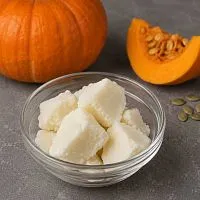




Rich plant butters for balms creams and stick formulas
This section brings together solid plant butters such as shea, cocoa, mango, cupuacu and similar fats used as the structural base of cosmetic formulas. Each one is naturally solid at room temperature, rich in fatty acids, and melts on contact with skin, which makes it a core building block rather than an occasional additive. Formulators use these butters to add body, slip and long lasting emolliency to a recipe.
In finished products, butters show up as the backbone of body balms, lip and cuticle sticks, thick night creams, whipped body creams and solid deodorant bases. Mixed at different ratios with liquid basic oils, they let a formulator control hardness, spreadability and melting point without changing the active ingredients. The same butter that gives a stick its snap can be softened into a whipped cream simply by adjusting the ratio of liquid oil in the blend.
Because butters are raw material rather than a finished niche product, the same jar of shea or cocoa butter can end up in a rugged winter balm, a delicate facial moisturizer or an anhydrous cleansing bar base. For labs sourcing larger volumes, browsing oils, butters, macerates and oil mixtures wholesale alongside this section helps plan a full batch of base ingredients in one order.
Refined versus unrefined grades
Within this group, the main dividing line is refining. Refined versions such as Karite Butter (Shea Butter) refined 100 g or Cocoa Butter RBD 100 g have a neutral smell and pale color, which suits formulas where fragrance and appearance need to stay predictable batch after batch.
Unrefined grades keep more of the original aroma and pigment. Unrefined Cocoa Butter 100 g, Unrefined Shea Butte 50 g and Unrefined Coconut Oil 50 ml carry a stronger natural scent and a richer texture, which some formulators build into rustic or artisanal lines on purpose. Palm oil, offered in Palm Oil 100 g, Palm Oil 250 g and Palm Oil 500 g, sits at a firmer, higher melting point than shea or cocoa, making it useful where a formula needs extra rigidity rather than a soft melt.
Choosing a butter and building a blend
Selection usually starts with melting point and hardness rather than the plant name alone. A stick that needs to hold its shape at room temperature calls for a firmer butter or a higher ratio of it, while a whipped body cream leans on a softer texture cut with liquid oil.
Coconut oil, available refined as Coconut Oil Refined 100 g, brings fast absorption and a lighter feel, so it is often blended with heavier butters to balance richness against glide. Bay laurel oil, sold as Bay laurel Oil Unrefined 10 g and Bay laurel Oil Unrefined 50 g, is typically used in small percentages alongside butters to round out a blend rather than as a structural base on its own. For formulators comparing water dispersible options in the same recipe, the Water Soluble Oils section covers a different mechanism worth checking alongside these fats.
Origin and storage notes
Suppliers for this group span Malaysia, Thailand, Brazil, Germany, Italy, France including NATURA-TEC sourced material, and the United Kingdom, reflecting how widely these plant fats are traded worldwide.
All of these butters and oils are solids or semi-solids sensitive to heat and light, so keeping containers sealed in a cool, dark place preserves texture and shelf life. Since consistency shifts with temperature, it helps to bring jars to room air before weighing them out for a batch, which keeps ratios accurate across a production run.
FAQ
What is the difference between shea butter and cocoa butter in a formula?
Shea butter is softer, absorbs faster and feels lighter on skin, while cocoa butter is harder, more brittle and contributes a firmer structure. Blending both lets a formulator balance melting point and glide, which is why many balm and stick recipes combine several butters rather than relying on one.
How should plant butters be stored before use?
Keep butters in a cool, dry place away from direct light and heat, ideally below room temperature, in tightly closed containers. Proper storage slows oxidation and keeps the texture and scent stable for longer, especially for batches held between production runs.
Can plant butters replace liquid oils in a recipe?
Not entirely. Butters provide structure, hardness and slip, while liquid oils bring lighter absorption and spreadability. Most formulas blend both, adjusting the ratio to reach the desired firmness, from a solid stick to a soft whipped cream.
Why do some butters need melting before mixing with other ingredients?
Because they are solid at room temperature, butters must be gently melted so they blend evenly with oils, waxes and actives without leaving lumps or an uneven texture. Controlled, low heat also helps preserve the fatty acid profile during processing.
What products commonly use solid plant butters as a base?
Balms, lip and cuticle sticks, thick night creams, whipped body creams and solid deodorant bases all rely on plant butters for their structure. The same butter can shift from firm to soft simply by changing the ratio of liquid oil blended into it.
Recommendations
When choosing a plant butter for a specific formula, start with the melting point and texture you need, a firmer butter for sticks and bars, a softer one for whipped creams and lotions. Compare batches by scent, color and firmness at room temperature, since natural variation between harvests can shift these traits slightly. For labs planning recurring production, it helps to test a small sample first and confirm how the butter behaves once blended with your liquid oils and actives. Once you have settled on the right grade, our team can prepare a quote for larger volumes. Reach out by email with your required quantity and intended use, and we will help match it to the right batch.


