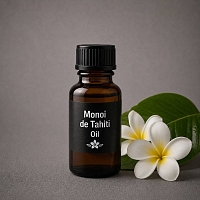
A Polynesian floral oil valued for skin nourishment and hair conditioning
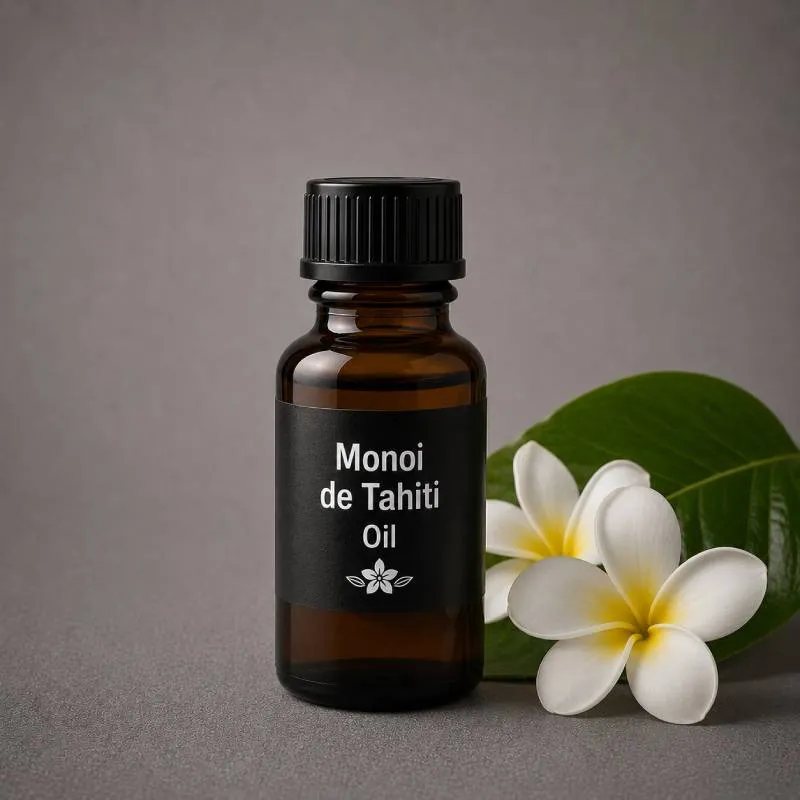
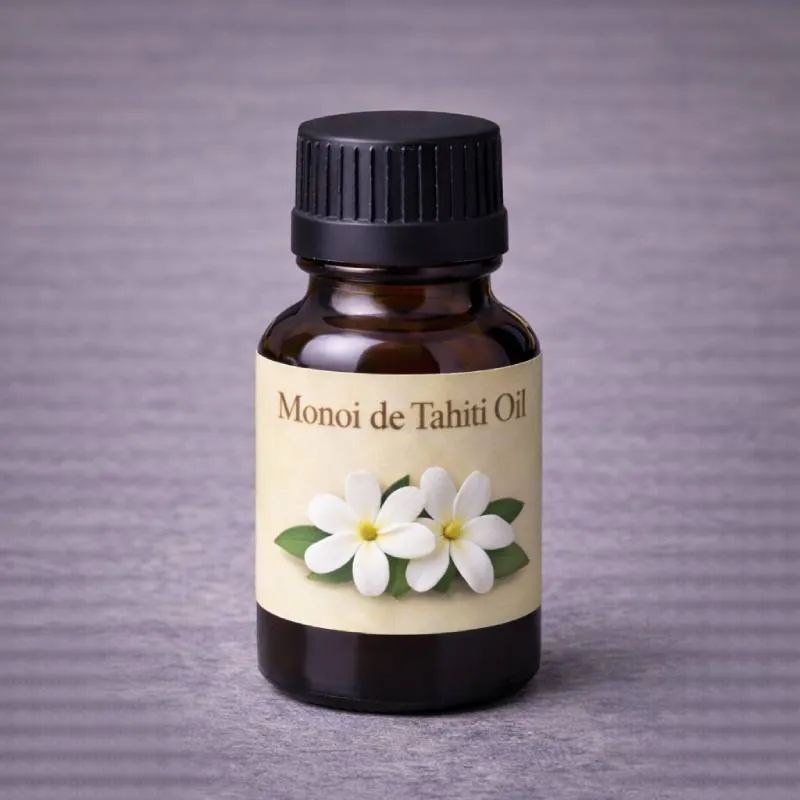
Monoi de Tahiti Oil belongs to the category of Natural Macerates, which brings together plant extracts infused into a carrier oil. In this case, refined coconut oil is enriched with the aromatic and nourishing compounds of Tahitian gardenia petals, commonly known as tiare flowers. Traditionally used across French Polynesia to protect skin from sun, wind and salt water, this oil is now a popular ingredient in body creams, lip balms, tanning oils and hair care formulas worldwide.
The 25 gram packaging is well suited for home cosmetic making and for testing a new ingredient before committing to a larger batch. This small volume allows hobbyists, independent formulators and small studios to try the oil in balms, scrubs, hair masks or protective creams without risking a large stock of raw material. Thanks to its rich fatty acid profile, the oil absorbs well, leaves a light protective film on the skin and gives finished products a signature tropical scent.
Monoi de Tahiti Oil can be blended with Butters to adjust texture in cosmetic formulas. This supports skin nourishment and hair conditioning. The oil absorbs well and forms a light protective film.
Monoi de Tahiti Oil is typically added at the cooling stage of a formulation, at temperatures not exceeding 40-45 degrees, to preserve the volatile floral notes of the infusion. Recommended usage in emulsions ranges from 3 to 10 percent of the total formula weight, while solid body oils and lip balms can tolerate up to 15-20 percent. It pairs well with other macerates, such as Aloe Vera Macerate BIO, which adds soothing and hydrating properties particularly valuable for after-sun care.
In the fragrance industry, Monoi de Tahiti Oil is often used as a base note for tropical and floral compositions, while in household chemistry it serves as the foundation for scented lotions and massage oils. For formulas requiring a fresh citrus accent, it combines nicely with Lemon Macerate in small trial batches, while larger scale production benefits from the stability offered by Lemon Macerate 1 L.
Store the oil in a tightly sealed container, away from direct sunlight and temperature fluctuations, since the fatty acids in the coconut base are sensitive to oxidation. Proper storage conditions help the product retain its qualities throughout its stated shelf life.
Tropical after-sun body oil
Monoi de Tahiti Oil 20 g
Sweet almond oil 60 g
Vitamin E 5 g
Essential lavender oil 3 drops
Combine
the sweet almond oil and Monoi de Tahiti Oil in a clean glass bottle, warming
gently to around 35 degrees to ensure the oils blend smoothly. Add the vitamin
E and lavender essential oil, close the bottle and shake thoroughly before each
use to keep the blend well mixed, applying a small amount to skin after sun
exposure for a soothing finish.
Listed under the INCI name Cocos Nucifera - Gardenia tahitensis ( Coco nut oil (and) Tiare Flower).
FAQ
What is the fatty acid profile of Monoi de Tahiti Oil and how stable is it against oxidation?
The oil is based on coconut oil infused with tiare flower. Oxidative stability details are available in the specification on request.
What is the comedogenic rating of Monoi de Tahiti Oil as a rough guide?
No specific rating is provided.
How should Monoi de Tahiti Oil be stored after opening?
Store in a dry cool place in a closed container. Slight caking is allowed if it does not affect properties.
What is the texture of Monoi de Tahiti Oil including melting point for butters or viscosity and absorption for liquid oils?
It appears as a viscous mass. Solidification occurs at 17-20°C and melting at 24-26°C.