
-
 Absolutes
-
 Active Complexes
-
 Actives & Peptides
-
 Amino Acids & Proteins
-
 Food Flavors
-
 Ayurvedic Ingredients & Herbs
-
 Vitamins & Coenzymes
-
 Chocolate Making Supplies
-
 Thickeners & Gelling Agents
-
 Hydrosols & Floral Waters
-
 Hydrolyzed Proteins
-
 Fragrance Ingredients
-
 Nutraceutical Ingredients
-
 Acids, Salts, Alcohols & Alkalis
-
 Preservatives & Antioxidants
-
 Cosmetic Ingredients
-
 Colorants, Micas & Glitters
-
 Masks, Scrubs & Botanicals
-
 Oils & Butters
-
 Candle Making Supplies
-
 Melt and Pour Soap Bases
-
 Cream, Lotion & Hair Care Bases
-
 Fragrance Oils & Industrial Aromatics
-
 Cleansing Agents & Surfactants
-
 Peeling Actives & Acids
-
 Cosmetic Powders
-
 Solvents & Humectants
-
 Silicones & Conditioning Agents
-
 Bottles, Jars & Vials
-
 Silicone & Plastic Molds, Tools
-
 Botanical Extracts
-
 Cosmetic Emollients
-
 Emulsifiers
-
 Essential Oils
- Cream Jars Wholesale 463
- Bottles for cosmetics, dispensers wholesale 1470
- Laboratory glassware wholesale 10
- Measuring Equipment Wholesale 12
- Cosmetic Containers Wholesale 1484
- Plastic containers wholesale 16
- Perfume testers wholesale 20
- Glass bottles and jars Wholesale 395
- Perfume Packaging Wholesale 517
- Diffuser bottles and reeds wholesale 25
- Metal perfume atomizers Wholesale 10
Perfume testers wholesale

 Add to cart




 Subscribe

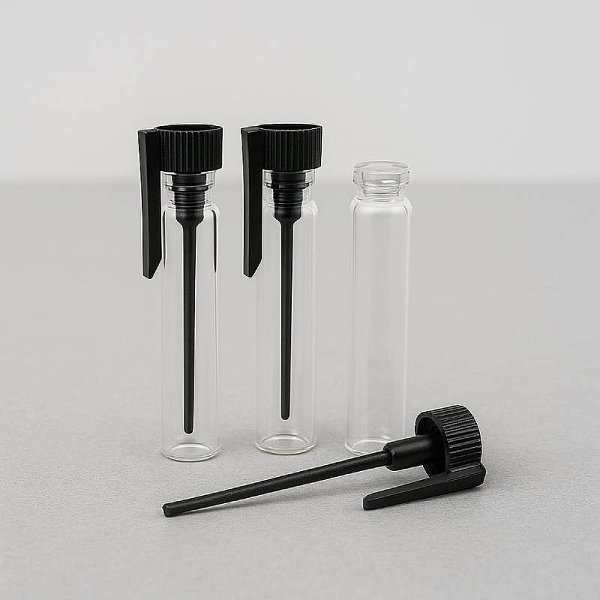
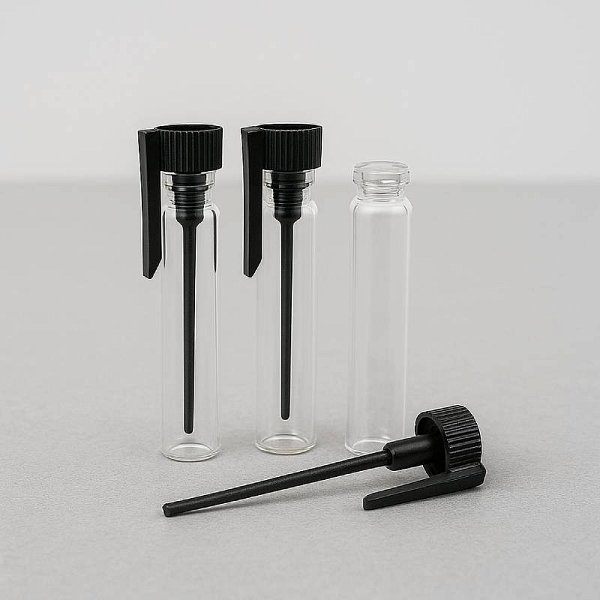


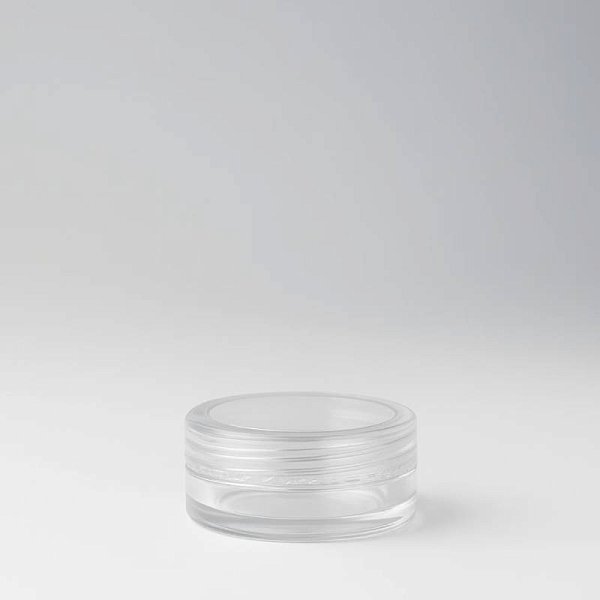

Blank vials and strips for fragrance sampling setups
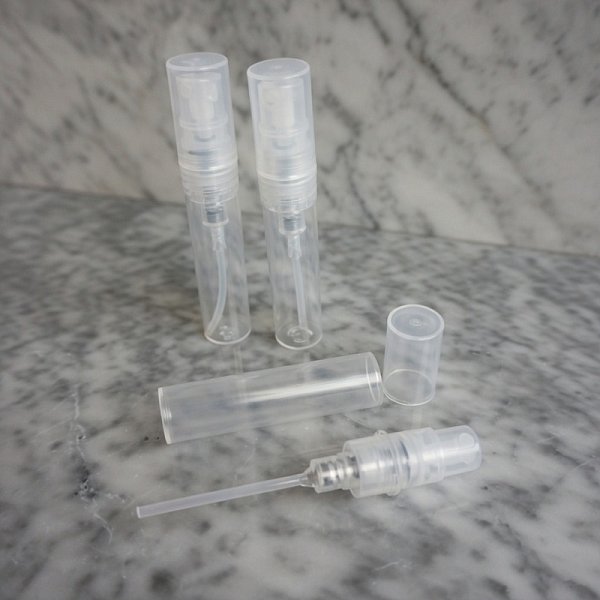
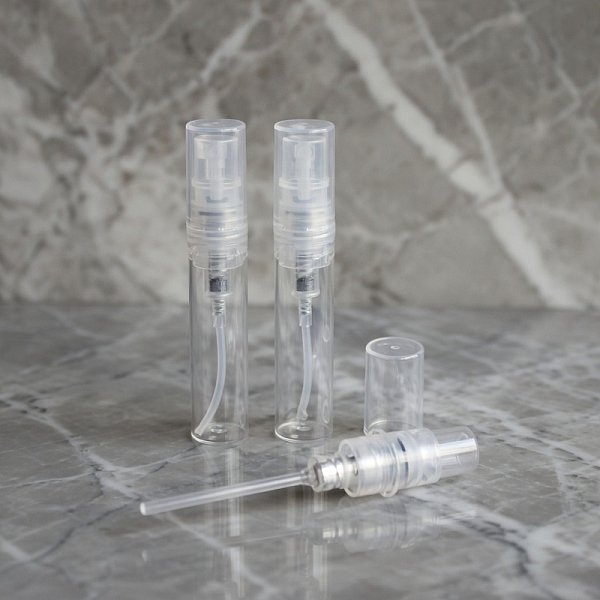
This section covers empty tester vials, mini bottles and blotter strips used to present liquid fragrance compositions before a full-size bottle is filled and sealed. These containers hold no scent of their own, they are neutral carriers that let a formulator, a retailer or a brand show how a finished composition behaves on skin or paper without opening the primary packaging.
Fragrance labs use these formats to compare batches during development, retail counters use them for customer sampling, and private label producers use them to send scent variants to buyers before committing to a production run. Because the same vial can hold an eau de parfum, a room spray concentrate or a cosmetic base with added fragrance, the format works across categories rather than one narrow use case. Teams that also handle bulk decanting often pair these testers with cream jars wholesale for matching solid formats, or rely on laboratory glassware wholesale when measuring and blending the composition itself.
Container styles and how they differ
The core distinction inside this group is size and closure. Mini vials in the one to two milliliter range suit single-use scent strips or one-time customer trials, while larger tester bottles from five milliliters up allow a formulator to keep a working reference sample on a bench for weeks. Some testers use a simple friction cap, others a dropper or a small orifice reducer that controls how much liquid comes out per drop, which matters when a lab wants consistent dosing across repeated comparisons. Blotter strips, by contrast, carry no liquid at all, they are absorbent paper meant to be dipped and then set aside to dry down and reveal how a composition changes over the first hours after application.
Buyers who need a small run for a client presentation usually pick the same format as our Sample 1 ml from 50 pcs, since it keeps the batch size manageable while still giving each recipient a fair impression of the scent.
Choosing a format and pairing it with the rest of a production line
The right choice depends on what happens after the sample leaves the bench. A vial meant to travel to a distant client should have a tight, leak-resistant closure, while a countertop tester that gets opened dozens of times a day benefits from a wider mouth and a sturdier cap. Volume matters too, a formulator running side by side comparisons of three or four variants will go through testers faster than a retail counter offering one finished scent, so batch size planning differs accordingly.
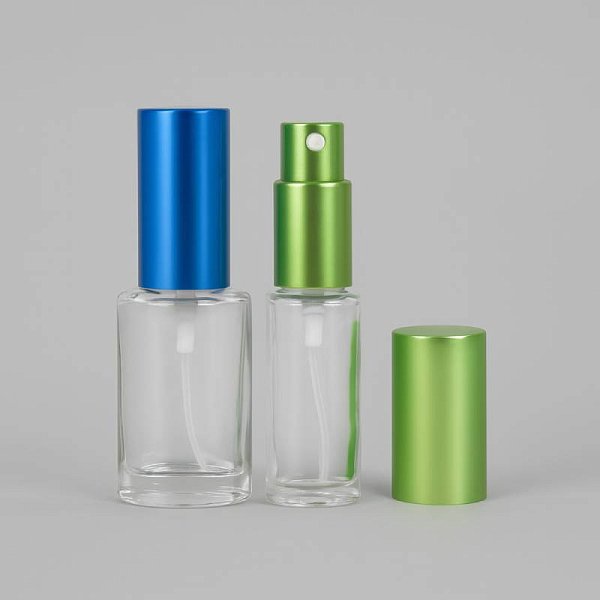
These containers rarely stand alone in a workflow. Teams filling testers alongside finished units often draw on Perfume Packaging Wholesale for the retail bottle itself, add Metal perfume atomizers Wholesale when a spray format is needed, and turn to Bottles for cosmetics, dispensers wholesale for cosmetic lines that combine fragrance with a lotion or serum base. Since these blank containers are neutral by design, they work equally well for an alcohol-based composition, a cosmetic emulsion carrying added scent, or a room spray concentrate, rather than being tied to a single product type.
Origin, storage and matching equipment
Stock in this section is sourced from Poland, giving buyers a consistent supply of standard vial and strip formats without long lead times. Empty containers should be kept dry and away from direct sunlight before filling, since some plastics can absorb ambient odors over time if stored near strong-smelling materials.
For teams that also handle general packaging beyond fragrance testers, related stock is available under Cosmetic Containers Wholesale, Plastic containers wholesale and Glass bottles and jars Wholesale, while precise dosing during blending is easier with Measuring Equipment Wholesale on hand for weighing and mixing each trial batch before it goes into a vial.
FAQ
What is the difference between a tester vial and a blotter strip
A tester vial holds a small liquid volume so evaluators can apply the composition to skin or a surface, while a blotter strip is a porous paper wand dipped briefly into the liquid to carry a dry scent trail. Labs often use both together to compare skin behavior against pure air evaporation.
What vial size is best for sampling a new fragrance batch
One to two milliliter vials suit quick internal batch comparisons where only a few drops are needed, while three to five milliliter mini bottles work better for sending samples to retail buyers or private label clients who want to test the scent over several days.
Can the same vial be reused for a different composition
Reuse is not recommended once a vial has held a concentrated liquid, since residual aromatic molecules can linger in the glass or plastic and skew the next reading. Most producers treat these containers as single use per formula to keep evaluation results accurate.
How should fragrance testers be stored before use
Keep empty vials and strips in a closed box away from direct light and any strong ambient odors, since porous blotter paper especially can pick up smells from the surrounding air. Dry, room temperature storage away from solvents or cleaning products preserves neutrality until they are filled.
Recommendations
Choose vial or strip format based on how the sample will travel: mini bottles with a secure cap suit mailed buyer samples, while open blotter strips work best for immediate side by side comparison on a bench. Check that the closure type matches your filling method and that the glass or paper is free of any coating that could interfere with the composition. Send us an email with your batch volume and intended use, and we will help you match the right format and quantity for your current production run.



