-
 Absolutes
-
 Active Complexes
-
 Actives & Peptides
-
 Amino Acids & Proteins
-
 Food Flavors
-
 Ayurvedic Ingredients & Herbs
-
 Vitamins & Coenzymes
-
 Chocolate Making Supplies
-
 Thickeners & Gelling Agents
-
 Hydrosols & Floral Waters
-
 Hydrolyzed Proteins
-
 Fragrance Ingredients
-
 Nutraceutical Ingredients
-
 Acids, Salts, Alcohols & Alkalis
-
 Preservatives & Antioxidants
-
 Cosmetic Ingredients
-
 Colorants, Micas & Glitters
-
 Masks, Scrubs & Botanicals
-
 Oils & Butters
-
 Candle Making Supplies
-
 Melt and Pour Soap Bases
-
 Cream, Lotion & Hair Care Bases
-
 Fragrance Oils & Industrial Aromatics
-
 Cleansing Agents & Surfactants
-
 Peeling Actives & Acids
-
 Cosmetic Powders
-
 Solvents & Humectants
-
 Silicones & Conditioning Agents
-
 Bottles, Jars & Vials
-
 Silicone & Plastic Molds, Tools
-
 Botanical Extracts
-
 Cosmetic Emollients
-
 Emulsifiers
-
 Essential Oils
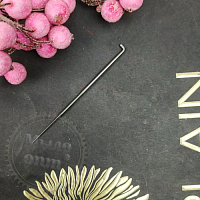
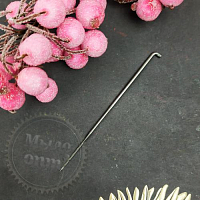
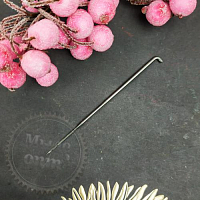
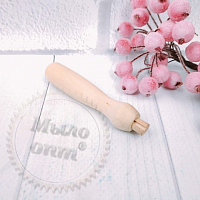
Felting needles

 Add to cart








 Subscribe
Needle types and how they shape fiber work
Felting needles are thin barbed steel tools used to tangle and compact loose fibers into a firm, dense structure without water or heat. Each needle has notches along its shaft that catch fiber strands and push them inward with every poke, gradually locking them together. This section offers needles in a range of gauges and barb patterns, from fine finishing needles to coarser tools for fast bulk work, plus multi-needle tools and handles for larger surfaces.
Beyond shaping figures and toys, these needles are widely used for building texture on fabric, joining fiber layers, sculpting three dimensional forms, repairing worn felted items and blending colors directly on a surface. Coarser needles work well with wool for felting, while finer needles suit detailed finishing passes on smaller pieces or accents added to items filled with toy stuffing materials.
Gauge numbers and barb patterns explained
Needle gauge numbers, such as 36, 38 or 43, indicate thickness: lower numbers mean a thicker shaft for fast, coarse work, while higher numbers mean a finer shaft for gentle finishing passes. A felting needle No. 36 star has extra barb rows arranged around the shaft, so it grabs more fiber per poke and speeds up the early shaping stage. A felting needle No. 36 reverse works with barbs facing the opposite direction, which pulls fiber upward rather than compacting it downward, useful for texturing a surface or lifting loose strands. A triangular felting needle No. 36 has a three sided shaft that creates a firmer, more even bond with fewer passes, while a felting needle No. 38 fork holds two points on a single shaft, letting a maker cover more surface area in one motion. For projects that need several needles working together, felting needles sprocket No. 36 mount as a set on a holder for fast, uniform coverage over larger flat areas.
Matching a needle to the fiber and the stage of work
Choosing the right needle depends on the stage of a project and the density already achieved in the fiber. Coarse gauges like No. 36 suit the first rounds of shaping, when loose fiber still needs heavy compacting, while finer gauges such as a felting needle No. 38 or a felting needle No. 43 suit smoothing a surface, adding fine detail or blending a thin top layer of color without leaving visible holes. Many makers keep a mixed set on hand and move from coarse to fine as a form firms up, switching tools rather than forcing one needle through every stage. Fiber thickness and density also matter: denser or coarser fiber generally responds better to lower gauge numbers, while fine or delicate fiber calls for a lighter touch and a finer shaft to avoid tearing the material.
Origins, care and building a working set
Needles in this section come from manufacturers based in the United States, the United Kingdom, China and Germany, giving a mix of price points and barb styles for different budgets and techniques. Keeping needles dry and stored point down in a case or foam block prevents bent tips and accidental snapping, since a felting needle is brittle by design and can break if flexed sideways during use. Pairing a small selection of gauges with a set of felting tools such as handles, mats and multi needle holders makes it easier to move between fine detail work and fast bulk shaping without switching setups constantly. A well stocked case usually holds a few coarse needles for early stages, a handful of mid range gauges for general shaping and a couple of fine needles reserved for final surface work.
FAQ
What gauge felting needle should I choose for a beginner project
A medium gauge such as 38 works well for most beginners since it punches through fiber quickly without breaking easily. Finer needles like 40 or 42 suit detail work, while coarser needles around 36 are better for fast bulk shaping of larger forms.
What is the difference between star and triangle felting needles
Star needles have four barbed edges and grab more fiber per stroke, making them efficient for bulk shaping and blending layers. Triangle needles have three edges, giving a slightly gentler action that suits finer detailing and smoother surface finishing on smaller pieces.
Can felting needles be used on fabric as well as loose fiber
Yes, felting needles are commonly used to attach fiber onto woven or knit fabric, building raised texture, patches or embellishments directly on the surface. The same tangling action that binds loose fiber also locks fiber strands into the fabric weave.
How do I stop felting needles from snapping during use
Needles usually snap from sideways bending rather than straight punching, so keep strokes vertical and let the barbs do the work instead of forcing the needle through dense fiber. Working on a supportive foam pad also reduces stress on the shaft and lowers breakage.
Recommendations
Match needle gauge to the stage of your project: coarser numbers for fast bulk shaping, finer numbers for smoothing and detail passes, and star or twisted profiles when you need to blend colors quickly across a surface. Keep a small mix of gauges on hand so you can move between rough shaping and fine finishing without switching tools constantly. To review available gauges and multi-needle sets for your workshop, reach out by email and our team will help you plan the right selection.



