-
 Absolutes
-
 Active Complexes
-
 Actives & Peptides
-
 Amino Acids & Proteins
-
 Food Flavors
-
 Ayurvedic Ingredients & Herbs
-
 Vitamins & Coenzymes
-
 Chocolate Making Supplies
-
 Thickeners & Gelling Agents
-
 Hydrosols & Floral Waters
-
 Hydrolyzed Proteins
-
 Fragrance Ingredients
-
 Nutraceutical Ingredients
-
 Acids, Salts, Alcohols & Alkalis
-
 Preservatives & Antioxidants
-
 Cosmetic Ingredients
-
 Colorants, Micas & Glitters
-
 Masks, Scrubs & Botanicals
-
 Oils & Butters
-
 Candle Making Supplies
-
 Melt and Pour Soap Bases
-
 Cream, Lotion & Hair Care Bases
-
 Fragrance Oils & Industrial Aromatics
-
 Cleansing Agents & Surfactants
-
 Peeling Actives & Acids
-
 Cosmetic Powders
-
 Solvents & Humectants
-
 Silicones & Conditioning Agents
-
 Bottles, Jars & Vials
-
 Silicone & Plastic Molds, Tools
-
 Botanical Extracts
-
 Cosmetic Emollients
-
 Emulsifiers
-
 Essential Oils


Raw materials for candles
 Add to cart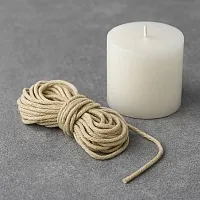





Core components for shaping scent and texture in candle making
This section brings together the functional raw materials used to build candle formulations, from waxes and structural additives to components that support scent throw, burn quality and finish. Buyers can source base materials for pillar, container and specialty candles, along with supporting ingredients that stabilize texture and appearance across batches.
These materials serve formulators working at very different scales, from small studio production runs to larger manufacturing lines that need consistent quality across repeated batches. A single component in this category can be adjusted in ratio and combination to influence melting behavior, surface finish, opacity and how a candle holds its shape at room temperature or under heat exposure.
Many formulators pair these base materials with candle fragrance oils to build a complete scent profile, or combine them with candle colorants when a specific visual result is part of the finished product design.
Waxes, wicks and functional additives
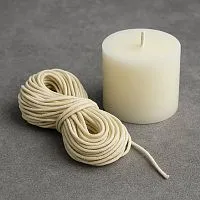
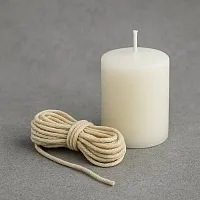
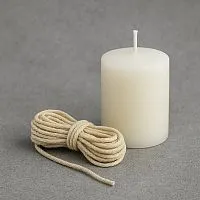
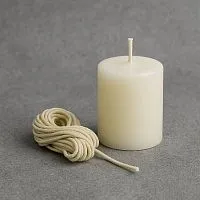
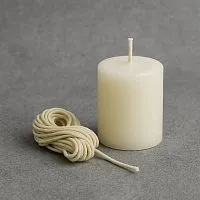
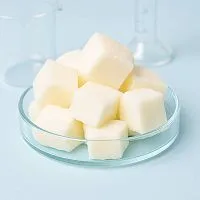
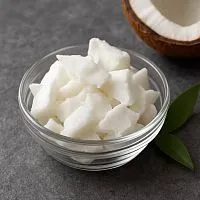
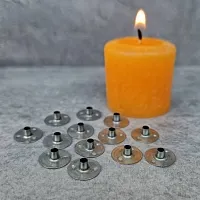
Paraffin remains one of the most widely used base materials, valued for predictable melting behavior and a smooth surface finish. Paraffin P-2 1 kg and Paraffin P-2 10 kg cover both small test batches and larger production runs of the same formulation. Beeswax offers a different profile, with a warmer tone and firmer structure, and Beeswax Yellow 1 kg is often blended with paraffin to adjust hardness and burn time rather than used on its own. Wicks vary by thickness and are matched to container diameter and wax type, with Candle wick 1.5 mm 100 m and Candle wick 2 mm 100 m suited to smaller trial quantities, while Candle wick 1.5 mm 1000 m and Candle wick 2 mm 1000 m support continuous manufacturing lines. A Wick holder 100 pcs helps keep the wick centered while the poured material sets.
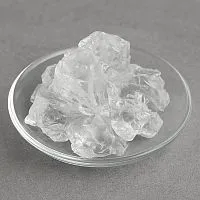
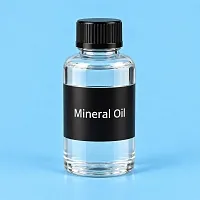
Mineral oil is a flexible functional additive rather than a single-purpose product. Mineral Oil 1 L is used to soften wax blends, adjust clarity and influence how a poured surface cures, which makes it relevant across many different formulations rather than one fixed recipe. Fluorescent UV powders serve a purely visual function and can be dosed into a wide range of bases to produce a glow effect under UV light, with Blue Fluorescent UV Powder 1 kg and Green Fluorescent UV Powder 1 kg allowing formulators to combine colors or use them alongside standard pigments depending on the design goal.
Matching materials to a formulation
Selecting the right combination starts with the intended container and pour temperature. Harder waxes and thicker wicks generally suit wider containers, while softer blends with thinner wicks work better for narrower vessels. Testing a small batch before scaling up production helps confirm burn consistency, which is why smaller wick and wax package sizes are useful during formulation development.
Structural and functional additives are rarely used in isolation. Mineral oil, fluorescent powders and wax bases are typically combined in different ratios depending on the desired hardness, clarity or visual effect, and the same raw material can appear in several unrelated formulations. Formulators working across multiple product lines often keep a core set of these components on hand alongside dedicated tools, and the Candle making tools Wholesale section covers the equipment side of that same workflow.
Origin and storage
Materials in this category come from a mix of origins, including India, China, Ukraine, the United States, Poland and Germany, giving buyers flexibility when sourcing consistent volumes for repeated production. Waxes and mineral oil should be stored in a dry space away from direct heat sources to keep their texture and melting behavior stable between batches. Fluorescent powders keep their performance longest when kept sealed and out of prolonged light exposure prior to use.
FAQ
What is the difference between paraffin wax and other candle base materials in this category?
Paraffin offers predictable melting behavior, strong scent throw and a smooth glossy surface, making it a common base for pillar and container candles. Other structural additives in this section are used to adjust hardness, opacity or heat resistance depending on the finished candle format.
How do I choose the right wax blend for container versus pillar candles?
Container candles typically need a softer, adhesive wax that bonds well to glass without pulling away, while pillars require a firmer structure that holds its shape unsupported. Matching melting point and additive ratio to the mold type helps avoid sinkholes, frosting or poor release.
Can these base materials be combined with fragrance oils and colorants?
Yes, these structural components are designed to accept fragrance oils and colorants without disrupting burn quality or surface finish. The exact load rate depends on the specific wax blend and the desired intensity of scent throw or color depth in the finished candle.
How should candle wax and additives be stored before use?
Keep raw materials in a cool, dry space away from direct sunlight and heat sources, ideally below room temperature to prevent softening or discoloration. Proper storage preserves consistent melting point and texture across production batches over time.
Why does my candle have surface imperfections like frosting or tunneling?
Frosting and tunneling usually result from an unsuitable wax to additive ratio, incorrect pour temperature or mismatched wick sizing for the container diameter. Adjusting the blend composition and testing burn behavior in small batches helps identify the right formulation for consistent results.
Recommendations
Selecting the right base material starts with matching the wax type and additive ratio to your finished format, whether that is a container, pillar or specialty candle. Consider melting point, expected burn time and how the blend will interact with fragrance load and colorant before committing to a full batch. Testing a small trial run helps confirm surface finish, scent throw and shape retention under real conditions. For sourcing specific wax grades or additive combinations for your production needs, our team is available by email to help identify the right match for your formulation.


