-
 Absolutes
-
 Active Complexes
-
 Actives & Peptides
-
 Amino Acids & Proteins
-
 Food Flavors
-
 Ayurvedic Ingredients & Herbs
-
 Vitamins & Coenzymes
-
 Chocolate Making Supplies
-
 Thickeners & Gelling Agents
-
 Hydrosols & Floral Waters
-
 Hydrolyzed Proteins
-
 Fragrance Ingredients
-
 Nutraceutical Ingredients
-
 Acids, Salts, Alcohols & Alkalis
-
 Preservatives & Antioxidants
-
 Cosmetic Ingredients
-
 Colorants, Micas & Glitters
-
 Masks, Scrubs & Botanicals
-
 Oils & Butters
-
 Candle Making Supplies
-
 Melt and Pour Soap Bases
-
 Cream, Lotion & Hair Care Bases
-
 Fragrance Oils & Industrial Aromatics
-
 Cleansing Agents & Surfactants
-
 Peeling Actives & Acids
-
 Cosmetic Powders
-
 Solvents & Humectants
-
 Silicones & Conditioning Agents
-
 Bottles, Jars & Vials
-
 Silicone & Plastic Molds, Tools
-
 Botanical Extracts
-
 Cosmetic Emollients
-
 Emulsifiers
-
 Essential Oils
- Antioxidants 122
- Biocides 12
- Hydrosols (Hydrolates) 11
- Hydrocolloids for Cosmetics 10
- Others 70
- Fragrant Waters for Cosmetics 26
- Mineral Cosmetic Ingredient 194
- Functional Components 5146
- Corneotherapy 17
- Liposomes for Cosmetics 21
- Minerals 76
- pH Neutralizers/Correctors 20
- Resins and Resinoids 17
- UV and SPF Filters for Cosmetics 95
- Fruit Powders 15
- Chemical Raw Materials 155
- Enzymes, Filtrates, and Lysates 26
- Cargill France SAS – Oils and Actives 10
- BASF Cognis Care Chemicals 12
- Vitamins & Coenzymes Wholesale 156
- Bulk Waxes for Cosmetics 61
- Others Wholesale 89
- Acids, Salts, Alcohols & Alkalis Wholesale 136
- Cosmetic Ingredients Wholesale 2551
- Food grade raw materials wholesale 13
- Fruit Powders in Bulk 23
- Antioxidants bulk 1
- Acids and Alkalis Wholesale 17
- Preservatives Bulk 5
- Bulk Surfactants 3
- Emulsifiers Bulk 14
- Hydrosols Bulk 210
Emulsifiers Bulk
 Add to cart

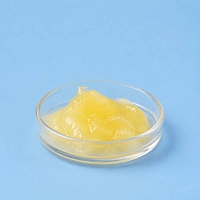
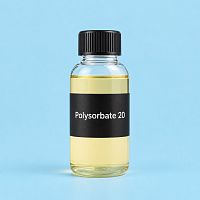


Choosing the right emulsifying system for stable formulas
This section brings together emulsifiers used to bind oil and water phases into stable creams, lotions, serums, and conditioners. You will find O/W and W/O systems, self-emulsifying waxes, PEG-free options, and co-emulsifiers suited for both small-batch and industrial cosmetic production.
Emulsifiers are the backbone of nearly every emulsion-based product, from lightweight face lotions and body butters to thick barrier creams, hair conditioners, and sunscreen bases. The same component often works across several formulation types depending on concentration and processing temperature, so it rarely belongs to a single product category.
Formulators typically pair emulsifiers with functional components such as thickeners and stabilizers to fine-tune texture and shelf stability. For a broader view of related raw materials used alongside emulsifying systems, the cosmetic ingredients wholesale range is worth browsing as well.
Types of emulsifiers and how they differ
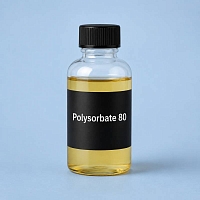
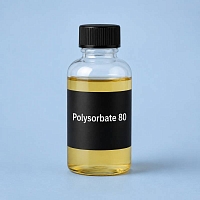
Not all emulsifiers behave the same way once they hit water and oil phases. Anionic and nonionic types such as Polysorbate 80 and Polysorbate 20 are water-soluble solubilizers, often used to disperse oils, fragrance, or actives into a clear or semi-clear aqueous base rather than to build a thick, opaque cream structure.
Self-emulsifying waxes and co-emulsifiers such as Ceteareth-25 work differently: they form the actual oil-in-water lattice that carries body butters, hand creams, and rich lotions, giving a fuller texture rather than a light, transparent finish. Smaller pack sizes, including Polysorbate 80 100 kg and Polysorbate 20 100 kg, suit workshops testing new formulas before scaling to full industrial batches.
Matching an emulsifier to the formula
Choosing the right system starts with the oil phase percentage, the required texture, and the processing temperature the production line can reach. A light facial serum calls for a different solubilizer than a heavy overnight balm, even though both rely on the same class of raw material.
Emulsifiers rarely work alone. They are commonly combined with waxes for structure, with acids and alkalis for pH adjustment during phase mixing, and with hydrosols as part of the water phase itself. Formulators building a full recipe often move between these categories in the same session, so the bulk waxes for cosmetics range, the acids, salts, alcohols, and alkalis wholesale section, and the hydrosols bulk catalog are all worth checking alongside this one.
Origin and storage
Emulsifiers in this range are sourced from suppliers in India and Italy, giving formulators a choice between different production standards and packaging formats depending on batch size and budget.
Storage is straightforward for most emulsifiers in this group: a dry, room-temperature space away from direct sunlight keeps the material stable well within its shelf life. Larger drums should be resealed tightly after each use to avoid moisture contact, which can affect how the emulsifier disperses in the next batch.
FAQ
What is the difference between O/W and W/O emulsifiers?
O/W (oil-in-water) emulsifiers disperse oil droplets in a water-based continuous phase, giving lighter, non-greasy textures typical of lotions and serums. W/O (water-in-oil) emulsifiers create a fattier, more occlusive film, often used in barrier creams and richer body butters.
Can emulsifiers be combined with each other in one formula?
Yes, combining a primary emulsifier with a co-emulsifier or stabilizer is common practice. This improves droplet stability, adjusts viscosity, and helps formulas hold up across a wider temperature and pH range during storage.
How should emulsifiers be stored before use?
Keep emulsifiers in tightly sealed containers, away from direct sunlight and heat sources. Most waxes and powders remain stable at room temperature, though checking individual melting points helps avoid clumping or premature softening in warehouse conditions.
Are PEG-free emulsifiers suitable for industrial batch production?
Yes, PEG-free emulsifying systems scale well for both small workshops and industrial lines. They are chosen mainly for formulation preferences and consumer-facing labeling rather than any processing limitation, so batch size is not a barrier.
Recommendations
Match the emulsifier to your formula type first, an O/W system for fluid lotions and serums, a W/O or self-emulsifying wax for richer creams and conditioners. Check the required processing temperature and recommended usage rate before committing to a full batch, since these vary between anionic, nonionic, and co-emulsifier types. For trial quantities or larger production volumes, reach out by email and our team will help confirm availability and packaging options for your specific recipe.





