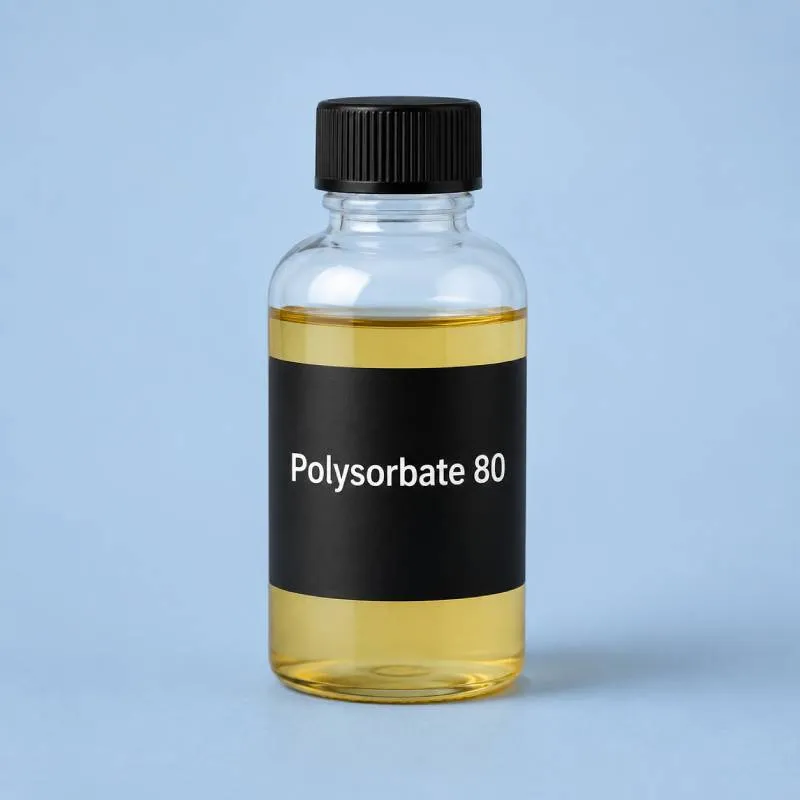
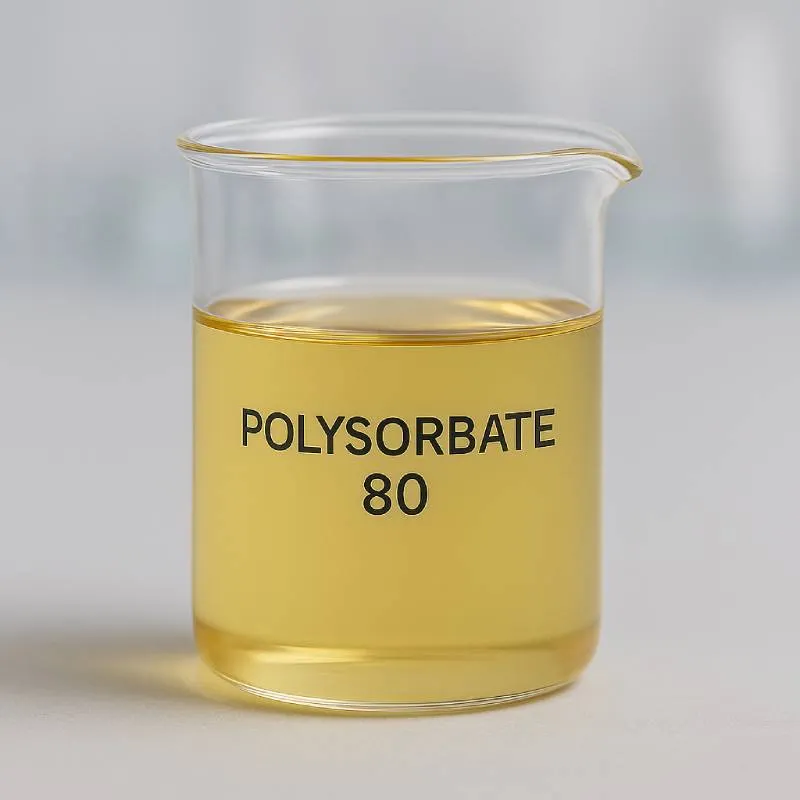
Why a small pack of this solubilizer solves oil-in-water challenges
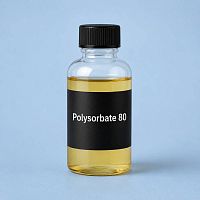
Polysorbate 80 stands out among nonionic emulsifiers for its ability to dissolve oily components evenly into water without separation. Globally, the largest share of demand for this ingredient comes from the food industry, where it stabilizes ice cream, sauces, mayonnaise and baked goods, followed closely by pharmaceuticals, where it solubilizes essential oils, vitamins and active substances in aqueous solutions. This item belongs to the Emulsifiers
category, which gathers ingredients for stabilizing oil-water systems across many industries. The 25 g pack size is well suited for home-based formulation and small trial batches, letting you test dosage before committing to a larger purchase.
In cosmetic formulation, polysorbate 80 is a go-to ingredient for water-based sprays containing essential oils, facial tonics, micellar water and hydrolats enriched with fragrance blends. It disperses nonpolar ingredients into the water phase, preventing the oily film that would otherwise float on the surface of the finished product. Typical usage ranges from one to four parts emulsifier per one part oil, depending on the density and polarity of the specific oil chosen. It is added during the oil-blending stage before water is introduced, at room temperature or gently warmed to around 30-40 degrees Celsius to improve dissolution and reduce viscosity.
Polysorbate 80 pairs well with other emulsifiers and stabilizers, enabling more complex multiphase formulations. Combined with Lecigel 10 g, it produces stable, lightweight gels carrying an oil phase, while pairing it with ERCAMULS LF 10 V/FD 50 g allows formulators to build thicker emulsion creams with improved shelf stability. For recipes requiring additional structure and firmer texture, many chemists add Stearic Acid 100 g, which functions simultaneously as a co-emulsifier and thickening agent.
Beyond cosmetics and food, polysorbate 80 is widely used in household chemical products to dissolve fragrance oils into aqueous cleaning bases, and in agriculture within crop protection formulations to improve wetting and spreading of active ingredients on leaf surfaces. In veterinary and biochemical laboratory work, it also serves as an auxiliary component for preparing solutions and suspensions.
Store polysorbate 80 in a tightly sealed container, in a dry place at room temperature, away from direct sunlight and heat sources. Extended storage at low temperatures may cause it to become cloudy or thicker, but the original properties fully return once it warms back to room temperature. Avoid storing it near strong oxidizing agents.
Citrus refreshing body mist
Polysorbate 80 - 4 g
Sweet orange essential oil - 1.5 g
Distilled water - 90 ml
Aloe vera liquid extract - 5 ml
Blend
polysorbate 80 with the sweet orange essential oil until the mixture turns
clear and uniform, warming it gently to about 35 degrees Celsius if needed for
full dissolution. Stir in the aloe vera liquid extract, then slowly pour in the
distilled water while mixing continuously. Transfer the finished mist into a
spray bottle and let it rest for a few hours before first use to allow the
structure to settle.