-
 Absolutes
-
 Active Complexes
-
 Actives & Peptides
-
 Amino Acids & Proteins
-
 Food Flavors
-
 Ayurvedic Ingredients & Herbs
-
 Vitamins & Coenzymes
-
 Chocolate Making Supplies
-
 Thickeners & Gelling Agents
-
 Hydrosols & Floral Waters
-
 Hydrolyzed Proteins
-
 Fragrance Ingredients
-
 Nutraceutical Ingredients
-
 Acids, Salts, Alcohols & Alkalis
-
 Preservatives & Antioxidants
-
 Cosmetic Ingredients
-
 Colorants, Micas & Glitters
-
 Masks, Scrubs & Botanicals
-
 Oils & Butters
-
 Candle Making Supplies
-
 Melt and Pour Soap Bases
-
 Cream, Lotion & Hair Care Bases
-
 Fragrance Oils & Industrial Aromatics
-
 Cleansing Agents & Surfactants
-
 Peeling Actives & Acids
-
 Cosmetic Powders
-
 Solvents & Humectants
-
 Silicones & Conditioning Agents
-
 Bottles, Jars & Vials
-
 Silicone & Plastic Molds, Tools
-
 Botanical Extracts
-
 Cosmetic Emollients
-
 Emulsifiers
-
 Essential Oils


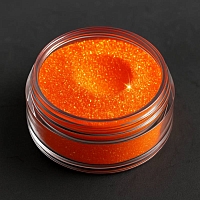
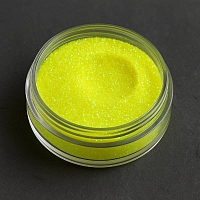
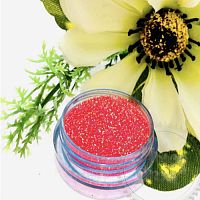
Fluorescent glitter
 Add to cart

 Subscribe
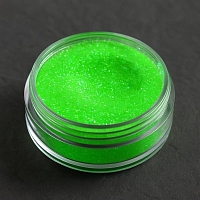
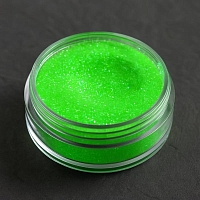
UV reactive sparkle particles for creative color effects
Fluorescent glitters are finely cut particles that glow vividly under UV or blacklight while staying bright and visible in ordinary daylight. This section covers loose glitter shades and particle sizes formulated for blending into cosmetic bases, decorative coatings and craft mediums where a strong pop of color is needed.
Formulators use these particles to add shimmer and dimension to body lotions, gels, lip and eye products, nail coatings, and decorative emulsions, as well as resin art, party makeup and festival looks. Because the pigment core is suspended in a durable polymer film, the sparkle holds its brightness across water based and oil based systems alike. For softer, non UV shimmer effects, browse the wider range of glitters, or pair fluorescent tones with metallic mica powder for layered pearlescent and neon combinations in a single formula.
Particle shapes and brightness levels
Fluorescent glitter within this section ranges from ultra fine dust to chunky flakes, and the cut size changes how the sparkle reads once it is mixed into a base. Fine particles disperse evenly and give a soft haze of color across lotions, gels and coatings, while larger flakes sit closer to the surface and throw off distinct flashes of light. Some batches lean toward a single saturated neon shade, others combine two or three tones in one jar for a mixed sparkle effect that shifts depending on the angle of light.
Brightness under blacklight also varies by pigment loading. Denser particles hold a stronger glow and stay visible longer in low light settings, which matters for festival makeup, party cosmetics and decorative resin work where the UV effect is the whole point. Lighter loading gives a subtler daytime shimmer that still carries a faint neon tint once a UV source is introduced, useful when a formulator wants restrained sparkle rather than a full glow effect.
Choosing a shade and building a formula around it
Selection usually starts with the base system. Water based lotions, gels and shampoos need particles that stay suspended without clumping, while oil based balms and coatings call for a film that disperses cleanly through fats and waxes. Since these particles work equally well in either environment, the choice narrows down to particle size, shade intensity and how visible the flash effect needs to be once diluted into the final product.
Fluorescent shades combine well with other color and effect ingredients rather than standing alone. Pairing them with Liquid Metallic Pearl softens the neon edge with a smoother sheen, while blending with Mica Powders adds a pearlescent undertone that carries the sparkle across body products, nail systems and decorative coatings alike. Formulators working on edible or near edible decorative projects sometimes look at Glitter Food Coloring as a related but distinct option for surface decoration rather than bulk formulation.
Storage and where this fits in the wider range
Loose glitter particles keep their color and glow strength best in a dry, sealed container away from direct heat and prolonged sunlight, since both moisture and prolonged UV exposure can dull the pigment film over time. Small batch testing in the actual base before scaling up a formula is the most reliable way to confirm shade behavior, since dispersion can shift slightly between water based and oil based systems.
This category sits within the broader Metallic Powder, Glitters, Mica range, which makes it easy to move between fluorescent, pearlescent and metallic effects while sourcing from the same catalog section.
FAQ
What is the difference between fluorescent glitter and regular glitter
Fluorescent glitter contains a pigment core that absorbs UV light and re-emits it as visible glow under blacklight, while staying vivid in daylight too. Regular glitter only reflects ambient light, so it has no special reaction under UV lamps or blacklight setups.
Can fluorescent glitter be mixed into both water based and oil based formulas
Yes, the sparkle particles are encased in a durable polymer film that keeps the pigment stable and bright whether blended into a water based gel, an oil based lotion, or a decorative emulsion. This makes the same particle size usable across multiple base types without losing intensity.
How much fluorescent glitter should be added to a cosmetic base
Loading levels vary by particle size and desired intensity, so small test batches at low percentages are the standard starting point before scaling up. Finer cuts blend smoothly at lower amounts, while chunkier flakes often need less volume to create a strong visual effect.
How should fluorescent glitter be stored to keep its brightness
Keep the particles sealed, dry, and away from direct sunlight and heat, since prolonged UV or temperature exposure can gradually dull the glow response over time. A cool, shaded storage area helps preserve both the daylight color and the UV reactive brightness.
Recommendations
Choose a particle size based on the finish you need: fine cuts for an even color haze, larger flakes for a bold sparkle pop, and always test a small batch in your actual base before committing to a full production run. Check that the shade performs the way you expect under both daylight and UV light, since the two effects can look different depending on the base medium. To review specific shades and sizes or place an order, reach out to our team by email and we will help match the right pick to your formula.