-
 Absolutes
-
 Active Complexes
-
 Actives & Peptides
-
 Amino Acids & Proteins
-
 Food Flavors
-
 Ayurvedic Ingredients & Herbs
-
 Vitamins & Coenzymes
-
 Chocolate Making Supplies
-
 Thickeners & Gelling Agents
-
 Hydrosols & Floral Waters
-
 Hydrolyzed Proteins
-
 Fragrance Ingredients
-
 Nutraceutical Ingredients
-
 Acids, Salts, Alcohols & Alkalis
-
 Preservatives & Antioxidants
-
 Cosmetic Ingredients
-
 Colorants, Micas & Glitters
-
 Masks, Scrubs & Botanicals
-
 Oils & Butters
-
 Candle Making Supplies
-
 Melt and Pour Soap Bases
-
 Cream, Lotion & Hair Care Bases
-
 Fragrance Oils & Industrial Aromatics
-
 Cleansing Agents & Surfactants
-
 Peeling Actives & Acids
-
 Cosmetic Powders
-
 Solvents & Humectants
-
 Silicones & Conditioning Agents
-
 Bottles, Jars & Vials
-
 Silicone & Plastic Molds, Tools
-
 Botanical Extracts
-
 Cosmetic Emollients
-
 Emulsifiers
-
 Essential Oils
Cosmetic brushes and applicators

 Add to cart





Tools for applying powders, pigments and pressed formulas
This section covers brushes and applicators used to pick up, blend and deposit powder, pigment and cream formulas onto skin. It includes soft natural and synthetic bristle heads, dense pressing pads, sponge tips and handle-mounted applicators sized for full coverage or precise placement.
These tools sit alongside the raw materials they are meant to move: a fluffy bristle head distributes loose mineral powder or shimmer evenly, while a firmer pad presses pigment onto skin without disturbing the layer beneath it. Formulators pair them with mineral fillers to test how a batch behaves once applied, not just how it looks in the jar.
Because bristle density and shape change how much product transfers per stroke, the same applicator can serve a light daily setting powder or a denser sculpting formula, depending on the pressure and angle used during testing.
Bristle shapes, pads and sponge tips
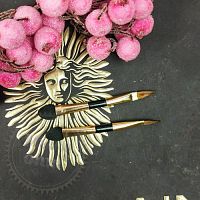
Applicator heads inside this section fall into a few clear families. Slim domed heads such as the eyeshadow applicator or the eyeshadow applicator Madonna are built for tight placement in the crease or along a lash line, where control matters more than coverage speed.
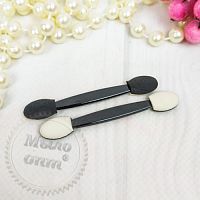
Wider formats work differently. A double-sided applicator sponge gives two densities on one handle, letting a formulator switch between a soft blending pass and a firmer packing motion without changing tools. The fan design brush spreads its bristles wide, which suits sweeping a thin, even film of fine powder or pigment across a larger surface rather than concentrating product in one spot. Fixed-handle designs, like the long handle eye shadow applicator, add reach and leverage during longer testing sessions.
Matching an applicator to the formula being tested
The right choice depends on what the powder or pigment is meant to do once it lands on skin. A loose, low-density mineral blend needs a softer head that will not compress the particles, while a pressed or high-pigment formula responds better to a firmer pad that can pack color into a compact layer. This is exactly where testing tools meet the raw material itself, since bristle stiffness changes how much of a batch actually transfers with each pass.
For mixed or layered work, a set such as the painting brush set covers several bristle widths at once, useful when a single rectifying batch of pigment needs to be checked across different pressure levels before it goes into a larger production run. Grooming-style tools like the brush-comb for eyebrows and combination pieces such as the eyeshadow applicator with brush Lady extend the same logic to shaping and setting fine powders along brows or contours, not only broad areas of skin.
Origin and storage
Items in this section are sourced from China. Keeping bristle and sponge heads dry between uses and storing them away from direct heat helps the material keep its shape, which matters when the same applicator is reused across several test batches to compare how a formula behaves under consistent conditions.
FAQ
What is the difference between a sponge tip and a bristle head applicator?
Sponge tips compress and deposit dense pigment or cream formulas in a solid layer, while bristle heads pick up loose powder and diffuse it across a wider area. Choosing between them depends on whether your formula is pressed, loose or cream based and how much blending the finish requires.
How do you choose the right applicator size for a formula test?
Match the head size to the coverage area you are testing. Compact domed heads suit small placement zones and precise pigment testing, while wider pads and fluffy heads suit full face coverage tests where even distribution across a larger surface matters most.
Can the same applicator be used for both loose powder and pressed formulas?
Many bristle heads handle both, but pressure and angle change the result. A soft angle picks up loose powder gently, while firmer pressure against a pressed pan transfers more product per stroke, so testers often keep several densities on hand for accurate comparisons.
How should powder and pigment applicators be stored between tests?
Keep heads dry and separated by formula type to avoid cross contamination between batches. Storing them upright or in individual sleeves protects bristle shape and pad density, which affects how consistently they perform across repeated formulation trials.
Recommendations
When selecting applicators for a batch of powders or pressed pigments, match bristle density and head shape to how the formula will actually be worn, not just how it looks during a single test. Order a small range of shapes together so you can compare transfer and blend behavior side by side. Reach out by email with your intended formula type and coverage area, and our team can help you narrow down the right combination for your next production run.



