-
 Absolutes
-
 Active Complexes
-
 Actives & Peptides
-
 Amino Acids & Proteins
-
 Food Flavors
-
 Ayurvedic Ingredients & Herbs
-
 Vitamins & Coenzymes
-
 Chocolate Making Supplies
-
 Thickeners & Gelling Agents
-
 Hydrosols & Floral Waters
-
 Hydrolyzed Proteins
-
 Fragrance Ingredients
-
 Nutraceutical Ingredients
-
 Acids, Salts, Alcohols & Alkalis
-
 Preservatives & Antioxidants
-
 Cosmetic Ingredients
-
 Colorants, Micas & Glitters
-
 Masks, Scrubs & Botanicals
-
 Oils & Butters
-
 Candle Making Supplies
-
 Melt and Pour Soap Bases
-
 Cream, Lotion & Hair Care Bases
-
 Fragrance Oils & Industrial Aromatics
-
 Cleansing Agents & Surfactants
-
 Peeling Actives & Acids
-
 Cosmetic Powders
-
 Solvents & Humectants
-
 Silicones & Conditioning Agents
-
 Bottles, Jars & Vials
-
 Silicone & Plastic Molds, Tools
-
 Botanical Extracts
-
 Cosmetic Emollients
-
 Emulsifiers
-
 Essential Oils
- Fragrance Oils from England 8
- Fragrance Oils Germany 17
- Fragrance Oils for Creams and Lotions 13
- Fragrance Oils Spain 67
- Lori Fragrance Oils (Latvia) 81
- Polish Fragrance Oils 3
- Fragrance Oil US 365
- Ukrainian Fragrance Oils 344
- French Fragrance Oils 170
- Water Soluble Fragrances 30
- Hypoallergenic fragrances 12
- Home Fragrance Collection 4
- Polymer Granules for Sachets 17
- Lipstick Flavors Oils 21
- Toothpaste fragrances 1
- Cold & Hot Process Soap Fragrance Oils 45
- Laundry detergent fragrance oils 16
- Japanese Fragrance Oils 30
- Perfume compositions 957
- Perfume Fragrance Oils 957
- Fragrance Oils Wholesale 4338
Fragrance Oils for Creams and Lotions

 Add to cart




 Subscribe

Scent Ingredients Built for Emulsion Stability
This section brings together fragrance oils selected for use in emulsified formulas such as body creams, hand lotions, facial moisturizers and body butters. Each oil is chosen with compatibility in mind, meaning it can be blended into an emulsion system without breaking the structure or leaving an oily film on top. The range covers a wide spread of scent profiles, from soft floral and powdery notes to fruity, gourmand and woody directions, giving formulators room to build a signature line rather than relying on a single popular note.
Because these oils are meant for leave-on skin contact products, they are dosed differently than oils intended for rinse-off items or air care. Formulators typically test them at low usage rates first, then adjust based on how the scent behaves once diluted through the water phase. The same base oils used here often show up in shampoo and conditioner bases too, so if a workshop produces both hair and skin lines, ingredients can sometimes be shared across batches, which simplifies stock planning. For buyers who also import scent oils sourced locally, the Ukrainian Fragrance Oils section lists domestically produced alternatives, while the Fragrance Oils Wholesale category is useful when a production run requires larger volume purchasing.
Scent Families and How They Differ
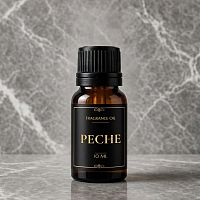
Within this collection, floral and powdery oils tend to sit closest to the skin, working well in facial creams and hand lotions where a soft, clean impression matters more than projection. Fruity and gourmand directions, such as Fragrance Oil Caramel pear, 10 ml or the peach note in Peche Fragrance Oil, 10 ml, are typically dosed a touch higher because their sweetness fades faster once diluted through an emulsion.
Green and herbal notes, like Fragrance Oil Fresh nettle, 10 ml, sit on the opposite end of the spectrum, offering a sharper, more mineral edge that suits body butters aimed at an unisex or apothecary-style positioning. Tropical options such as Mangue Fragrance Oil 10 ml read warmer and are often paired with lighter lotion bases rather than heavier creams, since a thick base can mute their brighter top notes.
Selecting an Oil and Building a Blend
Choosing the right oil starts with the base formula itself. A water-heavy lotion carries scent differently than a butter-rich cream, so it helps to test a candidate oil at more than one dosage before locking in a final recipe. Oils built for florals with a rosehip character, like Deceptive Rosehip Fragrance Oil 10 ml, tend to blend smoothly with fruitier partners for a rounder profile, while a nettle-forward scent such as Ortie Sauvage Fragrance - Vivid Memories, 10 ml often works best on its own, without competing notes layered on top.
Because these oils are formulated for leave-on use, always confirm behaviour in the finished emulsion rather than in the raw oil alone, since some notes shift once combined with emollients and emulsifiers. An oil like Fragrance Oil Embrace of Nature, 10 ml illustrates this well, showing a softer, rounder character once diluted compared to how it smells straight from the bottle.
Origin and Storage
Oils in this range are sourced from suppliers in France and Germany, reflecting established fragrance houses with long-standing formulation expertise. Bottles should be kept away from direct light and heat, tightly capped between uses, to preserve the top notes that are the first to fade in an open container. Buyers working across both skincare and haircare lines can review the French Fragrance Oils section for additional options from the same origin, useful when a formula calls for consistent sourcing across a full product range.
FAQ
Can these fragrance oils be used in cold-process emulsions or only heated ones?
Most oils in this range tolerate addition during the cool-down phase, which is standard for emulsions. Some heavier notes hold up in warm-process batches as well, but testing a small trial batch first confirms stability before committing to full production volume.
How much fragrance oil should be added to a body cream or lotion base?
Usage typically starts around 0.5 to 1 percent of total formula weight for leave-on skin products, then adjusted upward based on scent strength and how the oil performs once diluted through the water phase. Lower starting doses reduce the risk of destabilizing the emulsion.
Will a fragrance oil cause an emulsion to separate or thin out?
Poorly matched oils can weaken an emulsion system, causing thinning or separation over time. Oils selected for this category are chosen with emulsion compatibility in mind, though a compatibility test in the actual base recipe is still recommended before scaling up a batch.
How should fragrance oils be stored to keep their scent stable?
Keep containers tightly closed, away from direct light and heat, ideally in a cool dark storage area. Exposure to air and warmth over time can shift the scent profile and reduce strength, so smaller working bottles are worth decanting rather than repeatedly opening bulk containers.
Recommendations
When choosing a fragrance oil for an emulsified formula, start with a small trial batch at a low dose and watch how the scent settles once blended into the water phase, since behavior in the bottle can differ from behavior in the finished cream or lotion. Consider how the note pairs with other actives already in your recipe, and whether a lighter or richer profile suits the product line you are building. Once a scent proves stable and consistent across trial runs, place your order by email with the batch quantity confirmed in advance, keeping in mind that orders are typically assembled within three to five business days.



