Why Benzyl Benzoate Matters for Fragrance and Industrial Formulations
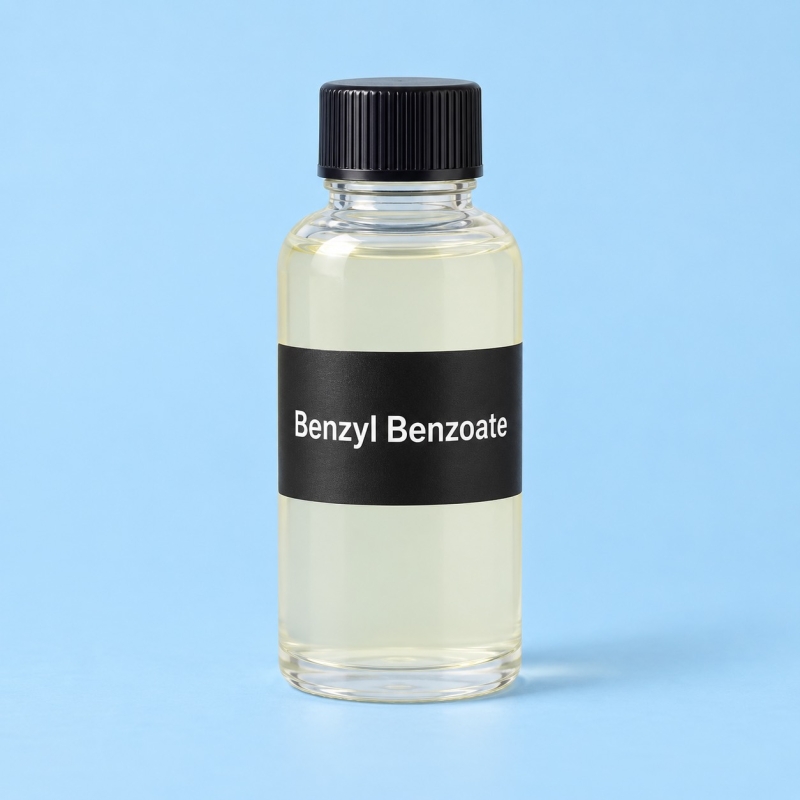
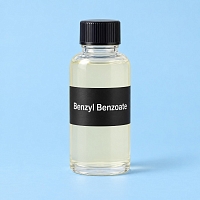
Benzyl benzoate is an oily liquid valued for its strong solvent properties across fragrance manufacturing, pharmaceutical production and industrial chemistry. Worldwide, the biggest demand for this raw material comes from perfumers who rely on it to dissolve resinous and musky notes, and from manufacturers of protective external-use preparations that need a stable carrier solvent. This item belongs to the Solvents and humectants category, which brings together auxiliary ingredients used to dissolve hard-to-blend substances and stabilize finished formulas.
In fragrance work, benzyl benzoate is prized as a solvent for synthetic and natural musk notes, resins, balsams and thick essential oils that otherwise disperse poorly in an alcohol base. Adding it slows the evaporation of top notes and extends how long a scent lingers on skin, so perfumers typically blend it into the concentrate before introducing alcohol, at roughly 3 to 10 percent of the fragrance mass. In industrial chemistry, the compound acts as a plasticizer for nitrocellulose lacquers and polymer films, and it also serves as a carrier solvent in the production of insect-repellent and acaricidal external preparations, which explains the steady interest from pharmaceutical labs and formulators of skin-applied protective products.
Within skincare formulation, benzyl benzoate sometimes functions as an auxiliary solvent for actives and fragrance oils that are difficult to disperse before adding them to an emulsion or oil phase. It pairs well with antioxidant actives such as Coenzyme Q10 Powder, which can be pre-dissolved in a small amount of this solvent for even distribution throughout a cream base. In barrier and protective pastes, it is combined with mineral components like Zinc Oxide Pharma Netherlands to produce soft external-use pastes. The solvent should be introduced at room temperature or during a mild heating stage up to 35-40 degrees Celsius, avoiding strong heat that reduces its fixative performance. Store it in a tightly sealed container, in a cool dark place away from open flame, since the liquid is combustible.
The 50 gram packaging suits home labs, hobbyist perfumers and small trial batches when testing a fixative recipe or an experimental external-use blend without committing to bulk volumes, allowing precise dosage to be worked out before scaling up production. Occasionally soapmakers use a small measure of this solvent to dissolve thick fragrance oils before blending them into melted White Soap Base WST for a more even and longer-lasting scent throw.
Solid Perfume Fixative Blend
Benzyl benzoate 3 g
Fragrance oil or essential oil blend 12 g
Jojoba oil 10 g
Beeswax 15 g
Melt
the beeswax gently in a heatproof container over low heat, then remove from
heat and stir in the jojoba oil until fully blended. Add the benzyl benzoate
together with the fragrance oil, stirring thoroughly until the mixture is
uniform, then pour it into small tins or jars before it sets. Allow the blend
to cool undisturbed at room temperature for a few hours until fully solid, then
store the finished solid perfume in a cool place away from direct light.