-
 DIY: Video master classes
-
 Aromatherapy
-
 Felting master classes
-
 Eating at home
-
 DIY cosmetics for children
-
 Cooking recipes
-
 Detergents, cleaning products with your own hands
-
 Soap making as a business
-
 Natural cosmetics. Raw materials for cosmetics and soap.
-
 Natural oils in cosmetics
-
 News
-
 Recipes for balms and conditioners
-
 Bath Bomb Recipes
-
 Cream recipes. Cream making.
-
 Lotion recipes. Gel recipes.
-
 Mask recipes
-
 Soap recipes. Base soap. Soap from scratch.
-
 Recipes for all occasions
-
 Natural shampoo recipes
-
 Healthy Nutrition Recipes
-
 Scrub recipes. Massage tiles. Ubtan
-
 DIY candles
-
 Reference materials, questions, tips
-
 Startup - soap production
-
 Hair care. Tips, recipes
-
 Facial skin care. Cleansers.
-
 Body care. Tips, recipes
-
 Photo Reviews
-
 Chocolate Handmade


Basics of creating a cream: a combination of active ingredients
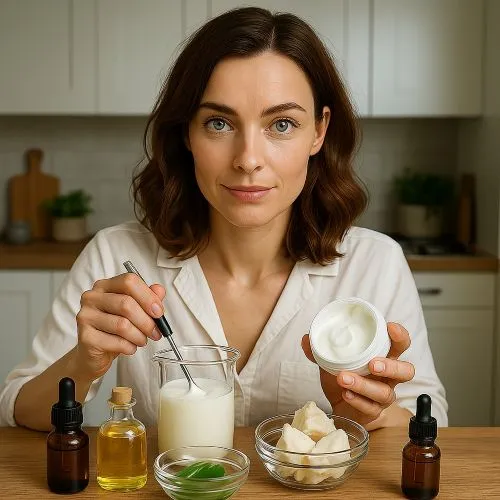 The world of skincare is vast, but at its heart lies the humble cream – a staple in almost every beauty routine. While commercial creams offer convenience, delving into the realm of DIY cream making opens up a universe of personalization, allowing you to tailor formulations to your skin's exact needs, free from unnecessary fillers or potential irritants. The true magic, however, lies in understanding how to effectively combine active components to address specific skin concerns, from aging and dryness to sensitivity and oiliness. This comprehensive guide will equip you with the fundamental knowledge of cream creation, demystifying the process of emulsion, exploring key ingredients, and providing three detailed recipes that strategically blend actives for optimal results.
The Art and Science of Cream Formulation: Beyond Simple Mixing
Unlike oil blends or hydrosol mists, a cream is an emulsion – a stable mixture of two immiscible liquids, typically oil and water. Achieving this stability requires an emulsifier, and understanding its role is paramount.
Understanding Emulsions: The Heart of Your Cream
Most cosmetic creams are either oil-in-water (O/W) or water-in-oil (W/O) emulsions. In an O/W emulsion (most common for facial creams), tiny oil droplets are dispersed within a continuous water phase, making the cream feel lighter and less greasy. In a W/O emulsion, water droplets are dispersed within a continuous oil phase, resulting in a richer, often heavier feel, ideal for very dry skin or barrier repair.
- **Water Phase:** Contains all water-soluble ingredients, including distilled water, hydrosols, humectants (like glycerin), and some water-soluble active ingredients.
- **Oil Phase:** Contains all oil-soluble ingredients, such as carrier oils, butters, waxes, fatty alcohols, and oil-soluble active ingredients.
- **Emulsifier:** The bridge between the oil and water phases, allowing them to mix and form a stable cream. Emulsifiers have both oil-loving (lipophilic) and water-loving (hydrophilic) parts.
Why Active Components Matter
Active components are the powerhouse ingredients in your cream, providing specific benefits beyond basic hydration and moisturizing. These can include vitamins, peptides, botanical extracts, and gentle acids designed to target issues like fine lines, hyperpigmentation, inflammation, or acne. The challenge and reward lie in combining these actives synergistically, ensuring their stability and efficacy within the cream's base.
Essential Categories of Cream Ingredients
To formulate an effective cream, you'll need to source high-quality ingredients from reliable suppliers. Here's a breakdown:
- **Water Phase Components:**
- **Distilled Water/Hydrosols:** The primary base for your cream. Distilled water is pure; hydrosols (e.g., rose, lavender, green tea) add therapeutic benefits and subtle scent.
- **Humectants (Glycerin, Propanediol, Hyaluronic Acid):** Attract and hold moisture in the skin, enhancing hydration.
- **Oil Phase Components:**
- **Carrier Oils (Jojoba, Argan, Sweet Almond, Rosehip, Grapeseed):** Provide essential fatty acids, vitamins, and moisturizing properties. Choose based on skin type and desired feel.
- **Butters (Shea, Cocoa, Mango):** Offer rich emollients, skin protection, and add texture to the cream.
- **Waxes (Beeswax, Candelilla Wax, Carnauba Wax):** Provide consistency, stability, and a protective barrier.
- **Fatty Alcohols (Cetyl Alcohol, Cetearyl Alcohol):** Not drying alcohols; they act as co-emulsifiers, thickeners, and emollients, giving creams a luxurious feel.
- **Emulsifiers: The Unifiers:**
- **Emulsifying Wax NF:** A common, reliable O/W emulsifier that creates stable, easy-to-use creams.
- **Olivem 1000 (Cetearyl Olivate, Sorbitan Olivate):** A natural, PEG-free O/W emulsifier derived from olive oil, known for creating elegant, silky textures.
- **Lecithin:** A natural emulsifier, often used for W/O emulsions or as a co-emulsifier.
- **Active Components: The Problem Solvers:**
- **Niacinamide (Vitamin B3):** Reduces inflammation, minimizes pores, regulates sebum, strengthens skin barrier. Water-soluble.
- **Vitamin C (L-Ascorbic Acid, SAP, MAP):** Antioxidant, brightens skin, stimulates collagen. Stability varies by form. L-Ascorbic Acid (LAA) is highly active but prone to oxidation; Sodium Ascorbyl Phosphate (SAP) and Magnesium Ascorbyl Phosphate (MAP) are more stable.
- **Peptides:** Amino acid chains that signal skin cells to perform specific functions (e.g., collagen production, wrinkle reduction). Stability depends on type.
- **Botanical Extracts (Green Tea, Chamomile, Licorice):** Provide antioxidant, anti-inflammatory, and soothing benefits. Solubility varies.
- **Preservatives: Non-Negotiable for Safety:**
- **Cosgard (Benzyl Alcohol, Dehydroacetic Acid, Aqua):** A broad-spectrum preservative suitable for natural formulations.
- **Geogard 221 (Benzyl Alcohol & Dehydroacetic Acid):** Another popular broad-spectrum choice.
- **Liquid Germall Plus:** A highly effective broad-spectrum preservative for various formulations.
- **Crucial Note:** Any product containing water MUST have a preservative to prevent hazardous microbial growth. Always follow manufacturer's usage rates.
- **pH Adjusters: Balancing for Skin Health:**
- **Lactic Acid (or Citric Acid):** Used to lower the pH of your cream to be skin-compatible (typically pH 4.5-6.0).
- **Baking Soda Solution:** Used to raise the pH if too acidic.
- **pH Strips/Meter:** Absolutely essential for accurate pH measurement.
Mastering the Craft: General Nuances of Cream Preparation
Cream making requires precision, patience, and meticulous hygiene. Follow these general steps for successful formulation:
- **Sterilization is Paramount:** Before you begin, sterilize all your equipment (beakers, stirring rods, spatulas, final jars) by boiling them for 10-15 minutes or by spraying with 70% isopropyl alcohol and allowing them to air dry completely. This prevents bacterial contamination.
- **Accurate Weighing:** Use a digital scale with at least 0.01g precision. Eyeballing measurements can lead to unstable emulsions or ineffective creams.
- **Phase Separation:** Divide your ingredients into water phase, oil phase, and cool-down phase (for heat-sensitive actives and preservatives).
- **Heating:** Gently heat both the water phase and oil phase in separate heat-resistant beakers in a double boiler (bain-marie) until both phases reach approximately 70-75°C (158-167°F). This ensures waxes and butters are fully melted and both phases are at a similar temperature for optimal emulsion.
- **Emulsification:** Once both phases reach temperature, slowly pour the heated water phase into the heated oil phase (or vice versa, depending on your emulsifier's instructions) while continuously stirring. Use a mini-mixer, stick blender, or whisk to create a stable emulsion. Blend consistently for 3-5 minutes, ensuring the mixture thickens and homogenizes.
- **Cooling & Stirring:** Continue to stir (intermittently as it cools) as the cream comes down to room temperature (below 40°C / 104°F). This cooling process helps the emulsion stabilize and thicken.
- **Adding Heat-Sensitive Actives & Preservative:** Once the cream has cooled to below 40°C, add your heat-sensitive active ingredients (e.g., Vitamin C derivatives, Hyaluronic Acid solution, Niacinamide) and, most importantly, your chosen broad-spectrum preservative. Stir thoroughly to ensure even distribution.
- **pH Adjustment:** This is a critical step. Once the cream is at room temperature, measure its pH using pH strips. If it's too high or too low for your skin (aim for 4.5-6.0), add a tiny amount (drop by drop) of your pH adjuster (e.g., Lactic Acid to lower, Baking Soda solution to raise). Stir well after each addition and re-test until the desired pH is achieved.
- **Final Transfer:** Transfer the finished cream into your sterilized jar or airless pump bottle.
Three Advanced DIY Cream Recipes: Harnessing Active Synergy
These recipes are designed for specific skin concerns, showcasing how active components can be combined effectively. Percentages are given, so you can easily scale up or down (e.g., for 50g total, multiply each percentage by 0.5g).
Recipe 1: Anti-Aging & Brightening Face Cream (Vitamin C & Niacinamide Synergy)
This cream combines two powerful actives, Vitamin C (stable form) and Niacinamide, known for their brightening, anti-aging, and skin barrier-strengthening properties. This formula is generally suitable for most skin types.
Ingredients (for 50g total cream):
- **Water Phase (Total: ~65.7% / 32.85g):**
- Distilled Water: 60.7% (30.35g)
- Vegetable Glycerin: 3% (1.5g)
- Hyaluronic Acid (HA) Solution (1%): 2% (1g) - *Added in cool-down phase*
- **Oil Phase (Total: ~20% / 10g):**
- Jojoba Oil: 10% (5g) - *Light, non-comedogenic*
- Rosehip Seed Oil: 5% (2.5g) - *Rich in vitamins, regenerative*
- Emulsifying Wax NF: 5% (2.5g) - *Primary emulsifier*
- **Cool-Down Phase (Total: ~14.3% / 7.15g):**
- Niacinamide Powder (Vitamin B3): 5% (2.5g) - *Water-soluble active*
- Sodium Ascorbyl Phosphate (SAP) Powder (stable Vitamin C): 3% (1.5g) - *Water-soluble active*
- Preservative (e.g., Cosgard): 1% (0.5g)
- Vitamin E (Tocopherol): 0.5% (0.25g) - *Antioxidant, oil-soluble, added to oil phase OR cool-down*
- Distilled Water (for dissolving actives): 4.8% (2.4g) - *Used to pre-dissolve Niacinamide & SAP*
- pH Adjuster (Lactic Acid/Baking Soda solution): As needed
Detailed Preparation Steps:
- **Sterilize:** Clean and sterilize all your equipment and containers.
- **Prepare Water Phase Actives:** In a small, separate sterilized beaker, combine the 2.4g of Distilled Water for cool-down phase with Niacinamide and SAP powders. Stir well until completely dissolved. Set aside.
- **Heat Water Phase:** In a heat-resistant beaker, combine Distilled Water (60.7%) and Vegetable Glycerin. Place in a double boiler.
- **Heat Oil Phase:** In another heat-resistant beaker, combine Jojoba Oil, Rosehip Seed Oil, and Emulsifying Wax NF. Place in the same double boiler.
- **Melt & Combine:** Heat both phases until the oil phase is completely melted and both phases reach approximately 70-75°C (158-167°F).
- **Emulsify:** Slowly pour the heated water phase into the heated oil phase while stirring continuously with a stick blender or mini-mixer. Blend for 3-5 minutes until a uniform, creamy emulsion forms.
- **Cooling & Occasional Stirring:** Remove from heat and continue to stir occasionally as the cream cools down. As it cools, it will thicken.
- **Add Cool-Down Actives:** Once the cream's temperature drops below 40°C (104°F), add your pre-dissolved Niacinamide/SAP solution and the 1% Hyaluronic Acid solution. Stir thoroughly. Add Vitamin E.
- **Add Preservative:** Stir in the preservative.
- **Adjust pH:** Measure the cream's pH. Aim for 4.5-5.5. Add Lactic Acid (drop by drop) to lower pH or Baking Soda solution (tiny amounts) to raise pH, stirring well and re-testing after each addition.
- **Final Transfer:** Once the cream is fully cooled and pH-adjusted, transfer it into a sterilized airless pump bottle or jar.
Application Recommendations:
Apply a pea-sized amount to clean, toned skin morning and night. Gently massage into face and neck. This cream works well as a daily moisturizer. As it contains actives that can increase sun sensitivity, always use a broad-spectrum SPF 30+ sunscreen during the day.
Storage:
Store in an airtight container (preferably an airless pump for better stability) in a cool, dark place. With proper preservation, shelf life is typically 3-6 months. Discard immediately if you notice any separation, discoloration, mold growth, or unusual odor.
Advantages over Industrial Analogues:
- Fresh & Potent Actives: Your Vitamin C and Niacinamide are freshly incorporated, maximizing their efficacy, unlike products that might degrade over time on shelves.
- No Unnecessary Fillers: Free from silicones, synthetic fragrances, dyes, or parabens that can irritate sensitive skin.
- Optimized Concentrations: You control the precise percentage of actives, tailoring it to your skin's tolerance and needs.
- Cost-Effective in the Long Run: Once you have the raw ingredients, individual batches are significantly cheaper.
Recipe 2: Soothing & Repairing Barrier Cream (Ceramides & Colloidal Oats)
Designed for sensitive, dry, or compromised skin, this cream focuses on strengthening the skin barrier and reducing inflammation. Ceramides are lipid molecules naturally found in the skin barrier; colloidal oats are known for their soothing properties.
Ingredients (for 50g total cream):
- **Water Phase (Total: ~64.2% / 32.1g):**
- Distilled Water: 61.2% (30.6g)
- Glycerin: 3% (1.5g)
- **Oil Phase (Total: ~20% / 10g):**
- Shea Butter: 5% (2.5g) - *Rich emollient*
- Oat Kernel Oil (or Sunflower Oil): 10% (5g) - *Soothing, barrier support*
- Cetearyl Alcohol: 2% (1g) - *Thickener, co-emulsifier, emollient*
- Olivem 1000: 3% (1.5g) - *Natural O/W emulsifier*
- **Cool-Down Phase (Total: ~15.8% / 7.9g):**
- Ceramide NP (powder/liquid dispersed): 1% (0.5g) - *Barrier repair lipid, usually comes pre-dispersed or requires gentle heating in oil phase, check supplier instructions.*
- Colloidal Oatmeal: 3% (1.5g) - *Soothing, anti-inflammatory*
- Panthenol (Vitamin B5): 2% (1g) - *Hydrating, skin-healing*
- Allantoin: 0.5% (0.25g) - *Soothing, healing*
- Preservative (e.g., Geogard 221): 1% (0.5g)
- Distilled Water (for dissolving actives): 8.3% (4.15g) - *Used to pre-dissolve Panthenol & Allantoin*
- pH Adjuster (Lactic Acid): As needed
Detailed Preparation Steps:
- **Sterilize:** Ensure all equipment is sterile.
- **Prepare Water Phase Actives:** In a small, separate beaker, dissolve Panthenol and Allantoin in the 4.15g of Distilled Water for cool-down phase. Stir well.
- **Heat Water Phase:** Combine Distilled Water (61.2%) and Glycerin in a heat-resistant beaker. Place in a double boiler.
- **Heat Oil Phase:** Combine Shea Butter, Oat Kernel Oil, Cetearyl Alcohol, and Olivem 1000 in another heat-resistant beaker. If your Ceramide NP requires heating in the oil phase (check supplier's instructions), add it here. Place in the same double boiler.
- **Melt & Combine:** Heat both phases until completely melted and reach approximately 70-75°C.
- **Emulsify:** Slowly pour the heated water phase into the heated oil phase while continuously blending with a stick blender for 3-5 minutes.
- **Cooling & Stirring:** Continue stirring intermittently until the cream cools below 40°C.
- **Add Cool-Down Actives:** Once cooled, add your pre-dissolved Panthenol/Allantoin solution and Colloidal Oatmeal (stir well to disperse, it might slightly thicken). If Ceramides were not added in the oil phase, add them now according to supplier instructions.
- **Add Preservative:** Stir in the preservative thoroughly.
- **Adjust pH:** Measure pH. Aim for 5.0-6.0. Adjust with Lactic Acid (to lower) or Baking Soda solution (to raise) as needed.
- **Final Transfer:** Transfer to a sterilized jar or pump bottle.
Application Recommendations:
Apply a small amount to clean, sensitive, or dry skin as needed. This cream is perfect for soothing irritated skin, supporting the skin barrier, and providing lasting hydration. It can be used daily, morning and night, or as a spot treatment for dry patches.
Storage:
Store in an airtight container in a cool, dark place. Shelf life with preservative is typically 3-6 months. Discard if any signs of spoilage appear.
Advantages over Industrial Analogues:
- High Concentration of Actives: Often higher concentrations of ceramides, colloidal oats, and panthenol than in many commercial products.
- Hypoallergenic Profile: Absence of common irritants like fragrance, dyes, and harsh chemicals.
- Tailored Emollience: Choose carrier oils and butters that best suit your skin's dryness level.
- Freshness: Active ingredients are more potent in a freshly made batch.
Recipe 3: Mattifying & Pore-Refining Cream (Willow Bark & Green Tea)
This cream is designed for oily and combination skin types, focusing on sebum regulation, pore minimization, and gentle exfoliation, while providing necessary hydration.
Ingredients (for 50g total cream):
- **Water Phase (Total: ~65.5% / 32.75g):**
- Green Tea Hydrosol: 60.5% (30.25g) - *Antioxidant, mildly astringent*
- Glycerin: 3% (1.5g)
- Niacinamide: 2% (1g) - *Water-soluble active, added in cool-down phase*
- **Oil Phase (Total: ~20% / 10g):**
- Grapeseed Oil: 12% (6g) - *Light, non-comedogenic*
- Cetyl Alcohol: 3% (1.5g) - *Thickener, emollient*
- Emulsifying Wax NF: 5% (2.5g) - *Primary emulsifier*
- **Cool-Down Phase (Total: ~14.5% / 7.25g):**
- Willow Bark Extract (standardized for Salicin): 5% (2.5g) - *Natural BHA, pore-refining*
- Zinc PCA: 1% (0.5g) - *Sebum regulator, anti-acne*
- Preservative (e.g., Cosgard): 1% (0.5g)
- Distilled Water (for dissolving actives): 7.5% (3.75g) - *Used to pre-dissolve Niacinamide & Zinc PCA*
- Essential Oil (Tea Tree or Rosemary): 0.5% (0.25g / ~5 drops) - *Optional, for balancing properties*
- pH Adjuster (Lactic Acid): As needed
Detailed Preparation Steps:
- **Sterilize:** Ensure all equipment is sterile.
- **Prepare Water Phase Actives:** In a small, separate beaker, dissolve Niacinamide and Zinc PCA in the 3.75g of Distilled Water for cool-down phase. Stir well.
- **Heat Water Phase:** Combine Green Tea Hydrosol and Glycerin in a heat-resistant beaker. Place in a double boiler.
- **Heat Oil Phase:** Combine Grapeseed Oil, Cetyl Alcohol, and Emulsifying Wax NF in another heat-resistant beaker. Place in the same double boiler.
- **Melt & Combine:** Heat both phases until completely melted and reach approximately 70-75°C.
- **Emulsify:** Slowly pour the heated water phase into the heated oil phase while continuously blending with a stick blender for 3-5 minutes.
- **Cooling & Occasional Stirring:** Remove from heat and continue stirring intermittently until the cream cools below 40°C.
- **Add Cool-Down Actives:** Once cooled, add Willow Bark Extract, and your pre-dissolved Niacinamide/Zinc PCA solution. Stir thoroughly. Add essential oil if using.
- **Add Preservative:** Stir in the preservative.
- **Adjust pH:** Measure the cream's pH. Aim for 4.5-5.5 (optimal for Willow Bark's efficacy). Adjust with Lactic Acid (drop by drop) to lower pH or Baking Soda solution (tiny amounts) to raise pH.
- **Final Transfer:** Once the cream is fully cooled and pH-adjusted, transfer it into a sterilized airless pump bottle or jar.
Application Recommendations:
Apply a small amount to clean, toned skin morning and night. This cream helps control shine, minimize the appearance of pores, and offers light hydration without feeling heavy. Due to the presence of Willow Bark Extract (a natural BHA), **always use a broad-spectrum SPF 30+ sunscreen during the day**, as it can increase sun sensitivity.
Storage:
Store in an airtight container (preferably an airless pump bottle) in a cool, dark place. Shelf life with preservative is typically 3-6 months. Discard if you notice any separation, discoloration, mold growth, or unusual odor.
Advantages over Industrial Analogues:
- Targeted Oil Control: Uses natural sebum regulators like Willow Bark and Zinc PCA without stripping the skin.
- Non-Comedogenic Formula: Designed with light oils and ingredients less likely to clog pores.
- Gentle Exfoliation: Natural BHA from willow bark offers mild pore clearing benefits.
- Customizable Consistency: Adjust the oil phase to make it lighter or richer based on your skin's needs.
Critical Safety & Usage Guidelines for Homemade Creams
- **Preservation is Non-Negotiable:** Any DIY cosmetic containing water is susceptible to microbial growth. A broad-spectrum preservative, used at the correct dosage, is essential for your safety and product longevity. Never skip this step.
- **Sterilization and Hygiene:** Work in a clean environment. All equipment, containers, and your hands must be sterilized to prevent introducing bacteria into your cream.
- **Accurate Weighing:** This is not optional for cream making. A digital scale with 0.01g precision is required to ensure proper emulsion stability and correct active concentrations.
- **pH Measurement and Adjustment:** The pH of your cream impacts skin health, ingredient stability, and preservative efficacy. Always test and adjust the pH to the optimal range (typically 4.5-6.0) for a face cream.
- **Patch Testing:** Before applying any new cream to your entire face, perform a patch test on a small, inconspicuous area (e.g., behind the ear or on the inner arm) for 24-48 hours to check for any allergic reactions or irritation.
- **Shelf Life & Storage:** Homemade creams, even with preservatives, generally have a shorter shelf life than commercial products. Store them in airtight containers, away from direct sunlight and heat. Discard immediately if you notice any signs of spoilage (odor, discoloration, separation, mold).
- **Ingredient Quality:** Source your raw ingredients from reputable suppliers that offer cosmetic-grade materials.
- **Research Active Components:** Before incorporating any new active, research its solubility, stability, recommended usage rate, and compatibility with other ingredients. Some actives cannot be combined (e.g., certain forms of Vitamin C and Niacinamide might interact if pH is not controlled).
The DIY Cream Advantage: Why Homemade Formulations Shine
Embracing the creation of your own cosmetic creams offers a truly unparalleled skincare experience:
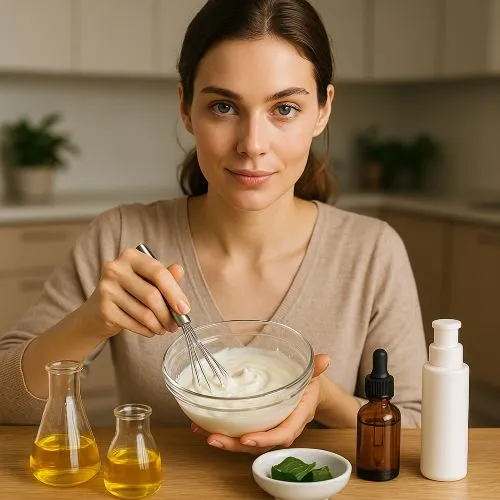
- **Complete Ingredient Control:** You dictate every single component, ensuring your cream is free from common irritants, fillers, synthetic fragrances, dyes, parabens, or ingredients you wish to avoid (like mineral oil or silicones).
- **Unmatched Customization:** Tailor every aspect of your cream – from the carrier oils and butters that suit your skin type to the specific active components and their concentrations that target your unique concerns.
- **Optimal Freshness and Potency:** Your cream is made on demand, guaranteeing that active ingredients are at their peak efficacy, unlike commercial products that may have been stored for extended periods.
- **Cost-Effectiveness (Long-Term):** While initial investment in raw materials might seem higher, the cost per batch of high-quality, customized cream is significantly lower than premium commercial alternatives.
- **Deeper Understanding of Skincare:** The process of formulating provides invaluable knowledge about ingredients and their effects, empowering you to make more informed choices about all your skincare products.
- **Reduced Environmental Footprint:** Minimize packaging waste by reusing containers and purchasing raw materials in bulk.
Conclusion: Your Journey to Personalized, Potent Skincare
Creating your own cosmetic creams is a rewarding journey that blends science, art, and personal wellness. By understanding the fundamentals of emulsions and the strategic combination of active components, you unlock the ability to craft truly effective, safe, and luxurious skincare tailored precisely to your needs. This guide has laid out the essential principles, detailed recipes, and critical safety considerations to embark on this exciting path. Embrace the power of personalization – your skin will thank you for the thoughtful, potent care only a homemade cream can provide.


Cosmetic ingredients and professional formulation blog
This section features expert materials on modern cosmetic actives. We cover peptides, polynucleotides PDRN, different forms of hyaluronic acid, retinoids, ceramides and other key components.
Special focus is given to active stability, ingredient compatibility and correct incorporation into formulas. You will find practical guides on working with anti-age actives, moisturizing complexes and barrier repair ingredients.
We examine how to properly combine myorelaxants with peptides, common mistakes when using unstable vitamin C forms and ways to improve the performance of moisturizing actives.
Separate materials are dedicated to base oils, extracts, emulsifiers and supporting ingredients. This helps create stable and effective formulas for both professional and home cosmetics.
The blog regularly publishes reviews of trending actives, comparisons of similar ingredients and step-by-step formulation recommendations. The content is aimed at formulators, technologists and anyone seriously involved in creating cosmetic products.
Why this blog is useful
Here you will find practical data on eye area care actives, lifting systems and ingredients that improve skin firmness and tone. We rely on real formulation experience and address the actual challenges that arise during product development.
You can also explore materials on skin protection and repair, depigmentation and anti-inflammatory actives. This approach supports a more systematic selection of ingredients.
FAQ
What topics are covered most often
The blog focuses on peptides, PDRN, hyaluronic acid of different molecular weights, retinoids, ceramides and their compatibility rules.
Are there practical recommendations on how to incorporate actives
Yes, most articles include practical notes on pH stability, incorporation temperature and common formulation mistakes.
Is the content only for professionals
The materials are useful both for formulators and technologists and for those who create cosmetics for personal use and want to understand how modern ingredients work.
Where can I go directly to the ingredients
All key actives are collected in the Actives section, while base components are available in base oils and related categories.