A Gentle Amphoteric Booster Behind Stable Foam in Personal Care Formulas
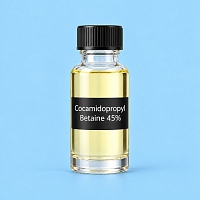
Cocamidopropyl Betaine 45% in a 1 liter pack is one of the most widely used auxiliary ingredients in the production of shampoos, shower gels, baby cleansers, facial washes, and liquid soaps worldwide. This amphoteric compound belongs to the broad category of Surfactants, and its main role is to reduce the irritation potential of anionic surfactants while stabilizing and thickening foam into a richer, creamier texture. That is exactly why it is used far beyond cosmetics — it also appears in dish soap formulations, car shampoos, and industrial cleaning products where skin mildness during contact matters.
The main reason this ingredient stays in such high demand is its dual function as a foam booster and mild thickener, along with its ability to noticeably lower irritation caused by sulfate surfactants such as sodium laureth sulfate. Because of this, it is routinely added to shampoos for sensitive scalp, intimate hygiene products, baby care lines, and professional salon formulations. On an industrial scale, formulators value its stability across a wide pH range and good compatibility with anionic, nonionic, and other amphoteric surfactants, which gives technologists flexibility in balancing lather, viscosity, and skin feel.
Cocamidopropyl Betaine blends well with mild sulfate and sulfate-free bases as well as plant-derived surfactants. For instance, combined with PROTEOL OAT it produces gentle oat-based formulas suitable for baby and sensitive skin products, while adding Disodium Laureth Sulfosuccinate helps build a delicate lather texture without stripping the skin's natural oils. These combinations are common both in home-based experimentation and in studio-scale or semi-industrial cosmetic production.
Typical dosage in finished formulations ranges from 3 to 15 percent of the total product mass, depending on the desired foam density and mildness level. It is best introduced during the active surfactant blending stage, at a temperature not exceeding 40-45°C, to avoid disrupting foam structure or reducing viscosity. When working with alkaline components, such as Sodium Carbonate in household cleaning formulas, it is important to monitor pH levels carefully, since amphoteric surfactants are sensitive to strongly alkaline environments.
The 1 liter pack size is well suited for small cosmetic manufacturers, formulation laboratories, and workshops preparing trial or small batches before scaling up to larger production runs. The product should be stored in a tightly sealed container, in a dry area at room temperature, away from direct sunlight and heat sources, to preserve its stability throughout the shelf life.
Everyday Mild Facial Cleansing Gel
Distilled water 620 ml
Cocamidopropyl Betaine 45% 160 ml
Disodium Laureth Sulfosuccinate 45 ml
PROTEOL OAT 30 ml
Cosmetic thickener 20 ml
Fragrance 5 ml
Preservative 6 ml
Warm the water to about 35-40°C, then slowly add Cocamidopropyl Betaine and PROTEOL OAT while stirring gently to avoid excessive foaming. Add Disodium Laureth Sulfosuccinate and mix until the blend becomes uniform. Once the mixture cools to room temperature, add the preservative and fragrance, adjust the final texture with thickener, and pour the finished gel into clean containers.