Bringing Structure to Balms and Creams with a Rich Botanical Wax
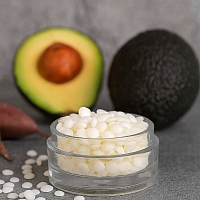
Avocado wax is produced by pressing the pulp and pit of avocado fruit and refining the resulting material into a firm, wax-like mass. Its texture sits between soft vegetable butters and hard beeswax, which makes it a convenient thickener and stabilizer for a wide range of formulations. Within the Waxes for cosmetics section this ingredient stands out for combining nourishing lipids from avocado with the structural strength of a true wax, a property valued across skincare manufacturing, color cosmetics production, and adjacent industries dealing with topical formulas.
The primary demand for avocado wax comes from cosmetic manufacturing: face and body creams, lip balms, hand sticks, hair conditioners and masks, as well as rich serums and repair emulsions that need firmer texture. The wax gives finished products a stable consistency, reduces the risk of emulsion separation during storage temperature fluctuations, and softens skin thanks to fatty acids and phytosterols retained after oil processing. In decorative cosmetics manufacturing this wax is used in lipsticks, tinted sticks and pencils, where both moldability and shelf stability under temperature changes matter. In smaller volumes the material also appears in premium candle production valued for its natural origin, and occasionally in soap crafting as an additive that adds firmness to finished bars.
Avocado wax blends well with other waxes from the same category, allowing formulators to fine-tune hardness and melting point of the final mixture. Combining it with Natural Beeswax produces a more classic firm structure suited for balms and ointments, while adding Green Tea Wax enriches the recipe with antioxidant properties and lightens the texture for daytime creams. When a formula calls for a more neutral scent and shade, it is worth considering bleached granulated beeswax, which is easier to dose precisely and has less impact on the final color of the product.
A recommended dosage of avocado wax in a finished formulation typically ranges from 3 to 10 percent of the total mass, depending on the desired firmness: lighter emulsions require the lower end of the range, while dense balms and sticks call for a higher share. The wax should be introduced into the oil phase during heating to roughly 65-75 degrees Celsius, allowing it to melt completely before combining with the remaining ingredients. Store the raw material in a dry area at room temperature, away from direct sunlight and heat sources, in a tightly sealed container, which preserves its properties over an extended period.
The 1 kg package is intended for production lines and formulation labs that need a reliable, steady supply of raw material without frequent reordering. This volume works equally well for testing new formulas before scaling up and for regular manufacturing runs of skincare batches without risking a shortage mid-cycle.
Repair Hand and Elbow Balm with Avocado Wax
Avocado wax 30 g
Shea butter 25 g
Sweet almond oil 20 g
Beeswax pellets 10 g
Vitamin E oil 3 g
Lavender essential oil 10 drops
Melt the avocado wax together with shea butter and beeswax pellets in a double boiler at around 70 degrees Celsius, stirring until fully liquid. Add the sweet almond oil and mix thoroughly, then remove from heat and let the blend cool to about 45 degrees Celsius. Stir in the vitamin E oil and lavender essential oil, pour the mixture into tins or jars immediately, and allow it to solidify at room temperature for several hours before sealing.