Why a Small Batch of Orange Butter Suits Trial Formulations
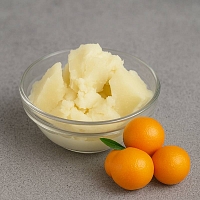
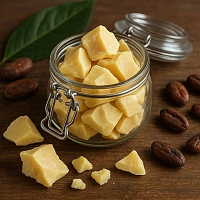
Refined orange butter in a 25 gram pack is aimed at makers who want to test new formulas before committing to a larger order of raw material. This plant fat belongs to the butters category, a group of dense fats with a melting point slightly above room temperature, which makes them practical for sticks, balms and thick creams that hold their shape without refrigeration. The main demand for orange butter comes from skincare production - hand and body creams, lip balms, anti-cellulite blends, stretch mark treatments and products for dry or flaky skin. It softens the skin surface, helps trap moisture in the upper layers of the epidermis and gives finished formulas a pleasant texture that melts smoothly on contact with skin.
On an industrial scale, citrus butters like this one are also used by perfumers as a fatty base for solid perfumes and aromatic sticks, and by spa product manufacturers for massage bars and butter blends. A small 25 gram size is convenient for checking how the butter behaves in a formula, evaluating absorption speed and emulsion stability before scaling up to a full production batch. Typical dosage in cosmetic recipes ranges from 5 to 20 percent of the total fat phase - higher concentrations give a firmer texture and usually need extra liquid oils for balance.
Orange butter should be added during the fat phase, melted on a water bath at around 55-65 degrees Celsius together with other solid ingredients such as wax, stearic acid or other butters. Once fully melted, the fat phase is combined with the water phase at matching temperatures for emulsions, or simply poured into molds for anhydrous sticks and balms. It blends well with other plant butters - pairing it with vanilla butter brings a soft sweet note to body balms, while combining it with almond butter boosts the softening effect and works well for dry or sensitive skin. For a stronger citrus profile, formulators often add lemon butter, building a layered scent without relying solely on essential oils.
Beyond creams and balms, orange butter appears in solid hair conditioner bars and repair masks. Store the product in a tightly sealed container, in a dry cool place away from direct sunlight - under these conditions the butter keeps its properties for the full shelf life stated by the supplier. Before use, check the consistency: if the butter has softened due to heat, placing it in the fridge for a few hours restores its firm texture.
Orange Butter Solid Hand Cream Bar
Refined orange butter - 6 g
Beeswax - 4 g
Sweet almond oil - 10 g
Cocoa butter - 3 g
Vitamin E - 1 g
Melt the orange butter, beeswax and cocoa butter together on a water bath at about 60 degrees Celsius, then stir in the almond oil until smooth. Let the mixture cool slightly to around 45 degrees, add vitamin E, mix well and pour into small molds or tins. Leave to set at room temperature for two to three hours before using.
FAQ
What are the storage conditions for refined orange butter after opening?
Store in a tightly sealed container in a dry cool place away from direct sunlight. The given storage conditions help maintain properties until 10.2028.
What is the comedogenic rating of refined orange butter as a rough guide?
The rating is not specified in the product data.
What is the texture and melting point of refined orange butter?
It is a semi-solid mass with a melting temperature of 41 degrees. This makes it suitable for thick creams and balms that hold shape at room temperature.
What input percentage and phase of addition apply to refined orange butter?
Recommended concentration is 5-100 percent, soluble in oils and the fatty phase. Specific percentages for formulations such as hand cream at 5-15 percent are listed in the characteristics.