A firm plant fat that bridges the food, chemical and cosmetic industries
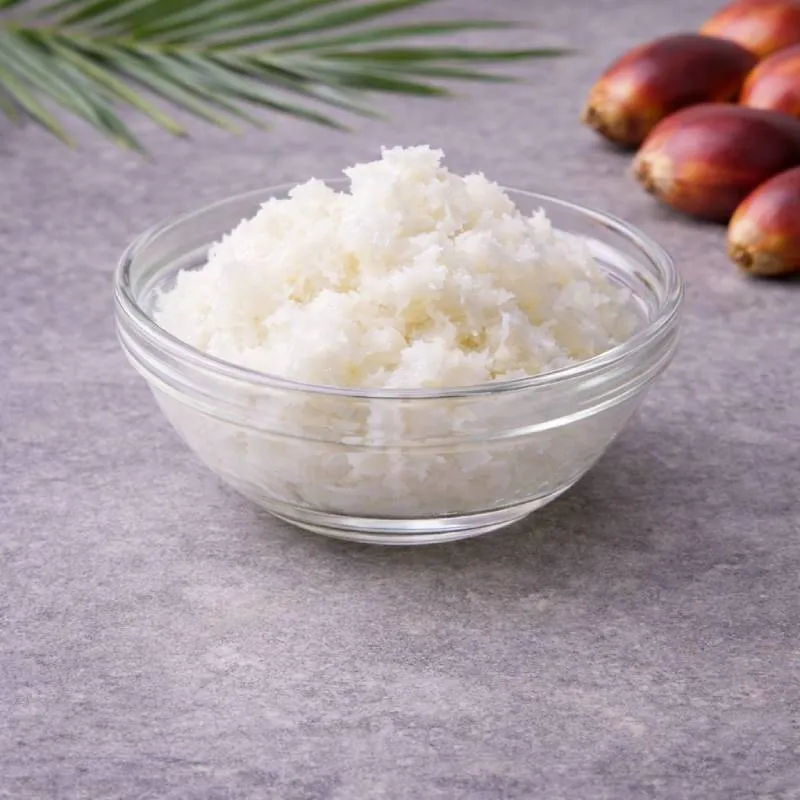
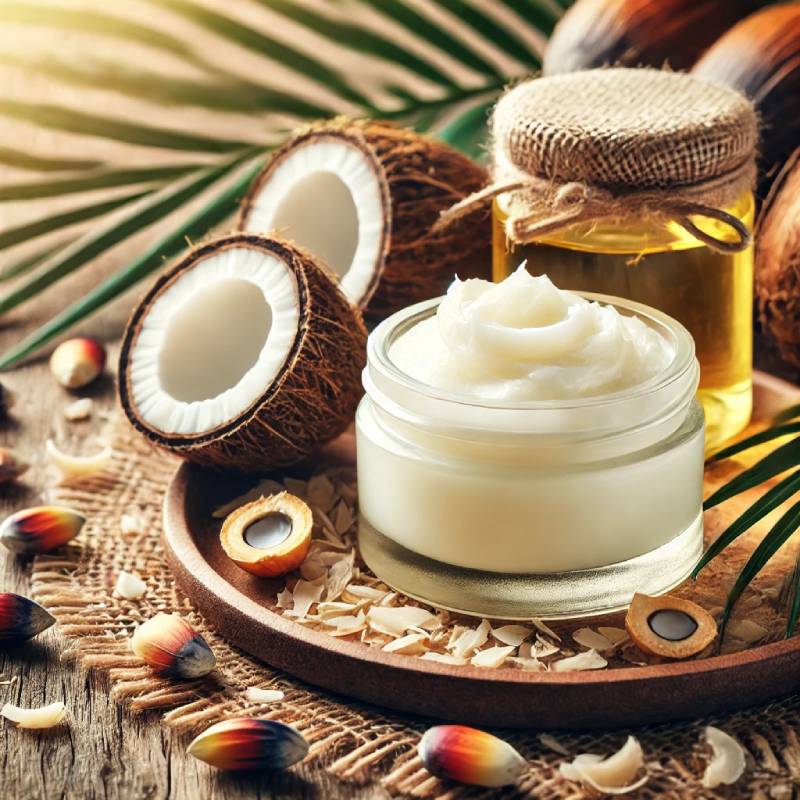
Palm kernel oil is pressed from the seeds inside the fruit of the oil palm, and it differs noticeably from regular palm oil extracted from the fruit pulp — it is firmer, richer in lauric acid, and melts at a higher temperature. This solid texture makes it valuable across several industries: the food sector, where it is used in margarine, confectionery coatings and cocoa butter substitutes, the household chemical and surfactant industry, and skin and hair care formulations. The 100 gram size is convenient for home formulation work and small trial batches when a recipe needs testing before scaling up. This product belongs to the butters category, which brings together firm plant fats with similar texture and melting behavior.
In cosmetic formulation, palm kernel oil is used as an ingredient in creams, lip balms, solid hair conditioner bars and nourishing masks. It leaves a light protective film on skin, softens and helps retain moisture, and thanks to its dense structure it performs well in solid formats such as sticks, bars and bricks. Typical dosage in finished formulas ranges from 5 to 15 percent of total weight depending on the desired firmness. It should be introduced during the oil phase, melted on a water bath at 60-70 degrees together with other oils and waxes, then cooled to 40-45 degrees before adding heat-sensitive ingredients such as essential oils or vitamins.
Palm kernel oil pairs well with other firm butters that complement its properties. Combined with unrefined Shea butter, it produces a more stable texture and boosts the nourishing effect of the finished product, which is especially useful for formulas targeting dry or weather-affected skin. For lighter, faster-melting compositions, formulators often add murumuru butter, which softens the firmness of palm kernel oil and gives the final product a smoother, creamier feel. When a recipe calls for an active botanical ingredient with a distinct aroma and stimulating effect, unrefined bay laurel oil is a common choice, frequently used in scalp treatments and strengthening balms.
In industrial chemistry and surfactant manufacturing, palm kernel oil serves as a raw material for producing lauric acid and its derivatives, which are later used in shampoo, shower gel and cleaning product formulas. In household chemistry, processed derivatives contribute foaming properties to laundry detergents and dishwashing products. In the food industry, the oil is valued for its storage stability and resistance to oxidation, making it a popular substitute for more expensive solid fats.
Store the oil in a dry, cool place away from direct sunlight, in a tightly sealed container, at a temperature not exceeding 25 degrees. During prolonged refrigeration the oil may become firmer and slightly cloudy — this is a normal effect of fatty acid crystallization, and gentle warming on a water bath restores its usual consistency before use.
Solid cuticle butter stick
Palm kernel oil 25 g
Unrefined Shea butter 20 g
Beeswax 10 g
Sweet almond oil 35 g
Vitamin E 2 ml
Orange essential oil 6 drops
Melt
the palm kernel oil, Shea butter and beeswax together on a water bath at around
65 degrees until fully liquid. Remove from heat, stir in the sweet almond oil
until the mixture is smooth, then let it cool to 40 degrees. Add the vitamin E
and orange essential oil, mix gently, and pour the blend into stick molds or
small tins, allowing it to set at room temperature for several hours before
use.
The INCI designation used in documentation is Palm Kernel Oil.
FAQ
What is the recommended input percentage and phase of addition for Palm Kernel Oil?
Palm Kernel Oil can be added at 1-100 % in cosmetic formulations. The exact percentage and phase depend on the recipe and are specified in the product documentation.
What is the shelf life of Palm Kernel Oil, how to recognize rancidity and how to slow it?
The expiration date for this batch is 10.2028.
What is the comedogenic rating of Palm Kernel Oil as a rough guide?
Comedogenic rating is not provided in the product data.
What is the difference between refined and unrefined grade of Palm Kernel Oil?
Information on refined versus unrefined grade is not included in the current characteristics.