-
 Absolutes
-
 Active Complexes
-
 Actives & Peptides
-
 Amino Acids & Proteins
-
 Food Flavors
-
 Ayurvedic Ingredients & Herbs
-
 Vitamins & Coenzymes
-
 Chocolate Making Supplies
-
 Thickeners & Gelling Agents
-
 Hydrosols & Floral Waters
-
 Hydrolyzed Proteins
-
 Fragrance Ingredients
-
 Nutraceutical Ingredients
-
 Acids, Salts, Alcohols & Alkalis
-
 Preservatives & Antioxidants
-
 Cosmetic Ingredients
-
 Colorants, Micas & Glitters
-
 Masks, Scrubs & Botanicals
-
 Oils & Butters
-
 Candle Making Supplies
-
 Melt and Pour Soap Bases
-
 Cream, Lotion & Hair Care Bases
-
 Fragrance Oils & Industrial Aromatics
-
 Cleansing Agents & Surfactants
-
 Peeling Actives & Acids
-
 Cosmetic Powders
-
 Solvents & Humectants
-
 Silicones & Conditioning Agents
-
 Bottles, Jars & Vials
-
 Silicone & Plastic Molds, Tools
-
 Botanical Extracts
-
 Cosmetic Emollients
-
 Emulsifiers
-
 Essential Oils
- Water-Soluble Oils Wholesale 25
- Bulk Liquid Oils 297
- Natural Oil Complexes Wholesale 58
- Bulk Oils 27
- Herbal Oil Extracts and Infusions Wholesale 16
- Massage Oils Wholesale 17
- Macerated Oils Wholesale 30
- Carrier Oil Blends Wholesale 71
- Solid Oils and Butters Wholesale 78
- Solid Oils and Butters Bulk Wholesale 10
- Fermented Oils Wholesale 8
- Natural Essential Oils Wholesale 769


Solid Oils and Butters Bulk Wholesale

 Add to cart


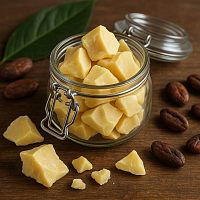


Firming plant butters and hard oils for cosmetic formulations
This section brings together solid plant oils and butters that stay firm at room temperature and soften on contact with skin. They are used as structural fats in balms, body butters, lip products, solid emulsions and anhydrous bar formats, giving finished products body, slip and a stable texture that liquid oils cannot provide on their own.
Because these fats melt at a defined temperature range rather than gradually softening, formulators rely on them to control how a product behaves in the jar and how it releases on skin. A blend of two or three butters with different melting points is a common way to fine-tune firmness without adding synthetic thickeners, and the same raw material can move from a rich winter balm to a lighter summer cream depending on ratio and processing.
Alongside solid textures, many formulators also pull from our liquid vegetable oils to dilute a heavy butter or add spreadability, and the wider solid oils and butters wholesale range covers grades suited to both small batch and industrial output.
Types of butters and hard oils and how they differ
Cocoa butter is the firmest option in this group and brings a naturally hard, brittle texture along with a mild characteristic scent. Unrefined Cocoa Butter 25 kg keeps more of that original aroma and trace compounds, while Cocoa Butter RBD 20 kg is deodorized and decolorized, giving a neutral base when a formulator does not want the raw scent showing through a finished cream or balm.
Shea, coconut and palm-derived fats sit at different points on the melting scale. Karite Butter (Shea Butter) refined 25 kg is softer and more pliable than cocoa butter, which is why it is often chosen for products that need to glide on easily rather than hold a sharp edge. Coconut fat behaves differently again, since it is solid in cool rooms but melts close to body temperature, and both Coconut Oil Refined RBD 20 kg and Unrefined Coconut Oil 10 L are available depending on whether a neutral or a more natural character is needed. Palm Oil 20 kg and Palm Kernel Oil 20 kg round out the range with their own firmness and glide profiles, useful where a formula needs body without the sharper snap of cocoa butter.
Choosing a fat and building a formula around it
The starting point is usually the finished texture a formulator wants: a firm balm stick, a whipped body butter, a solid serum bar or an anhydrous cream base all call for a different melting point and hardness. Blending two fats with different profiles, for example a harder butter with a softer one, is a practical way to land on the right consistency without reaching for synthetic thickeners.
These hard fats rarely work alone in a formula. They are commonly paired with lighter carriers from our Natural Essential Oils Wholesale range for scent and added actives, and with liquid vegetable oils to soften the final texture and improve spreadability on skin. The ratio between hard and liquid components is what ultimately decides whether the result feels like a rich winter balm or a lighter, faster-absorbing cream.
Origin, form and storage
Supply for this group comes from established producing regions, with material sourced from Italy, Malaysia, Thailand and Germany depending on the specific fat and grade. Butters and hard oils here are supplied in bulk formats suited to both small workshops and larger production lines, typically in the twenty to twenty five kilogram range, with coconut oil also available by volume.
Because these are solid fats with a defined melting point, they should be kept in a cool, dry place away from direct heat and sunlight to avoid premature softening or oxidation. Stock rotation matters more with unrefined grades, since their natural aroma and color are more sensitive to storage conditions than the refined RBD versions.
FAQ
What is the difference between a plant butter and a hard oil?
Butters like cocoa or shea are naturally solid at room temperature due to their fatty acid profile, while hard oils reach a firm state after processing or blending. Both function as structural fats, but butters generally offer richer skin feel and hard oils give cleaner, harder bars and sticks.
How do I choose the right melting point for a balm or stick formula
Match the melting range to the finished format and climate the product will face. A higher melting point keeps sticks and bars firm in warm storage, while a softer butter suits body creams meant to melt quickly on contact with skin.
Can these butters and hard oils be combined in one formulation
Yes, blending two or three fats with different melting points is a common way to fine-tune firmness, spreadability and glide without relying on synthetic thickeners. Ratios can be adjusted seasonally to shift a formula from a heavier winter balm to a lighter summer version.
How should solid plant butters and hard oils be stored
Keep them in a cool, dry place away from direct sunlight and heat sources, since repeated melting and resolidifying can affect texture and grain over time. Tightly sealed containers help protect the fats from oxidation and moisture during longer storage periods.
Recommendations
Start by matching the melting point and hardness of the butter or oil to the format you are building, whether that is a stick, a whipped body butter or a pourable balm base. Consider how the fat will behave once blended with liquid oils or actives, and request a small sample batch before committing to a larger volume. Our team is reachable by email to help confirm grade availability and typical lead times for your order.



