The Everyday Humectant Behind Pharma, Food and Skincare Formulas
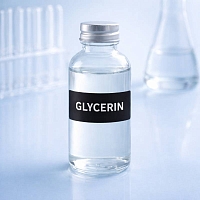
Glycerin in a 1 kg pack is one of the most versatile raw materials used far beyond a single industry. Chemically it is a triol alcohol, which is why the product belongs to the Acids, Salts, Alcohols, and Alkalis section, a category gathering core chemical building blocks for home labs, small-batch studios and industrial production lines alike. Global demand for glycerin is driven primarily by the pharmaceutical and food sectors, followed by household chemistry and personal care, so it is worth treating this ingredient as a cross-industry commodity rather than a niche cosmetic additive.
In pharmaceutical manufacturing, glycerin serves as a base for syrups, suppositories, gels and ointments thanks to its ability to retain moisture and build the right consistency. In food production it acts as a humectant, a solvent for flavorings and colorants, and a component of confectionery and beverages, helping preserve texture and extend shelf life. In household chemistry it appears in glass and mirror care formulas, anti-fog sprays, lubricants and antifreeze mixtures, while textile and printing industries use it as a fiber softener and ink additive.
In personal care manufacturing, glycerin remains a foundational humectant found in creams, lotions, serums, toners, shampoos and shaving products. It dissolves well in water and alcohol-based solutions, blends easily with other active ingredients and helps stabilize emulsions. In scalp serum formulas it is frequently paired with Nicotinic Acid, which supports microcirculation, while toners and liquid cosmetic formulas often combine it with Tartaric Acid to gently balance the pH of the finished product. In dry blends and food compositions, glycerin is sometimes combined with Maltodextrin, which acts as a bulking and texture-stabilizing agent.
Recommended dosage in cosmetic formulas usually ranges from 3 to 10 percent for creams and lotions, while hydrating serums and toners may contain 20 to 30 grams per 100 ml of finished product. Glycerin should be added to the water phase during mixing, and the introduction temperature can be either room temperature or warmed to 40-60 degrees alongside other water-based ingredients, which simplifies even distribution. In food and pharmaceutical recipes the dosage depends on the specific technology and the required consistency of the final product.
Store glycerin in a tightly sealed container at room temperature, away from direct sunlight and moisture sources, since the product is hygroscopic and readily absorbs water from the air once the container is opened. The 1 kg pack size suits studio-scale and small commercial production where a steady supply of raw material is needed without frequent reordering, as well as formulators testing new recipes before scaling up. It occasionally appears in soap making as an ingredient of clear soap bases, though this remains just one of many possible applications.
Soothing Hand and Body Lotion
Distilled water 780 ml
Glycerin 80 g
Cetyl alcohol 40 g
Sweet almond oil 60 g
Preservative 12 g
Warm the distilled water and glycerin together in one container, then melt the cetyl alcohol with almond oil separately until fully liquid. Combine both phases while stirring continuously until the mixture cools to room temperature and thickens into a smooth lotion, then blend in the preservative and transfer the finished product into pump bottles, allowing it to rest for a day before use to ensure full stability.