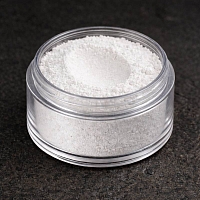
Bright Creative Effects with White Fluorescent Pigment
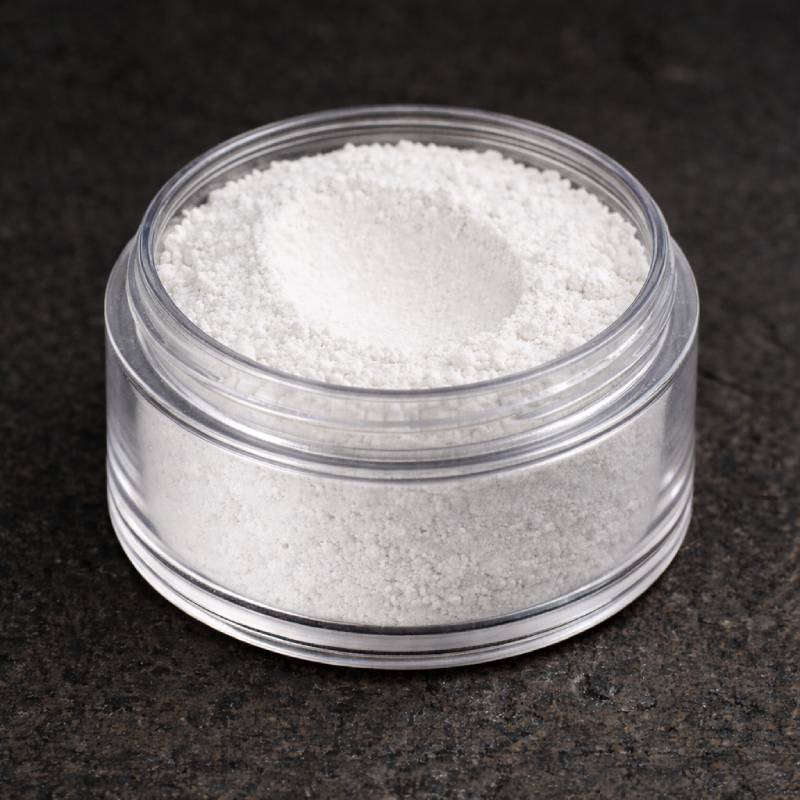
White fluorescent pigment in a compact 5 gram pack is designed for makers who want to test a glowing effect on a small scale before committing to larger production runs. This size is well suited for home crafters, beginner makeup artists and small studios experimenting with new formulas without risking a large amount of raw material. The pigment belongs to the Fluorescent Pigments category, which gathers vivid glow-effect colorants used across many decorative applications.
The most common application of white fluorescent pigment is decorative cosmetics and body art: aqua makeup, UV makeup for photoshoots, parties and themed events, and creating glowing accents on skin under ultraviolet light. Beyond cosmetics, the pigment is widely used in resin casting for jewelry and decor items, novelty candle making, and craft projects such as slime, polymer clay and decorative pours. White shade is often used as a base to lighten other fluorescent colors, so it pairs well with colored pigments, for example Fluorescent pigment Red, 5 g, producing soft pinkish glowing tones when blended together.
Recommended dosage depends on the desired intensity and the type of base: for cosmetic formulations 0.5 to 2 percent of the total mass is usually enough, while for epoxy resin and polymer casting the range is wider, from 1 to 5 percent, depending on the transparency of the material. The pigment should be introduced during the mixing stage into a cold or slightly warmed base, avoiding heating above 60-70 degrees Celsius, since excessive heat can reduce the brightness of the glow effect. Before adding, disperse the pigment thoroughly to prevent clumping and ensure even distribution of particles throughout the mixture.
This pigment blends well with oils, waxes, silicone bases, gel and emulsion systems, and clear polymer resins. For water-based formulations keep in mind that fluorescent pigments are typically hydrophobic, so liquid forms are a better fit for aqueous mixtures, such as Pigment liquid fluorescent yellow 10 ml or Pigment liquid fluorescent Green 10 ml, which are easier to incorporate into gel and liquid recipes. The dry white pigment, on the other hand, works better in oil, wax and polymer systems where particle stability without separation matters most.
Store the pigment in a tightly closed container, in a dry place away from direct sunlight, at room temperature, avoiding excess humidity, which helps preserve the brightness of the glow and prevents the powder from caking. The small 5 gram pack makes it easy to dose precisely in trial batches and avoids waste of unused material over time.
Glow-in-UV Body Gel with White Fluorescent Accent
Clear aloe gel base 25 ml
Glycerin 3 ml
White fluorescent pigment 0.2 g
Distilled water 5 ml
Combine
the aloe gel base with glycerin and distilled water in a small container,
stirring gently until smooth. Add the white fluorescent pigment gradually,
mixing thoroughly each time to avoid clumps and to achieve an even glowing
effect throughout the gel. Transfer the finished mixture into a clean jar and
let it rest for about an hour before use so the pigment settles evenly; apply a
thin layer to skin for a soft glow under ultraviolet light.
Frequently asked questions
How to incorporate neon white pigment into polymer products for decor?
Begin with a low amount in a test batch and adjust to achieve the desired effect. The pigment colors but does not dissolve. The 5 g pack fits trial work by makers before scaling up.
What is the shelf life of the white fluorescent pigment under proper storage?
Keep in a dry place away from sunlight. The pigment remains usable until 12.2041. The mineral component maintains its properties when stored correctly.
Does the 5 g pack of neon white include a COA?
COA is available on request. This size suits home makers and labs testing compatibility with epoxy resins or polymer clay.
Can neon white serve as a base to lighten other fluorescent shades in body art?
Yes, add gradually to a test batch for pastel glowing tones. It works with other fluorescent pigments in decorative cosmetics and body art applications.