What Vegetable Glycerin Represents
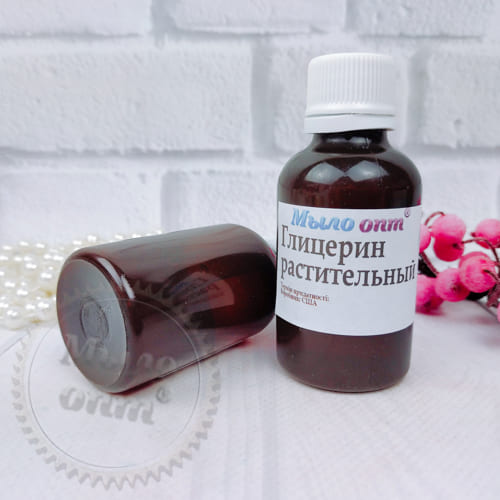
Vegetable Glycerin in the 50 g packaging offers a compact format for those testing new cream, serum or balm formulations at home or preparing a small trial batch of cosmetics. This volume allows evaluation of the component behavior in the formula without purchasing large containers. It serves as a universal moisturizer and solvent that attracts moisture from the air and retains it in the upper skin layers, which explains its frequent inclusion in creams, lotions, gels and masks.
The product belongs to the moisturizing actives section, where components share a similar action mechanism that helps dissolve active substances and maintain the required moisture level in the finished product.
Main Properties
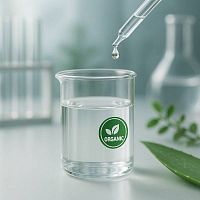
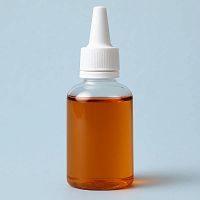
Vegetable Glycerin functions as a thick liquid that draws in and holds moisture. It dissolves readily in water, propylene glycol and alcohol. Its transparent, light yellow appearance makes it suitable for clear or lightly tinted formulations across multiple industries including cosmetics, food production, pharmaceuticals and technical applications.
Applications
In cosmetic care products Vegetable Glycerin is introduced at the water stage of emulsion preparation, typically at temperatures from 40 to 70 degrees, at dosages from 3 to 10 percent of the total product mass. Exceeding this range may create a sticky feel on the skin, especially in high humidity conditions. It pairs well with hyaluronic acid, panthenol, extracts and active complexes. For instance, when combined with CO2 plant retinol it helps distribute the active component evenly through the cream phase. Broader uses extend to the food industry as a moisture retaining agent in confectionery and baked goods, to household chemicals as a softening component and to pharmaceutical bases for syrups, suppositories and gels.
Further options appear in the parent catalog of actives for those exploring related ingredients.
How to Use
Introduce Vegetable Glycerin on the aqueous phase during production. Typical concentrations vary by product type: 2 to 4 percent in micellar water and water sprays, 5 to 7 percent in shampoos and hair balms, 1 to 5 percent in xanthan gels and serums, 3 to 7 percent in face masks and 3 to 5 percent in milk and mousses for makeup remover. Always verify compatibility with other ingredients before scaling a batch.
Compatibility and Technological Features
Vegetable Glycerin combines effectively with hyaluronic acid based ingredients. See examples in the hyaluronic acid section. It also works with plant waxes to produce more plastic and stable emulsions for balms and dense texture creams. When working with larger packaging such as the 1 kg size, dosing becomes easier for small batch production.
Check the 1 kg format for comparison when planning larger volumes.
Appearance and Characteristics
The ingredient presents as a thick liquid with transparent, light yellow color. It shows solubility in water, propylene glycol and alcohol. The 50 g packaging comes in a transport container and carries a shelf life until 11.2028 when stored correctly.
Example of Application
Moisturizing face gel with glycerin. Distilled water 80 ml. Vegetable Glycerin 8 ml. Hyaluronic acid powder 0.5 g. Xanthan gum 0.3 g. Liquid panthenol 3 ml. Broad spectrum preservative 1 ml. Gradually dissolve xanthan gum in distilled water at room temperature with vigorous stirring until a uniform gel without lumps forms. Separately dissolve hyaluronic acid powder in a small amount of water and allow it to swell for 30 minutes. Combine the gel base with the hyaluronic acid solution, add Vegetable Glycerin and panthenol, then mix thoroughly until homogeneous. Add the preservative last, stir and transfer the gel into a clean jar with a lid.
Storage
Store Vegetable Glycerin in a tightly closed container in a cool, dry place protected from light. Under these conditions it retains its properties for a long time without quality loss. Use opened packaging within several months while avoiding moisture and foreign impurities inside the container.
FAQ
What temperature range suits introduction of Vegetable Glycerin?
The recommended range lies between 40 and 70 degrees during the water phase of emulsion preparation.
Which solvents work with Vegetable Glycerin?
It dissolves in water, propylene glycol and alcohol according to the listed characteristics.
How much Vegetable Glycerin goes into a face mask?
The suggested concentration for face masks ranges from 3 to 7 percent of the total mass.
Where can larger packaging be found?
The 1 kg size provides an option when test batches confirm suitability for wider use.