What Vegetable Glycerin Represents
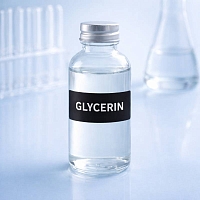
Vegetable Glycerin 1 kg is a thick liquid obtained from vegetable oils through saponification or hydrolysis. It serves as a humectant and texture regulator across multiple production areas including food manufacturing, pharmaceuticals and cosmetics. The 1 kg pack suits small-scale producers and studio laboratories that test formulas or release limited batches while maintaining supply stability. This item belongs to the solvents and humectants category that gathers ingredients for moisture and texture control in diverse recipes. Explore more in the bulk actives section.
Main Properties
The product appears as a transparent light yellow thick liquid. It dissolves in water, propylene glycol and alcohol. Input rates vary by application: micellar water and water sprays use 2-4 percent, shampoos and hair balms use 5-7 percent, xanthan gels and serums use 1-5 percent, face masks use 3-7 percent, and makeup remover milks and mousses use 3-5 percent. All site information remains for reference only.
Applications
Food production employs vegetable glycerin as a moisture-retaining agent and sweetener in baked goods, confectionery and beverages. Pharmaceutical manufacturing relies on it for syrup bases and soft capsules. In cosmetics it supports creams, lotions and gels by helping retain moisture. Industrial chemistry uses it in antifreeze components, polymer film plasticizers and as a biodiesel byproduct. Tobacco processing applies it for leaf moistening while textile production uses it as a fabric softening impregnation. See the parent actives catalog for additional humectants.
How to Use
Introduce vegetable glycerin into the water phase of emulsions during mixing at 40-60 degrees Celsius. Typical dosage ranges from 3 to 10 percent of total recipe mass depending on desired hydration level. Exceeding this range may cause stickiness in the finished product, so balance with other humectants. For lighter cream textures combine it with silicone ingredients such as olive plant silicone to improve slip and reduce the tacky feel common at high glycerin levels. If a different purity grade is required for parallel product lines consider the glycerin 1 kg variant from the main assortment.
Compatibility and Technological Features
Vegetable glycerin mixes readily with water phases, alcohol solutions, extracts and active complexes. In hydrating serums it pairs effectively with plant retinol CO2 complex to support moisture retention in upper skin layers alongside other actives. Check related options in the hair actives section when building compatible formulas.
Storage
Keep vegetable glycerin in a tightly closed container at room temperature away from direct sunlight and moisture sources because it is hygroscopic and absorbs water from air. Proper storage yields a long shelf life, making the 1 kg pack economical for small workshops and studio productions that value batch-to-batch consistency.
Original Recipe Example
Hydrating xanthan serum uses the following amounts: distilled water 150 ml, vegetable glycerin 8 ml, xanthan gum 1.5 g, aloe extract 8 ml, broad-spectrum preservative 2 ml. Gradually disperse xanthan gum into distilled water at room temperature while stirring until a smooth gel forms without lumps. Separately blend vegetable glycerin with aloe extract then add the mixture to the gel base in small portions with constant stirring. Once fully combined add the preservative and stir to homogeneity. Allow the serum to stabilize for 30 minutes before packaging into clean containers.
FAQ
Is vegetable glycerin suitable for food applications?
Yes, it functions as a moisture-retaining agent and sweetener in baked goods, confectionery and beverages according to established usage rates.
Can vegetable glycerin be combined with xanthan gum?
Yes, it integrates well into xanthan gels at 1-5 percent to adjust texture and hydration without altering gel stability.
What temperature range applies during introduction?
Add vegetable glycerin to the water phase at 40-60 degrees Celsius to ensure even distribution in emulsions.
How does excess dosage affect the final product?
Exceeding recommended percentages may produce a sticky feel, therefore balance remains important when selecting complementary humectants.