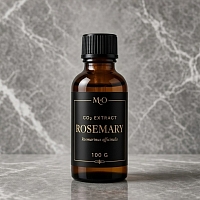
What Makes Rosemary Oil a Staple Across Multiple Industries
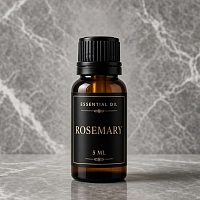
Rosemary essential oil is steam-distilled from the fresh leaves and twigs of a Mediterranean shrub, and it remains one of the most searched essential oils worldwide thanks to its sharp camphor-woody scent and a composition rich in cineole, camphor and alpha-pinene. These natural compounds explain its wide use across perfumery, personal care manufacturing, aromatherapy and household chemical production. The compact 5 ml bottle is a practical choice for home formulators, hobbyists and anyone testing a new recipe before committing to a larger batch. This oil belongs to the Essential Oils section, which brings together aromatic raw materials for skincare, haircare, fragrance and household product development.
In personal care manufacturing, rosemary oil is a frequent ingredient in scalp and hair strengthening formulas, toners and masks for oily skin, as well as warming body treatments. It is widely believed to support microcirculation and leave the skin feeling refreshed and awake. In perfumery, it functions as a middle note in masculine and herbal fragrance compositions, while in household chemical production it lends an invigorating character to cleaning product fragrances. Within the food industry, rosemary is recognized for its natural antioxidant properties that slow fat oxidation, though dedicated extracts are typically used for that purpose rather than the pure essential oil.
Typical usage rates for rosemary essential oil in finished formulations range from 0.5 to 2 percent of the total product weight, roughly equivalent to 5-20 drops per 100 ml of base. The oil should be added during the final stage of formulation, once the base has cooled below 40 degrees Celsius, to preserve its volatile aromatic compounds. Store the bottle tightly sealed in a cool, dark place away from direct sunlight and heat sources to maintain the freshness of the scent over time.
Rosemary blends particularly well with citrus and energizing oils. In invigorating shower gels or body mists, it is often paired with Mandarin Essential Oil, which softens the sharp herbal edge and adds brightness. For products designed to gently wake up the senses and refresh tired skin, rosemary combines well with Oxygen Essential Oil, and in fragrance blending an interesting balance emerges when it is combined with Bergamot Essential Oil, which adds a light citrus lift against the herbal backbone.
Before using in any cosmetic formulation, it is advisable to run a patch test on a small area of skin, and caution should be exercised when handling the undiluted oil due to the high concentration of active compounds. This oil is not recommended for pregnant women or individuals with epilepsy without prior consultation with a specialist.
Invigorating scalp tonic
Jojoba oil 25 ml
Rosemary essential oil 5 drops
Bergamot essential oil 3 drops
Vitamin E oil 2 ml
Combine the jojoba oil and vitamin E in a small dark glass bottle, then add the rosemary and bergamot essential oils and shake gently until fully blended. Massage a small amount into the scalp about an hour before shampooing, focusing on areas that need extra attention, then store the bottle away from light and heat between uses.