Achieving a Consistent Blue Shade Across Industrial Batches
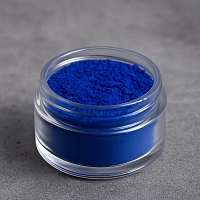
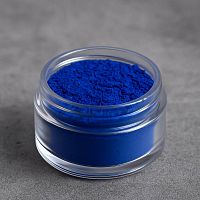
When a manufacturer needs the same vivid blue tone repeated reliably across dozens of production runs, an inorganic pigment with strong heat and light resistance becomes the practical choice. This material belongs to the Pigments category, which brings together coloring agents suited for plastics, coatings, construction materials, and decorative goods. The 1 kg packaging is built for workshop and factory-scale production, where the goal is not a single colored batch but a repeatable formula that can be scaled up without shifting the final hue. See additional options in the Pigment Powders Wholesale section for matching industrial shades.
Globally, the largest demand for this type of blue pigment comes from the plastics and construction industries, where it colors polymer pellets, rubber compounds, cement-based mixes, concrete pavers, and architectural coatings. The pigment is typically introduced during the mixing or extrusion stage, dispersing evenly throughout the mass without bleeding to the surface over time. Recommended dosage for construction mixes usually ranges from 1 to 5 percent of the dry material weight, while polymer applications call for 0.5 to 3 percent depending on the desired color depth. Since the pigment disperses rather than dissolves, thorough mechanical mixing is essential, particularly in thick or highly filled formulations.
Beyond construction and polymers, the pigment is widely used in candle making for coloring paraffin and wax blends, as well as in color cosmetics for pigmented lip and face products. For cosmetic formulations, a closely related option is the Blue Lipstick Pigment, milled finer and specifically adapted for decorative cosmetic use. Candle producers often pair this pigment with the Dark Blue Wax Dye for Candles to achieve deeper, layered blue tones in paraffin and wax compositions. For decorative or signal-type items requiring a striking optical effect under UV light, the Fluorescent Blue Pigment offers a fundamentally different visual response compared to a standard inorganic pigment.
This pigment is compatible with acrylic, alkyd, and epoxy binders, wax, molten polymers, and mineral binding systems. It can be introduced in either cold or heated phases, though excessive overheating beyond the manufacturer's recommended range should be avoided to prevent color shift. Store the pigment in a dry area, in a tightly sealed container, away from moisture and direct sunlight, to preserve color stability and powder flow over extended storage periods.
Smaller studios may also use this pigment for coloring cosmetic masses and decorative items in limited batches, but at 1 kg the packaging is primarily geared toward serial manufacturing, where cost efficiency and predictable scaling matter most.
Blue-Tinted Epoxy Resin Casting Blocks
Epoxy resin 1000 g
Hardener 500 g
Blue pigment 8 g
Isopropyl alcohol 10 ml
Disperse
the pigment into a small portion of the resin using a spatula until no clumps
remain, then blend this concentrate into the full volume of resin for even
color distribution. Add the hardener and mix slowly for at least three minutes
to avoid trapping air bubbles, using isopropyl alcohol sparingly on the surface
to pop any remaining bubbles. Pour the mixture into silicone molds and allow it
to cure undisturbed at room temperature for 24 to 48 hours before demolding the
finished blue blocks.
Frequently asked questions
How does the 1 kg Blue Pigment perform in building mixes for consistent shade?
Introduce the 1 kg Blue Pigment during the mixing stage of cement or gypsum based materials. Use 1 to 5 percent by dry weight to reach the desired intensity from blue to blue-blue. Test on a small batch first for uniformity.
Which bases suit the mineral Blue Pigment 1 kg pack?
The mineral pigment disperses well in polymers, paints and construction compounds without dissolving. Start at 0.5 percent in plastics and adjust up to 3 percent depending on the required color strength in your production run.
Is a COA available for the Blue Pigment 1 kg mineral quality?
Request the COA for this mineral pigment when ordering the 1 kg pack. It confirms suitability for repeated industrial coloring of plastics, resins and concrete products with stable results.
How should the 1 kg Blue Pigment be stored until December 2041?
Keep the 1 kg Blue Pigment in a cool dry place away from light to maintain its properties. This storage condition preserves the pigment quality through the indicated expiry date for ongoing manufacturing use.