The White Powder Behind Global Paint, Plastic and Cosmetic Production
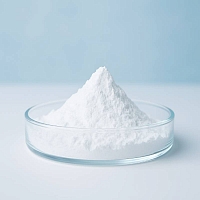
Titanium dioxide holds the title of the world's most widely used white pigment, forming the backbone of architectural and automotive paints, packaging plastics, paper coatings, ceramic glazes and sun protection formulas. Its unmatched opacity and brightness make it a staple ingredient far beyond the beauty industry, though it remains equally valued by cosmetic formulators and crafters. The Titanium Dioxide listing offers a 100 gram pack, a practical size for home crafters, small cosmetic studios and trial batches where testing the pigment before a larger purchase makes sense.
In home and small-scale production, this powder is mainly used to whiten and opacify a base. In decorative cosmetics it serves as the foundation of white shades in eyeshadows, pressed powders, BB and CC creams, and it boosts the coverage of tinted formulas. In higher concentrations it acts as a physical UV filter that reflects and scatters sunlight, which is why it appears in sunscreen lotions and SPF lip balms.
The pigment blends well with oils, waxes, glycerin and most emulsifiers, but it should be properly dispersed before being mixed into the final batch. Combine a small amount of powder with liquid oil, glycerin or a portion of the base until a smooth, lump-free paste forms, then stir this paste into the main mixture. This step prevents white specks and ensures even color throughout the product. For creams and lotions a dosage of half a gram to two grams per hundred grams of formula usually works well, while sunscreen formulations may require fifteen to twenty grams per hundred grams of emulsion depending on the intended protection factor.
Titanium dioxide can be introduced at almost any stage of production since it is heat stable and does not break down when heated to eighty or ninety degrees Celsius, which is convenient during candle making or when adding it to the oil phase of an emulsion while melting. For more even color distribution, however, many formulators prefer to add it at the mixing stage in candle making or during the cooling stage of a cream at forty to fifty degrees, avoiding premature separation of the dispersion. It pairs particularly well with zinc oxide, which reinforces both protective and mattifying properties, and with various mineral or organic pigments, allowing formulators to dilute strong colors down to any desired shade. Check the Water-dispersible titanium dioxide 100 g for water-based projects or browse more options in the Colorants and Pigments section.
Store the powder in a tightly sealed container in a dry area away from moisture and condensation, since it is hygroscopic and can clump when exposed to humid air. Direct sunlight and elevated storage temperatures should also be avoided, although the pigment itself resists fading. Under proper conditions the powder retains its properties for a long shelf life, making even a small pack a sound investment for those working in limited batches before scaling up to larger volumes.
Whitening Pigment for Matte Cosmetics
Olive oil 250 g
Coconut oil 150 g
Shea butter 50 g
Lye (sodium hydroxide) 65 g
Distilled water 150 g
Titanium dioxide 4 g
Glycerin 8 g
Lavender essential oil 10 ml
Prepare the lye solution by dissolving the sodium hydroxide in distilled water and let it cool to around forty degrees Celsius. Melt the olive oil, coconut oil and shea butter together, then combine with the lye solution and blend until reaching a light trace.
Frequently asked questions
How to add white titanium dioxide powder from the 100 g pack into lip balms?
Introduce 1-4% gradually while stirring the base until uniform. The fine powder disperses well in glycerin and oils. This size suits home makers testing small batches.
What dosage works for mineral cosmetics with this pigment?
Start at 2-10% and adjust after checking a test batch. It provides opacity in decorative products. The pack fits trial production runs before scaling up.
Where to request the COA for this cosmetic-grade white powder?
Send a request to receive the document. Store in a dry cool place in closed packaging; caking does not affect performance. Suitable for food industry use too.
How does the 100 g size help with UV-filter mixtures?
Use 2-7% in such blends and verify dispersion in triglycerides. Ideal for small-scale experiments. Begin low to find the optimal level for your formula.