Why Pumpkin Seed Oil Belongs in Small-Batch Skincare and Hair Care Formulas
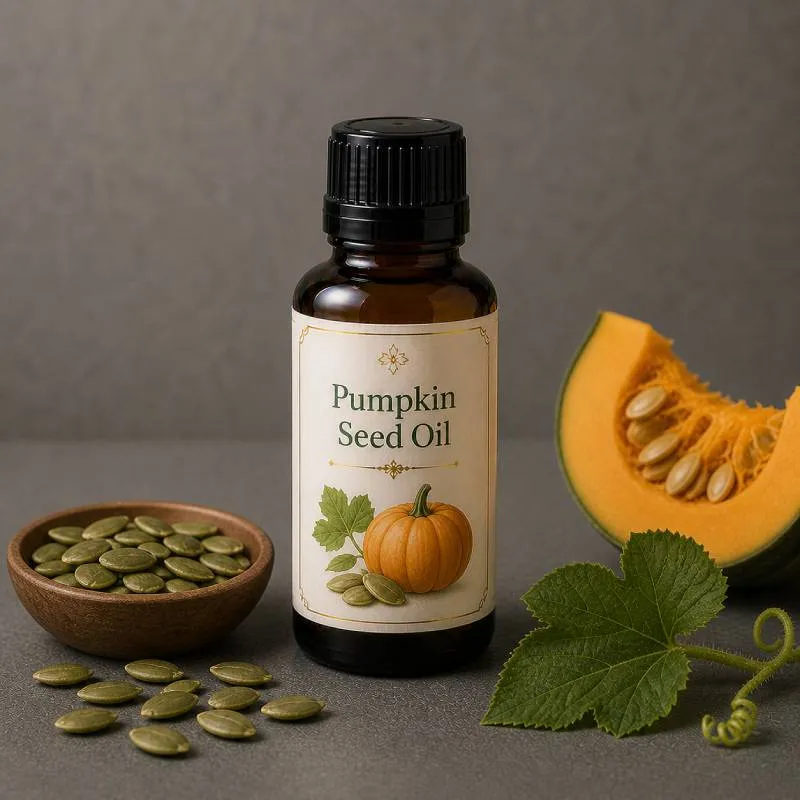
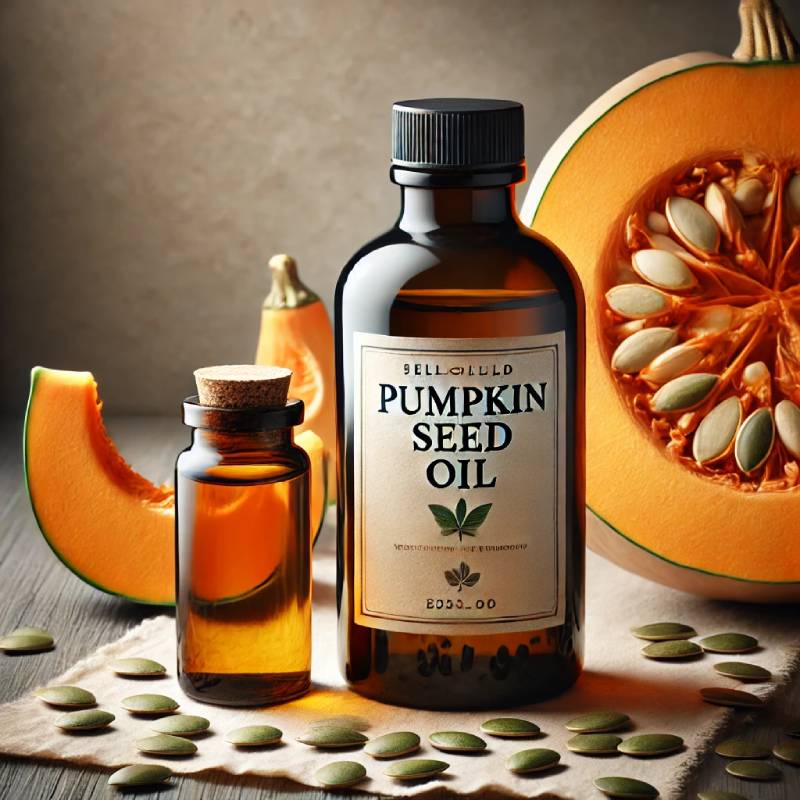
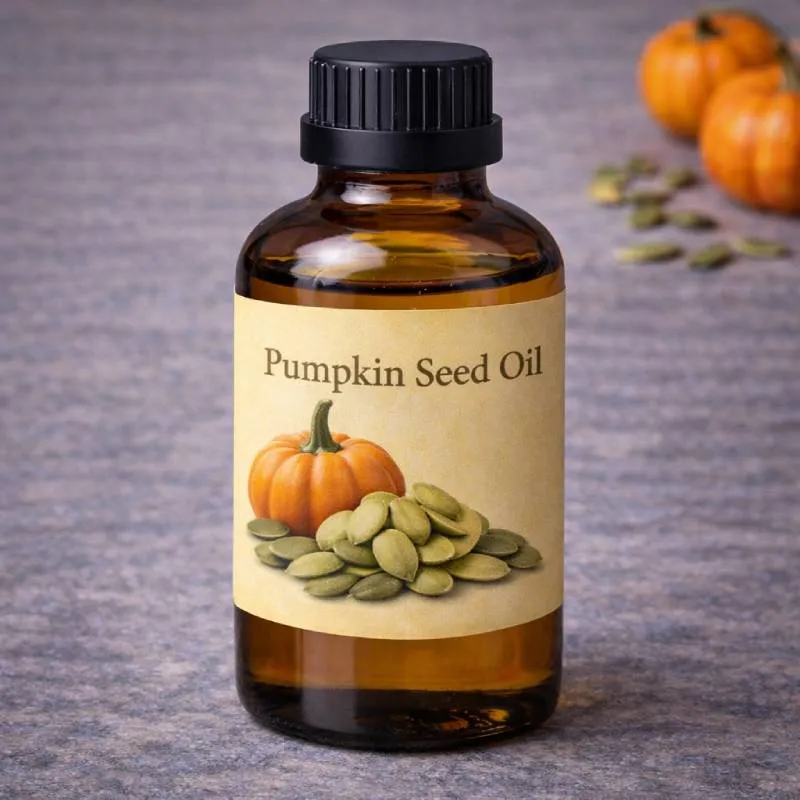
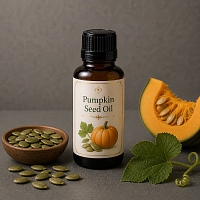
Pumpkin seed oil is produced by cold pressing cleaned seeds, which preserves a rich natural complex of polyunsaturated fatty acids, carotenoids, vitamin E and zinc compounds. This product belongs to the Liquid Basic Oils category, which brings together base plant oils used across cosmetic, food and pharmaceutical processing. The 50 ml packaging is well suited for home-based cosmetic making, trial batches of creams and serums, and for formulators who want to test the oil's behavior before ordering a larger volume.
Across global markets, pumpkin seed oil is mainly used in three areas: skin and hair care, food production, and nutritional supplements. In cosmetic formulas it is typically added to creams, lip balms, hair masks and facial serums at a concentration of 5 to 20 percent of the total oil phase, introduced during the oil-blending stage at a temperature not exceeding 40-45 degrees Celsius to protect heat-sensitive compounds. The oil absorbs well, supports skin elasticity and helps soften dry areas, which is why it frequently appears in formulas for mature or dehydrated skin as well as in products aimed at strengthening hair and eyelashes. In the food industry, unrefined pumpkin seed oil is traditionally used as a salad dressing and finishing oil for cold dishes, since heating reduces the benefits of its unsaturated fatty acids.
Within a formula, pumpkin seed oil blends smoothly with other lightweight base oils. It pairs well with Papaya Seed Oil, which adds a light texture and improves spreadability on skin, and with Lemon Seed Oil for refreshing formulas designed for oily or combination skin. For eye-area and nourishing skincare products, pumpkin seed oil is often combined with Carrot Seed Oil Extra Virgin, known for its high carotenoid content.
Dosage depends on the product type: creams and emulsions usually require 5-10 percent, while balms and oil-based serums can go up to 15-20 percent, and the pure oil can also be applied directly to cuticles, hair tips and dry skin patches. Pumpkin seed oil is added in a small proportion during the oil phase, since it is not a lathering ingredient but rather a nourishing addition to the product. The oil should be stored in a tightly closed container, in a cool dark place away from direct sunlight, which slows oxidation and extends its usability for further formulation work.
Restorative Hair Tip Serum
Pumpkin seed oil 20 ml
Argan oil 20 ml
Vitamin E 3 ml
Ylang-ylang essential oil 6 drops
Combine
the pumpkin seed oil and argan oil in a clean glass bottle at room temperature,
mix gently, then add the vitamin E and essential oil, shaking well before each
use. Apply a few drops to damp hair ends after washing, then store the finished
serum in a cool place away from direct light.
INCI name for label declarations: Pumpkin oil.
FAQ
Minimum wholesale batch and pack options for Pumpkin Seed Oil
The 50 ml pack is available; contact the supplier for wholesale batch sizes and other pack options.
Extraction method and how it affects quality of Pumpkin Seed Oil
Pumpkin Seed Oil is produced by cold pressing cleaned seeds, which preserves the natural complex of polyunsaturated fatty acids, carotenoids, vitamin E and zinc compounds.
Refined vs unrefined grade and what changes in Pumpkin Seed Oil
This product is 100 percent natural and unrefined; differences between grades can be checked in the specification on request.
Shelf life, signs of rancidity and how to slow it for Pumpkin Seed Oil
The product remains usable until 10.2028; store in a cool dark place in a tightly closed container to maintain quality. Check the label for any batch-specific details.