Why Carmoisine Remains a Top Choice for High-Volume Food Manufacturing
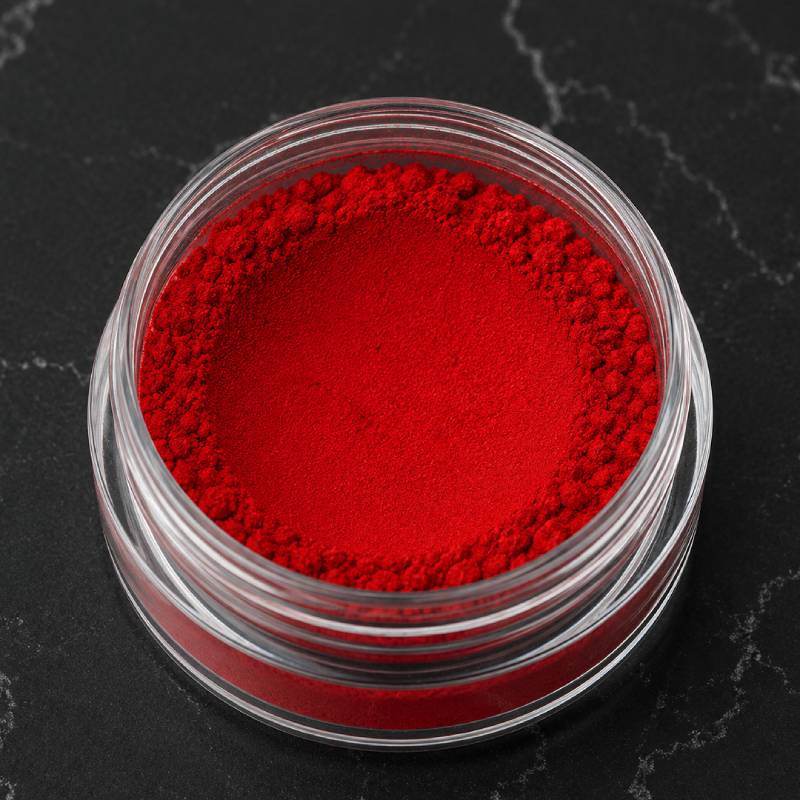
Carmoisine is a red-crimson synthetic colorant that ranks among the most widely used food colorants in confectionery, beverage, dairy and sauce production worldwide. Manufacturers rely on it for a deep, saturated hue that stays stable through heat processing and long shelf storage without fading or shifting tone. The 1 kg pack size is built for industrial and conveyor-line production, giving factories enough volume for continuous supply runs without frequent reordering while keeping color consistency identical batch after batch, which matters greatly for brands that depend on visual product recognition. This colorant belongs to the dry food colorants category, which brings together powder-based coloring materials suited to a wide range of food systems. See additional powder options in the Food Coloring Powders Wholesale category for matching applications.
Beyond confectionery and beverages, carmoisine is also used in pharmaceutical manufacturing for coating tablets and coloring syrups and capsules, as well as in cosmetic production such as lipsticks, gels and decorative makeup formulas that require a vivid, stable red shade. The colorant dissolves readily in water, so it is usually introduced as a pre-made aqueous solution, which helps distribute it evenly through the entire batch and prevents streaking or uneven spots on the finished product surface. A typical recommended dosage ranges from 0.01 to 0.3 grams per kilogram of finished product depending on the desired shade intensity and the base material, though exact figures should always follow the production formulation of the specific facility.
The best stage to add the colorant is after the main heating or during the cooling phase, avoiding prolonged exposure above 100 degrees Celsius, though brief pasteurization is generally well tolerated. Carmoisine blends smoothly with other water-soluble colorants to build custom shades: combining it with a small amount of Ponceau color powder deepens the tone toward a rich crimson-red, while pairing it with orange color powder produces warm coral and terracotta shades suited for creams, glazes and beverages. For burgundy and berry tones, technologists sometimes add a minimal amount of green color powder to mute the brightness and create a deeper, more natural hue.
The colorant should be kept in a dry, sealed container away from direct sunlight, since excess moisture can cause the powder to clump and lose coloring strength over prolonged exposure to air. Room temperature storage without sharp fluctuations or proximity to heating units is recommended. Under proper storage conditions, the colorant retains its declared properties for the full shelf life, making the 1 kg pack a practical solution for facilities running a steady, recurring production cycle.
Raspberry Glaze for Industrial Baking Lines
Water 300 ml
Sugar 700 g
Glucose syrup 150 g
Citric acid 4 g
Carmoisine food coloring 0.15 g
Combine
water, sugar and glucose syrup in a heated mixing vessel and bring to a gentle
boil, stirring until fully dissolved. Dissolve the colorant separately in 20 ml
of warm water and add it to the syrup once the mixture has cooled to around 60
degrees Celsius, then stir in the citric acid. Mix until the color is fully
uniform, then apply the glaze warm over baked goods on the production line,
allowing it to set at room temperature before packaging.
Frequently asked questions
How to dissolve carmoisine powder in water for beverage production?
Gradually stir the carmoisine powder into warm water or glycerin until fully dissolved, achieving shades from red to dark burgundy. Add the solution to drinks or confectionery in small amounts and test the color on a trial batch.
What bases are compatible with this 1 kg carmoisine powder?
The powder works in water, aqueous phases and glycerin for sauces, dairy and meat products. Start with low amounts in a test batch to reach the desired stable shade.
Does the 1 kg pack suit regular industrial lines?
The 1 kg pack supports consistent supply for confectionery and beverage lines, keeping the same color batch over time without frequent reordering.
How to request quality documents for the food dye batch?
A COA for the carmoisine powder is available on request to verify the food-grade quality of the supplied lot.