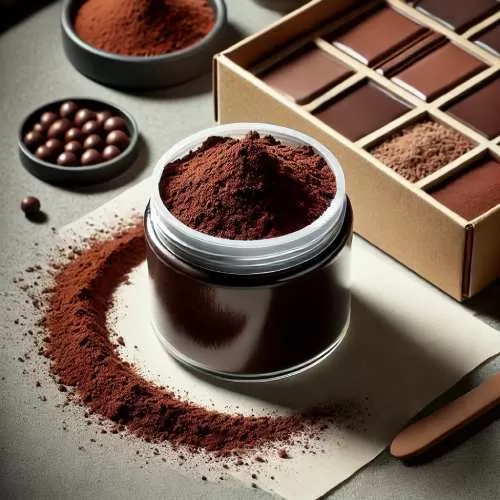
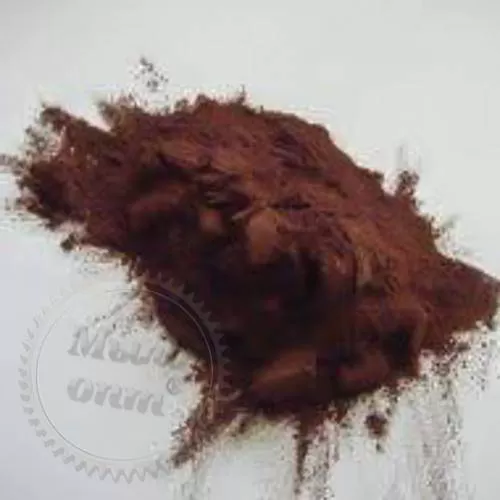
A Cocoa-Toned Powder Pigment Built for Confectionery Batches
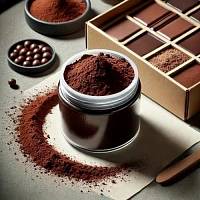
Colorants formulated for food production hold a distinct place among the raw materials used by chocolatiers, confectioners, and dessert manufacturers, and this item belongs to the chocolate colorants wholesale category, gathering concentrated pigments meant for tinting chocolate masses with a stable, rich tone. The 1 kg pack size targets confectionery workshops, chocolate studios, and small production lines that need a dependable stock of raw material rather than a one-off sample for occasional testing. See further shades and formats in the Food Coloring Powders Wholesale section.
The primary field of use for this kind of pigment is food and confectionery manufacturing. It is applied to tint white chocolate so it resembles milk or dark varieties, to color decorative elements, glazes, fondant, icing, creams, and to work with sugar paste and marzipan. The powder disperses well in fatty bases, so it is usually blended directly into melted chocolate mass or cocoa butter during tempering, at roughly 30-35 degrees, keeping the mixture from overheating so it stays fluid enough for pouring into molds.
Dosage is adjusted according to the desired depth of shade, typically starting with a minimal amount and adding the pigment gradually while mixing thoroughly to avoid clumping or uneven specks. This approach keeps consumption efficient and allows precise, repeatable color control from batch to batch, which matters greatly once a recipe moves toward larger-scale production runs.
The pigment blends well with cocoa butter, vegetable fats, confectionery glaze, and other fat-soluble ingredients, making it easy to combine with other technological additives already in a formulation. For a wider color range in cake decoration, candies, and desserts, manufacturers often pair chocolate shades with water-based liquid colorants, such as Cranberry liquid dye for berry accents, Mahogany liquid dye for deeper brown and burgundy nuances, and Blackcurrant liquid dye for dark saturated tones in creams and mousses.
Store the powder in a tightly sealed container, in a dry space away from direct sunlight and at room temperature, keeping it away from moisture, which can cause the particles to clump and lead to uneven coloring. Under these conditions the pigment retains its working properties for a long time and remains suitable for use throughout its stated shelf life.
Beyond confectionery, similar pigments are occasionally used in decorative candle making and household chemical goods where a chocolate or caramel-like tone is desired, though food production remains the main and most in-demand application.
Hazelnut-filled chocolate bonbons
Dark chocolate 500 g
Chocolate color powder 3 g
Cocoa butter 40 g
Roasted hazelnuts chopped 150 g
Heavy cream 33% 80 ml
Melt
the chocolate together with cocoa butter over a water bath at around 32
degrees, add the color powder and mix thoroughly until the shade is even.
Separately warm the cream, combine it with the roasted hazelnuts, let the
mixture cool slightly, and shape it into a filling. Pour the colored chocolate
into molds, place the filling inside, seal with a second layer of chocolate,
and leave to set in a cool place until fully firm.
Frequently asked questions
How to disperse the chocolate shade powder in glycerin evenly?
Add the chocolate shade powder gradually to glycerin or the aqueous phase while stirring until uniform. Begin with a small amount and adjust on a test batch. The 1 kg pack suits ongoing production runs in confectionery workshops.
What is the shelf life of this 1 kg chocolate food color powder?
Keep the closed pack in a dry cool place until 10.2028. Minor caking does not affect performance, allowing reliable use across multiple production cycles.
Is a quality document available for the chocolate colorant?
A certificate of analysis is supplied on request to confirm food-grade quality. This supports compliance needs for regular manufacturing batches.
Which confectionery bases accept the chocolate shade powder form?
The powder blends into fat-based masses such as melted chocolate, icing and marzipan at 30-35 degrees. Adjust dosage to achieve the desired tone during testing.