What keeps an oil-in-water cream from separating on the shelf
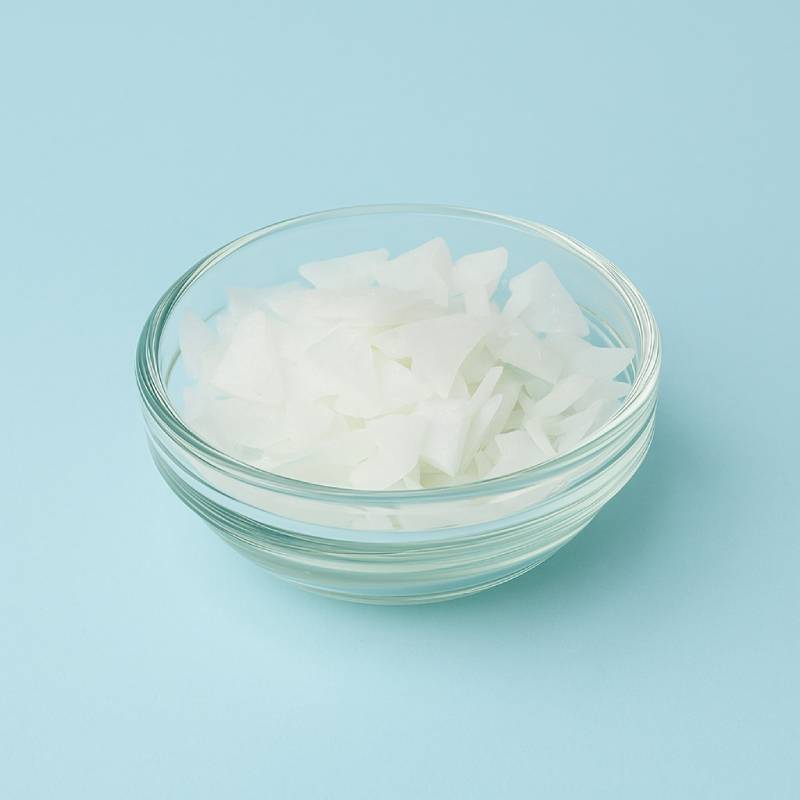
A smooth, stable cream that stays uniform for months does not happen by accident. The binding agent between the oil and water phases decides whether an emulsion holds together or splits after a few weeks in storage. This self-emulsifying wax-like complex is built specifically for that job and belongs to the category of Emulsifiers, with the 1 kg pack aimed at small-batch studios and low-volume manufacturers who need consistent results from batch to batch rather than a single test run.
Its main function is forming stable oil-in-water emulsions for face and body creams, lotions, balms, hair conditioners and other fluid cosmetic bases. It works simultaneously as an emulsifier, stabilizer and thickener, which simplifies formulation and reduces the number of separate ingredients needed. The material is melted into the oil phase at roughly 70-75 degrees Celsius, then combined with a water phase of matching temperature under continuous mixing. This gives a dense yet light-feeling emulsion without requiring an expensive homogenizer, since a standard paddle mixer or hand whisk is usually enough for smaller volumes.
Typical usage rates run between 3 and 6 percent of total formula weight, depending on the desired thickness and the oil load in the recipe. When more oils are added, the emulsifier dose should increase proportionally to prevent separation during storage or temperature swings. It blends well with plant and synthetic oils, silicones, extracts and active ingredients, and pairs comfortably with other stabilizing systems. For lighter textures, many formulators combine it with a softer emulsifier such as the Cellike emulsifier, which allows fine-tuning of skin feel, from a rich night cream to a light daily fluid.
This raw material is used mainly in skin and hair care manufacturing: nourishing and hydrating creams, body lotions, conditioners, masks, sun care products, and also in color cosmetics for foundations and BB creams. In food and household chemistry, different emulsifying agents are typically chosen for such tasks, for example the SSL Emulsifier E481 used in bakery products. For cosmetic emulsions that need stronger performance at lower pH, some formulators turn to the Hostaphat KL 340 D emulsifier, which follows a different incorporation method and addresses slightly different stabilization needs.
Store the product in a dry place at room temperature, in a tightly closed container away from direct sunlight and moisture, since excess humidity can cause the granules to clump and make accurate dosing more difficult. Under proper storage conditions the shelf life usually runs several years. The 1 kg pack suits small cosmetic workshops and studio manufacturers who produce in recurring batches and prefer keeping a working stock of emulsifier on hand rather than reordering small amounts frequently.
Lightweight daily face lotion
Distilled water 350 ml
Emulsifier Prolipid 141, 22 g
Sweet almond oil 30 g
Jojoba oil 20 g
Glycerin 15 g
Preservative 5 g
Geranium essential oil 2 ml
Heat
the water and oil phases separately to 75 degrees Celsius, melting the oils together
with the emulsifier until fully uniform. Pour the water phase gradually into
the oil phase while mixing continuously for 5-7 minutes until a smooth, dense
emulsion forms. Once the mixture cools to around 40 degrees, stir in the
glycerin, preservative and essential oil for a couple more minutes, then
transfer the finished lotion into clean containers.