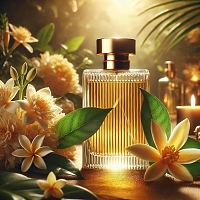
Why this tropical floral oil remains a global fragrance staple
Ylang ylang essential oil is obtained through steam distillation of freshly harvested flowers from the Cananga odorata tree, grown primarily in Madagascar, the Comoros Islands and Indonesia, which together supply the bulk of the world's raw material. For decades this aroma has remained a cornerstone ingredient in both niche and mass-market perfumery, appearing in countless floral and chypre compositions worldwide. Beyond fragrance houses, the oil is widely used in skincare and body care formulations, hair care products, home fragrance lines and aromatherapy blends. This 5 ml bottle is well suited for home cosmetic making, formula testing and small trial batches, allowing formulators to evaluate the ingredient's behavior before committing to larger volumes.
In finished formulations the oil is typically dosed between 0.3 and 2 percent, since its aroma is highly concentrated and long-lasting. It should be added at the final cooling stage, at temperatures not exceeding 40 degrees Celsius, to preserve the volatile aromatic compounds responsible for its character. This oil pairs naturally with other items in the essential oils category, which offers a broad range for building layered, complex scent profiles.
In skincare, ylang ylang is frequently blended into creams, lotions, balms and body oils to lend a rich tropical trail with a light uplifting facet. In hair care formulas it is often paired with warmer woody notes such as patchouli essential oil, which anchors the fragrance and extends its longevity on skin and hair. For energizing blends focused on skin tone, ylang ylang is commonly combined with ginger essential oil, while formulas targeting problem body zones often include it alongside the anti-cellulite essential oil blend, complementing massage oils and body wrap compositions.
Store the oil in a tightly sealed dark glass bottle, in a cool location away from direct sunlight and heat sources. Under proper storage conditions the aroma retains its intensity for an extended period. Before incorporating it into a new recipe, it is advisable to test compatibility with the base oils and emulsifiers used in that specific formula and to monitor the final concentration carefully, since overdosing can produce a heavy, overpowering trail instead of a soft floral accord.
Tropical floral body oil blend
Sweet almond oil 40 ml
Fractionated coconut oil 20 ml
Jojoba oil 15 ml
Ylang ylang essential oil 10 drops
Vitamin E 2 ml
Combine the sweet almond, coconut and jojoba oils in a clean glass bottle and mix gently until fully blended. Add the vitamin E as a natural preservative booster, then add the ylang ylang essential oil and swirl the bottle slowly to distribute the aroma evenly throughout the base. Let the blend rest for 24 hours before use to allow the scent to settle, then apply a small amount to skin after bathing and store the finished oil away from direct light and heat.