What Makes Octocrylene a Workhorse Filter in Sun Care Formulas
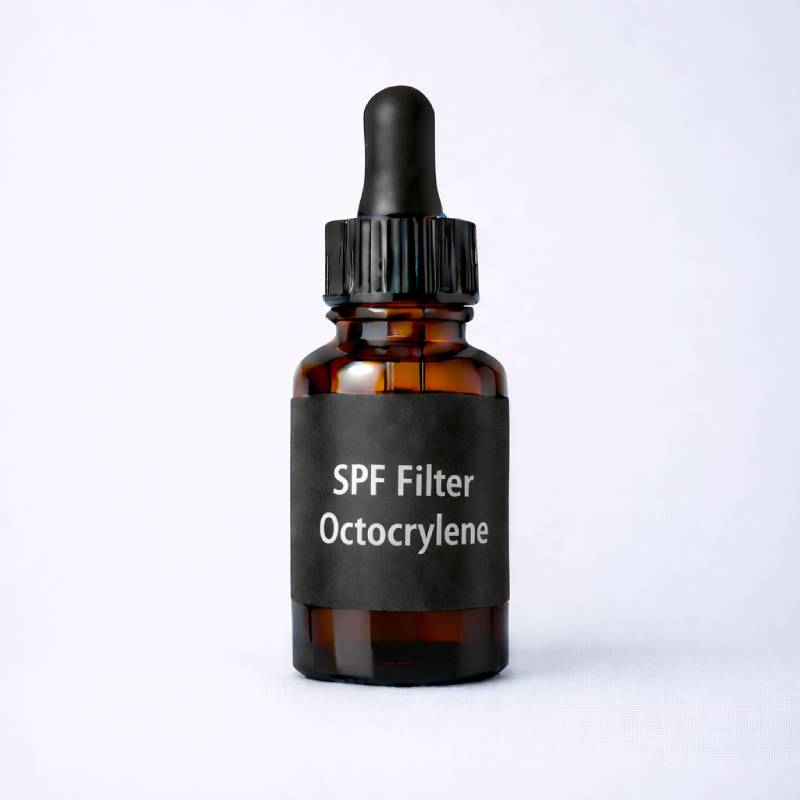
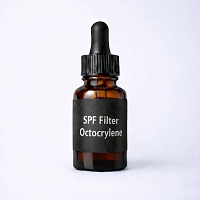
Octocrylene is an oil-soluble UV filter used extensively across the global sun care industry in the production of sunscreens, daily lotions, sprays, SPF lip products, and photoprotective color cosmetics. It belongs to the group of UV and SPF Filters for Cosmetics, materials that absorb ultraviolet radiation and reduce the amount of UV energy reaching the skin. Its primary activity covers the UVB range with partial UVA2 coverage, which is why formulators rarely rely on it alone and typically pair it with complementary filters to achieve broad spectrum protection.
One of the main reasons octocrylene appears in so many industrial formulas is its role as a photostabilizer for avobenzone, a UVA filter that degrades relatively quickly under light exposure without a stabilizing partner. Because of this, octocrylene is often included not just for its own SPF contribution but as a technical stabilizer for the entire filter system. In many finished products it is combined with Homosalate, which improves sensory feel and adds further protection, as well as with Ethylhexyl Salicylate, a filter that provides baseline photoprotection and blends readily into the oil phase.
Octocrylene should be incorporated exclusively into the oil phase during the emollient preparation step, typically at a temperature around 70-75 degrees Celsius alongside emulsifiers and lipids, before combining with the water phase. It dissolves well in oils and silicones, making it suitable for both rich creams and lightweight fluids or sprays. Typical usage levels range from 2 to 10 percent depending on the target SPF and the overall filter combination, though the final protection factor is always confirmed through laboratory testing of the finished formula rather than calculated from individual ingredients alone.
To extend the shelf stability of a finished product and protect the formula from oxidative degradation, many developers add antioxidant support such as FeruliShield Coconut, which works synergistically with UV filters and helps maintain efficacy throughout the product's shelf life. This pairing is particularly valuable in light serums and fluid sunscreens where texture stability is closely tied to filter performance over time.
The 10 ml size is well suited for home-scale experimentation, small trial batches, and independent formulators testing filter combinations before scaling up a sun care line. Octocrylene should be stored in a tightly sealed container, in a cool, dry place away from direct sunlight, since UV filters remain sensitive to prolonged heat and light exposure even before being incorporated into a finished product.
Lightweight Facial Sun Fluid Trial Batch
Water — 55 g
Glycerin — 4 g
Emulsifying wax — 5 g
Caprylic capric triglyceride — 9 g
Octocrylene — 5 g
Homosalate — 5 g
Ethylhexyl Salicylate — 4 g
FeruliShield Coconut — 0.5 g
Preservative — 1 g
Combine
the emulsifying wax and triglyceride oil with octocrylene, Homosalate and
Ethylhexyl Salicylate, then heat to 70-75 degrees until fully melted.
Separately heat the water and glycerin to the same temperature, then slowly
pour the water phase into the oil phase while blending continuously until a
smooth emulsion forms. Once the mixture cools to around 40 degrees, add
FeruliShield Coconut and the preservative, mix thoroughly, and transfer to a
clean container for further SPF evaluation.