Worldwide delivery  |  Free delivery in all Ukraine from 1899 UAH
Product catalog
Master classes, recipes, tips
AMIGEL rheology guide: Sclerotium Gum in gels emulsions and suspensions
A comprehensive technical formulation guide dedicated to managing rheology in cosmetics using the natural polysaccharide AMIGEL (Sclerotium Gum). This article explores the physical mechanisms of polymer hydration and network formation for structuring clear gels, light emulsions, and particle-suspending fluids. It covers pre-dispersion in polyols, electrolyte stability, shear rate handling, incompatibility limits, thermal limits, and precise pH controls. Features three complete DIY recipes with step-by-step compounding instructions and cold storage standards.
Natpure Film AP: natural film-forming technology for skin color cosmetics and hair
A comprehensive technical formulation guide dedicated to utilizing the bio-based film former Natpure Film AP (derived from sugar cane) in color cosmetics and hair care. This article breaks down the physical mechanics of flexible film creation, moisture resistance, and pigment adhesion enhancement. It covers aqueous dissolution protocols, compatibility with natural polymers and gums, thermal boundaries, and precise pH controls. Features three complete DIY recipes with step-by-step compounding instructions and storage standards.
ViableCare LipoCare 8: integrating a liposomal ceramide complex into barrier-care formulas
A comprehensive technical formulation guide to designing skin barrier restoration creams and liposomal fluids using ViableCare LipoCare 8. This article breaks down the physiological mechanism of ceramide integration into stratum corneum lipids to stop transepidermal water loss. It details exact processing protocols to protect liposomal structures, low-shear cooling phase entry below thirty degrees Celsius, emulsifier compatibility, and pH boundaries. Features three complete DIY recipes with step-by-step compounding instructions and cold storage standards.
Product Description

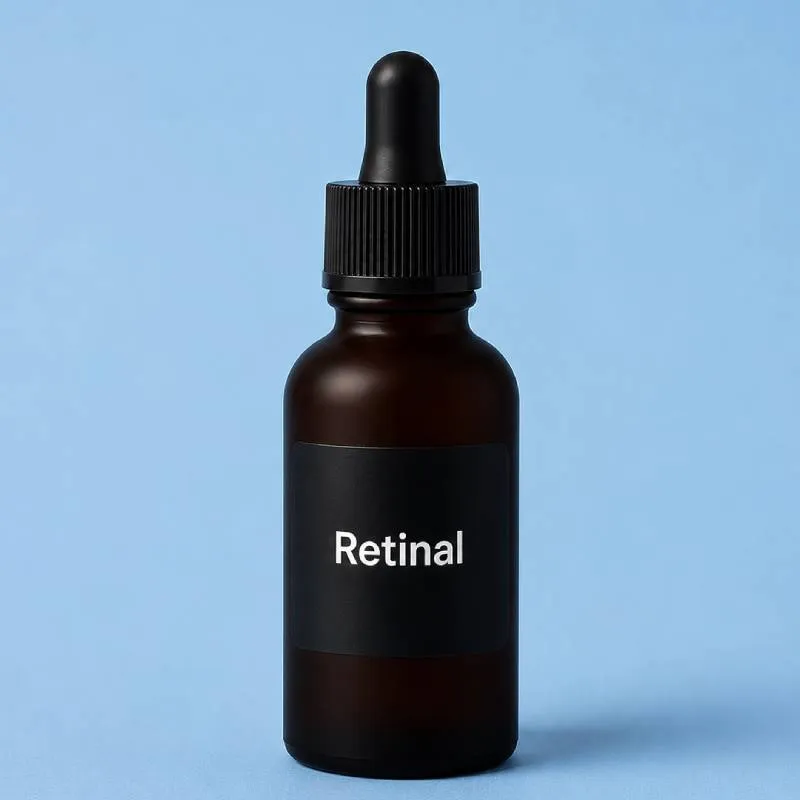
Retinal as a High Performance Bioactive for Advanced Cosmetic Formulation

Retinal, also known as retinaldehyde, stands as one of the most potent and transformative derivatives of Vitamin A currently available in the modern professional cosmetic industry. As a direct precursor to retinoic acid, it occupies a unique position in the skincare hierarchy, offering the high level of biological efficacy typically associated with prescription retinoids while maintaining a superior profile of skin tolerance. This bioactive acts by signaling the skin cells to increase their rate of turnover and collagen synthesis, effectively functioning as a comprehensive restorative agent. Professional formulators and contract manufacturing labs favor this ingredient for its ability to address multiple skin concerns simultaneously, from the softening of fine expression lines to the refinement of texture and the brightening of uneven pigmentation. Its role in cosmetic chemistry is defined by its ability to convert efficiently into its active acidic form directly within the skin cells, making it an indispensable tool for developing premium anti-aging and corrective treatment systems.

Biological Mechanism and Functional Profile

The primary functionality of retinal in a cosmetic matrix is rooted in its unique metabolic pathway. Upon topical application, the molecule undergoes a rapid enzymatic conversion process, transforming into retinoic acid precisely where the skin requires structural support. This targeted action makes it highly effective for boosting the production of structural proteins, including collagen and elastin, which are essential for maintaining the firmness and overall architecture of the skin. Furthermore, this ingredient works to accelerate the natural desquamation process, clearing away dull surface cells and promoting a fresher, more luminous appearance. Unlike other Vitamin A variants that may require multiple conversion steps, retinal delivers a rapid response, making it highly requested in sophisticated formulations intended for professional-grade results.

Industrial Applications and Formulation Versatility

In the international skincare sector, retinal is frequently integrated into night-time serums, concentrated treatment creams, and specialized ampoules designed to combat the visible signs of photo-aging and environmental stress. Beyond its core anti-aging capabilities, it is also a staple in formulations targeting blemish-prone skin, where its ability to normalize oil production and prevent follicular blockage provides a significant therapeutic benefit. Manufacturers of clean beauty and clinical skincare lines choose this ingredient for its potency, allowing for efficacious products at lower inclusion levels compared to retinol.

For developers, the ingredient is highly versatile, fitting seamlessly into serum-based systems, light emulsions, and protective night treatments. It is often combined with soothing botanicals, ceramides, and peptides to support the skin barrier while the active ingredient works to refine texture. The requirement for careful handling and protective packaging is a hallmark of this bioactive, which underscores its status as a high-value, professional-tier ingredient. It is widely used in both small-batch artisanal laboratories and large-scale contract facilities that specialize in high-efficacy cosmetic delivery systems.

Recipe for a Concentrated Night Restoration Serum

This formula is designed to stabilize the active ingredient within a peptide-rich base, ensuring deep delivery and minimal irritation while supporting the skin's structural integrity overnight.

Purified demineralized water 80 ml Vegetable glycerin 5 ml Sodium hyaluronate low molecular weight 1 gram Retinal concentrate 0.5 gram Palmitoyl tripeptide 5 solution 5 ml Bisabolol natural 1 ml Broad-spectrum mild preservative system 1.5 ml Tocopherol Vitamin E 1 ml

To prepare this serum, first disperse the sodium hyaluronate into the purified water and glycerin until a smooth, clear base is achieved. In a separate vessel, blend the retinal concentrate with the bisabolol and Vitamin E to ensure total dispersion of the oil-soluble components. Gradually introduce this mixture into the aqueous gel phase under constant, high-shear mixing to create a stable, homogeneous fluid. Finally, incorporate the peptide solution and the preservative system, stirring slowly until the mixture is uniform. The resulting serum should be a light, fluid gel that absorbs quickly without a greasy residue. When applied, it leaves the skin feeling supple and deeply hydrated, with a noticeable improvement in overall smoothness and tone after regular, consistent use over several weeks.

Professional Guidance for Storage and Usage

Retinal is a sensitive bioactive molecule that requires meticulous handling to maintain its potency. It is light-sensitive and prone to oxidation if exposed to environmental stressors. For optimal storage, all finished products containing this ingredient should be housed in opaque, airtight containers, preferably airless pump bottles, which prevent light and air from degrading the formula. The bulk raw material must be kept in a cold, dark environment, ideally under nitrogen blanketing, to ensure it remains stable until the moment of incorporation into a formula. By adhering to these professional storage standards, manufacturers can guarantee the reliability and efficacy of their finished cosmetic products, ensuring that the consumer receives the full benefit of this powerful restorative agent.

Characteristics:
INCI Retinal
pH 4,5-7,0
Other
Application Facial serums, facial creams, night creams, emulsions, facial masks, cosmetics for mature skin, cosmetics for dull skin, evening care products, premium cosmetics, professional cosmetics Skin concentrates, cosmetic boosters, multi-component anti-aging formulations, peptide-based products, ceramide-based products, squalane-based products, modern cosmetic care systems Premium cosmetic formulations, professional care products, active cosmetic concentrates, next-generation cosmetics
Att brand Spain
Color product From light yellow to orange-yellow
Dosage 0.01-0.1% pure Retinal, 0.05-0.2% in serums, 0.05-0.1% in creams, 0.05-0.1% in emulsions, 1-3% encapsulated concentrates containing 6% Retinal, 0.07-0.7% stabilized dispersions depending on the content of the active substance
Features All information presented on the site is for reference only
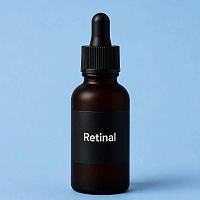
Name Retinal 100 ml
Other names Retinal Retinaldehyde Vitamin A Aldehyde Vitamin A Retinal Encapsulated Retinal Liquid Retinal Retinal Active / Retinal Retinaldehyde Vitamin A Aldehyde All-trans-Retinal Retinal Active Retinal Solution Retinal Concentrate
Packaging container for transportation
Properties Vitamin A derivative Lipophilic cosmetic active Anti-aging cosmetic ingredient Skin texture-evening ingredient Skin smoothing ingredient Skin appearance-improving ingredient Skin care ingredient for skin with signs of photoaging Suitable for evening care Compatible with ceramides Compatible with squalane Compatible with peptides Compatible with niacinamide Suitable for modern cosmetic formulations Encapsulated forms offer increased stability
Purpose Lipophilic cosmetic active ingredient, vitamin A derivative, anti-aging care component, skin smoothing component, skin appearance improving component, skin texture smoothing component, cosmetic serum component, cream and emulsion component, night care component, complex cosmetic system component, modern cosmetic formulation active ingredient, premium cosmetic active ingredient
Solubility oil
View Transparent oily liquid
Valid until 10.2027
Add a review
Your score:
Send feedback
Error

Close window
Product added to cart
Total:
Request the price of the product
Fill in the details for the price request
Request a price Request a price