-
 Absolutes
-
 Active Complexes
-
 Actives & Peptides
-
 Amino Acids & Proteins
-
 Food Flavors
-
 Ayurvedic Ingredients & Herbs
-
 Vitamins & Coenzymes
-
 Chocolate Making Supplies
-
 Thickeners & Gelling Agents
-
 Hydrosols & Floral Waters
-
 Hydrolyzed Proteins
-
 Fragrance Ingredients
-
 Nutraceutical Ingredients
-
 Acids, Salts, Alcohols & Alkalis
-
 Preservatives & Antioxidants
-
 Cosmetic Ingredients
-
 Colorants, Micas & Glitters
-
 Masks, Scrubs & Botanicals
-
 Oils & Butters
-
 Candle Making Supplies
-
 Melt and Pour Soap Bases
-
 Cream, Lotion & Hair Care Bases
-
 Fragrance Oils & Industrial Aromatics
-
 Cleansing Agents & Surfactants
-
 Peeling Actives & Acids
-
 Cosmetic Powders
-
 Solvents & Humectants
-
 Silicones & Conditioning Agents
-
 Bottles, Jars & Vials
-
 Silicone & Plastic Molds, Tools
-
 Botanical Extracts
-
 Cosmetic Emollients
-
 Emulsifiers
-
 Essential Oils


Oil Based Food Coloring Powder
 Add to cart

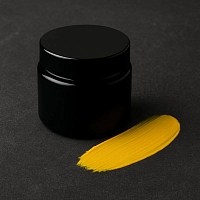
Fat soluble pigment powders for tinting formulations
Oil based food coloring powder is a finely milled pigment designed to disperse evenly in fats, oils, and waxes rather than in water. It gives formulators a concentrated way to build custom color intensity without altering the texture or stability of a fat based blend. This section covers dry pigment powders sold for coloring a wide range of oil phase products.
These powders are used wherever a formula relies on an oil, butter, or wax carrier that needs consistent, controllable color. Common applications include tinted balms, colored lip and body butters, decorative layered bases, and any emulsion where the pigment is first bloomed into the oil phase before blending. Because the powder is oil dispersible rather than water soluble, it resists streaking in fat rich mixtures and holds its shade through gentle heating.
For projects that instead call for a liquid format, formulators often pair these powders with Oil soluble liquid dyes for faster incorporation, or switch to Liquid Water-Soluble Dyes when the base is water dominant instead of oil dominant.
Shade Range and How the Powders Differ
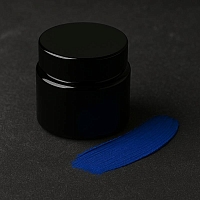
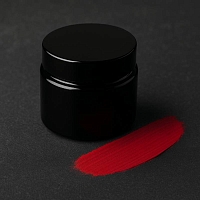
The core palette in this section covers the primary and secondary shades formulators reach for most, including Red Color Powder (fat-soluble) 10 g, Blue Color Powder (fat-soluble) 10 g, and Yellow Color Powder (fat-soluble) 10 g. From these three bases, formulators typically build custom tones rather than relying only on ready-made shades.
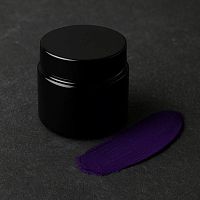
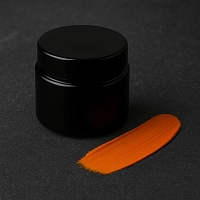
Beyond the primary set, the range extends into Green Color Powder (fat-soluble) 10 g, Violet Color Powder (fat-soluble) 10 g, and Orange Color Powder (fat-soluble) 10 g. Each shade differs mainly in pigment concentration and undertone, which affects how much powder is needed to reach a target depth of color and how the tone shifts once it is diluted into a lighter or darker base.
Choosing a Shade and Building a Formula
Selection usually starts with the carrier itself. A powder that disperses cleanly in a light oil may behave differently once blended into a dense butter or a wax heavy blend, so it helps to test a small batch before scaling up a full production run. Heat sensitivity is another factor, since some formulas call for gentle warming to bloom the pigment fully before it is folded into the rest of the oil phase.
These pigments work alongside a broad set of formulation tools rather than a single fixed recipe. Emulsifiers, oils, butters, and waxes all interact with pigment load differently, and many formulators keep both a fat soluble powder and a liquid option on hand for flexibility. When a project shifts toward a liquid oil base instead of dry powder, the Pigment Liquid ULTRA Dyes line offers a comparable color range in a ready to pour format. For water dominant systems where oil soluble pigment would not disperse at all, the Gel Food Coloring range covers that gap with a water compatible texture.
Origin, Storage, and Handling
The powders in this section are sourced from India. They ship as fine dry pigment, which keeps them stable for long term storage as long as they are kept sealed, dry, and away from direct heat or sunlight. Moisture exposure is the main risk, since it can cause clumping and uneven dispersion later on.
Because these are concentrated pigments, only a small amount is typically needed per batch, which makes a single package useful across many separate production runs. Keeping containers tightly closed between uses helps preserve both the color strength and the free flowing texture of the powder.
FAQ
What is the difference between oil soluble pigment powder and regular cosmetic pigment powder?
Oil soluble pigment powder is milled and treated to disperse evenly in fats, butters, and waxes without clumping or streaking. Regular pigment powder may work in both water and oil phases but often needs extra dispersing effort to blend smoothly into a fully oil based formulation.
How much pigment powder should be added to an oil based formulation?
Most formulators start with a small percentage, often under one percent, then build up gradually while checking the color against the finished texture. Adding pigment slowly avoids overshooting the shade and keeps the final blend smooth rather than gritty or uneven.
Can oil soluble pigment powders be mixed together to create custom shades?
Yes, these powders can be blended with each other before adding them to the oil phase, which allows formulators to build custom tones rather than relying only on single shade options. Testing small batches first helps confirm how the combined pigments behave once heated and cooled.
Do oil soluble pigment powders need to be stored differently than other cosmetic powders?
They should be kept in a cool, dry place away from direct light and moisture, since humidity can cause clumping and light exposure can gradually shift the shade. Sealed containers help maintain consistent color strength between uses.
Recommendations
When selecting a pigment powder for an oil based batch, match the shade strength to your carrier: heavier butters and waxes often need a slightly higher concentration to show true color once cooled. Always test a small sample batch first to confirm how the pigment disperses and holds up through your specific heating and cooling process. For guidance on choosing the right shade or particle grade for your formulation, reach out to our team by email and we will help you find the right fit for your production needs.



