Product Description
Sourcing and specification profile
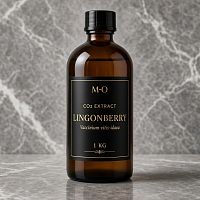
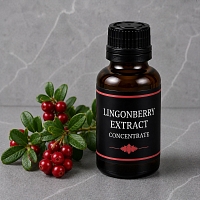
Lingonberry CO2 extract originates from Vaccinium Vitis Idaea L. leaves grown in Ukraine. Supercritical extraction yields an oily mass containing glycosides, lycopene, hyperoside, flavonoids and tannin. CO2 Extracts Wholesale supplies cosmetic labs and supplement manufacturers with consistent lots. The material meets requirements for both cosmetic and food-grade applications worldwide.
Composition and formulation value
The fat-soluble character allows direct addition to oil phases. INCI Vaccinium Vitis Idaea supports antioxidant capacity and mild astringent notes in finished goods. No residual solvents remain after processing. Buyers appreciate batch-to-batch stability for large-scale production runs.
Applications across cosmetics and nutrition
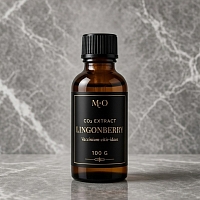
Manufacturers incorporate the extract into creams, serums and body balms. The same material serves as botanical raw material for dietary supplements and food industry products such as functional beverages and confectionery. Private formulators and factories purchase both retail and wholesale volumes. Lingonberry CO2 extract 100 g functions as a pilot size before bulk orders. Extracts Wholesale provides ongoing supply for industrial volumes.
Input guidelines
Recommended dosage ranges from 0.01 to 2 percent in the active phase. The extract dissolves completely in oils at temperatures below 40 degrees Celsius.
Example serum for cosmetic laboratories
Oil base 95 percent, CO2 extract 1.8 percent, tocopherol 0.2 percent, fragrance 3 percent. Blend at 35 degrees Celsius until uniform, then fill into airless pumps for daily facial application.
Storage and shelf life
Sealed containers kept cool and protected from light maintain quality for at least two years. Best before date is December 2028. Store in clean dry conditions away from direct light.
Frequently asked questions
Is the extract compatible with water-based systems?
Direct dispersion in water is not possible; pre-dissolution in the oil phase is required.
What temperature limit applies during processing?
Processing temperatures should not exceed 40 degrees Celsius to preserve volatile components.
Can it be used in dietary supplement blends?
Yes, the material is purchased as botanical raw material for dietary supplements and food formulations.