Why Manufacturers Order Titanium Dioxide by the Bulk Bag
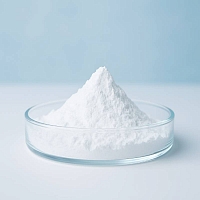
Among all inorganic pigments produced worldwide, this material holds the top position in terms of volume consumed, largely because it delivers unmatched whiteness, opacity and long-term stability under sunlight exposure. The Titanium Dioxide category on our site covers several pack sizes, and the 25 kg option is built specifically for facilities with steady, high-volume consumption — paint manufacturing plants, plastics extrusion lines, paper mills and construction material producers.
The largest share of global demand for this pigment comes from heavy industry rather than personal care. In coatings production it provides hiding power and UV resistance for facade paints, interior emulsions, enamels and primers. In plastics manufacturing, it is blended into polyethylene, polypropylene and PVC to whiten the polymer and slow down degradation caused by sunlight. Paper and cardboard producers use it to increase opacity and brightness of the sheet, while construction and ceramics industries rely on it in tile bodies, dry mixes and facade cladding. A separate but sizeable market is cosmetics — sunscreens, foundations, pressed powders and toothpaste formulations, where the pigment contributes opacity, matte finish and UV scattering.
Working with a large pack requires attention to dosing practices used on production lines. In paint formulations the pigment is typically introduced during the dispersion stage under gradual mixing to prevent lump formation, with typical loading ranging from 5 to 25 percent depending on the target opacity. In cosmetic emulsions it is usually incorporated into the oil phase or pre-dispersed with a suitable dispersant before phase combination, at temperatures generally not exceeding 70-80°C. A common technical pairing involves silicon-based matting agents — Silicon Dioxide is frequently used alongside this pigment to fine-tune texture and matte appearance in both paint and cosmetic formulas. Where surfaces require additional mechanical texturing or controlled abrasiveness, formulators combine the pigment with Universal Silica Abrasive AU, while oral care products and certain household formulations often call for White Carbon (Silicon Dioxide) as a thickening and mild abrasive component.
The 25 kg pack is suited for continuous manufacturing cycles, giving warehouses enough material to plan procurement over extended periods without risking line downtime. Store the material in its original sealed packaging, in a dry room away from direct sunlight and temperature fluctuations, keeping it away from moisture that could cause caking of the powder. During prolonged storage, periodically check the packaging integrity and bag closure to prevent contamination.
Due to its chemical inertness, the pigment is compatible with virtually all binder systems — acrylic, alkyd, silicone — as well as most emulsifiers and thickeners used in cosmetic systems, making it a versatile choice for formulators working across several industries at once.
White Base Coat for Industrial Wood Primer
Water 350 ml
Alkyd resin emulsion 300 g
Titanium dioxide 160 g
Talc powder 100 g
Cellulose thickener 7 g
Preservative 3 ml
Add
the cellulose thickener gradually into the water under slow mixing until fully
dissolved, then introduce the pigment in small portions while dispersing at
medium speed until no lumps remain. Blend in the talc and alkyd resin emulsion,
mixing until a smooth uniform paste forms, then add the preservative and let
the mixture rest for several hours at room temperature before transferring it
into storage containers.
Frequently asked questions
What dosage of the white powder works in lip balms and lipsticks?
Add 1-4 percent by weight of the mixture for lip products. Disperse the fine powder gradually into compatible oil or glycerin bases. The 25 kg pack fits ongoing production runs.
How to request documentation for titanium dioxide batches?
Ask for the COA when ordering the 25 kg quantity. The product meets cosmetic and food industry standards. Store in a dry cool place in closed packaging until 11.2028.
Can the white pigment be used to create oil-based colorants?
Yes, disperse 2-5 percent of the powder into oil bases with steady mixing. It works in triglycerides and glycerin too. This pack size suits production rather than small trials.
What storage conditions keep the 25 kg powder usable long term?
Keep it sealed in a dry cool location. Minor caking does not change performance. Shelf life extends to November 2028.