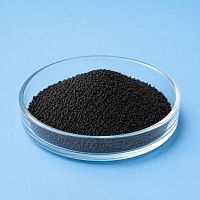
Why Ground Almond Shell Works as a Gentle Exfoliating Agent
Almond Scrub 50 g is made from crushed almond shells and kernels processed into particles of varying sizes for mechanical skin exfoliation. This raw material is primarily used in the production of facial and body care cosmetics, including scrubs, peelings, cleansing gels, and abrasive masks. Beyond cosmetics, ground almond is also applied in the manufacture of natural cleaning pastes for household chemistry, and as a filler in certain spa products used by beauty salons. This item belongs to the category of Scrubs for Cosmetic Production, which brings together various plant-based abrasives suitable for home crafting and small-batch cosmetic manufacturing.
The 50 gram size is intended for home-based cosmetic making and trial batches, giving formulators enough material to test a scrub recipe for face or body, adjust the abrasive concentration, and evaluate the sensation on skin. Almond particles are softer than stone-based abrasives, making them suitable for sensitive facial skin, unlike harsher options such as pine nut shell. The recommended dosage in a finished formula ranges from 5 to 15 grams per 100 grams of base, depending on the desired exfoliation intensity. The ingredient should be introduced at the final stage of preparation, once the main emulsion or gel base has cooled to no more than 40 degrees Celsius, to preserve the particle structure and avoid swelling or deformation.
Almond scrub blends well with vegetable oils, clays, extracts, and mild surfactants. For more complex textures, it can be combined with other abrasives, such as peeled pine nut scrub, creating a layered exfoliation effect through particles of different hardness. In body care formulas, pairing it with coarser fractions like pomegranate seed scrub allows manufacturers to design a product suited for rougher skin areas. Almond crumb is also frequently combined with nourishing pastes and oils such as tahini sesame paste, which softens the abrasive effect and enriches the formula with fatty acids.
Almond scrub should be stored in a dry place away from direct sunlight, in a tightly closed container, to prevent moisture absorption from the air and the development of unwanted odors. Under proper storage conditions, the material retains its physical properties for a long time and continues to disperse evenly throughout a formulation.
Creamy Almond Facial Polish
Almond Scrub 10 g
Cream base for scrubs 70 g
Sweet almond oil 10 g
Natural honey 8 g
Lavender essential oil 2 drops
Warm the cream base slightly on a water bath to about 35-40 degrees Celsius, then blend in the almond oil and honey until smooth. Remove from heat and let the mixture cool to room temperature before folding in the almond scrub with a spatula, distributing the particles evenly without breaking them apart. Finally add the lavender essential oil and transfer the finished polish into a jar with a tight lid.