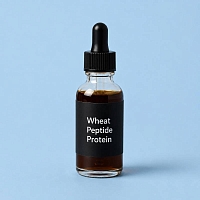
Industrial-scale wheat protein hydrolysate for hair care, skin formulas and food fortification
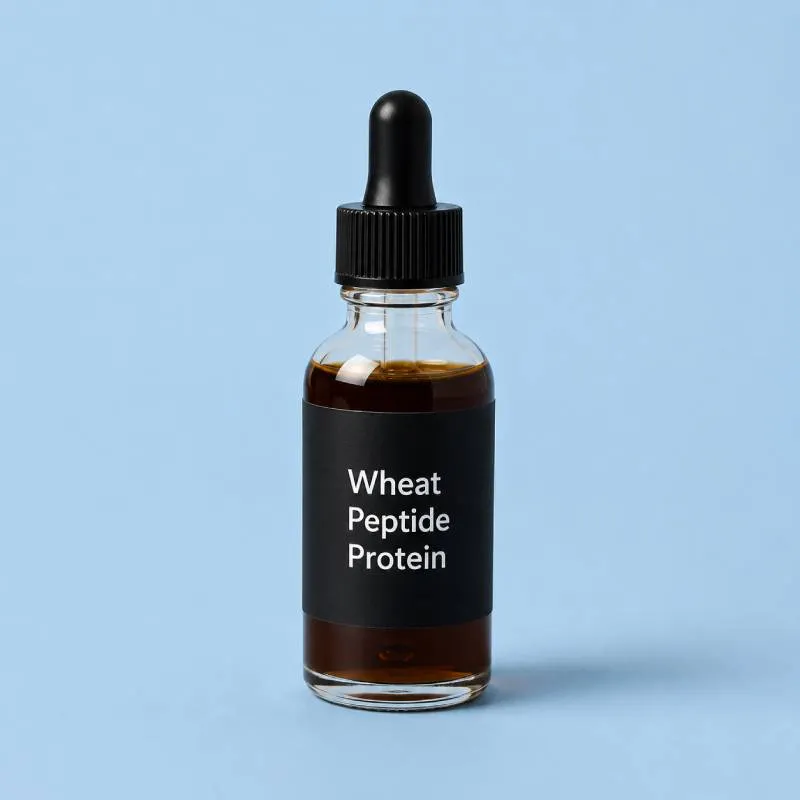
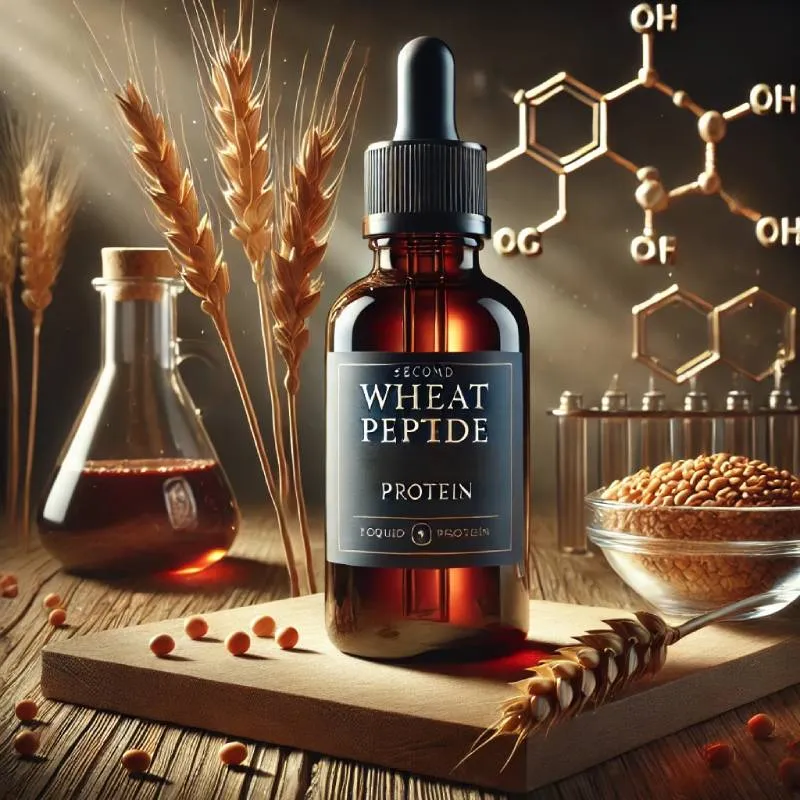
Hydrolyzed wheat protein is produced through enzymatic breakdown of grain proteins into short peptide chains and free amino acids. Because these fragments are much smaller than native proteins, they penetrate the upper layers of skin and bind more effectively along the hair shaft, delivering results that intact wheat protein cannot achieve. This raw material belongs to the Peptides for Cosmetics section, which brings together active ingredients aimed at strengthening, repairing and supporting the skin and hair barrier, and the 1 kg packaging is specifically suited to continuous manufacturing lines and reliable long-term supply.
The largest global demand for wheat peptide protein comes from hair care manufacturing. It fills gaps in the damaged cuticle layer, forms a thin protective film along the hair shaft, reduces static and improves manageability, which is why it is a standard ingredient in repair shampoos, conditioners, masks and heat-protection leave-in sprays. Skin care is the second major direction, with the peptide used in hydrating serums, creams for tired-looking skin and formulations for sensitive skin types, where it improves moisture retention and supports firmness.
This 1 kg pack suits continuous production lines and is listed among wholesale cosmetic peptides. It forms part of the wider selection of cosmetic actives and is also offered in the smaller Wheat Peptide Protein, 10 g size for testing. Similar bulk options include Lumiskin, 1 l.
Beyond cosmetics, wheat protein is widely used in the food industry as a plant-based protein source for enriching baked goods, sports nutrition products and processed meat items, functioning as a binding and texturizing agent. It is also applied in pharmaceutical capsule production and in the textile industry as a sizing agent for yarns. This versatility makes the bulk kilogram packaging practical for manufacturers running several product categories at once.
In complex industrial formulations, wheat peptide protein is frequently combined with other peptide actives to reinforce a targeted effect. For barrier-strengthening formulas it pairs well with Bodyfensine Peptide, while anti-aging lines with a lifting focus often add Syn-TC Peptide or Timecode Peptide, which supports slowing down visible signs of skin aging. Such combinations let manufacturers launch multifunctional products without expanding the ingredient list on the production floor.
The recommended dosage of wheat peptide protein in cosmetic formulas is between 1 and 5 percent of the finished product weight. It should be added to the water phase during the cooling stage, at a temperature not exceeding 40 degrees Celsius, to prevent denaturation of the protein chains and preserve their activity. In food applications, dosage is adjusted individually depending on the required protein content of the finished item. Store the raw material in a dry, cool place, in a tightly sealed container protected from moisture and direct sunlight, which is particularly important for large-volume industrial storage.
Strengthening leave-in spray for an industrial batch
Distilled water 800 g
Wheat peptide protein 25 g
Glycerin 30 g
Panthenol 15 g
Polysorbate 20 20 g
Broad-spectrum preservative 8 g
Fragrance oil 2 g
Combine
distilled water with glycerin and panthenol in a mixing tank and warm gently to
about 35 degrees Celsius while stirring. Once uniform, dissolve wheat peptide
protein into the mixture followed by polysorbate 20, preservative and fragrance
oil, blending until the solution is fully clear and homogeneous. Transfer the
finished spray into bottling equipment and let it rest for several hours at
room temperature before filling into spray bottles for distribution.
FAQ
What is the INCI name?
The INCI name is Hydrolyzed Wheat Protein Peptide.
What is the appearance of the product?
It is a gelatinous mass ranging from transparent to yellow with a characteristic smell.
How soluble is it in water?
It is poorly soluble in water. Keep this in mind when formulating cosmetics with Пептид протеин Пшеницы in the 1 kg pack.
What input percentage is recommended?
Wheat Peptide Protein 1 kg has recommended input percentage of 0.5-4%.