Why Wheat-Derived Peptides Remain a Staple for Hair and Skin Strengthening
Hydrolyzed wheat protein, supplied as a concentrated peptide powder, has long held a stable position in formulations for hair and skin care across global markets. This ingredient belongs to the broad category of peptides for cosmetics, which are widely used both in home-based formulation and in studio-scale as well as industrial production of shampoos, conditioners, masks and creams. Wheat peptides are obtained through hydrolysis of grain protein, producing short amino acid chains capable of penetrating the outer layers of hair fiber and skin, delivering noticeable strengthening of the structure.
The main application of this raw material worldwide is in hair strengthening and repair products - anti-hair-loss shampoos, conditioners, leave-in serums, and masks for damaged or color-treated hair. Wheat peptides form a thin protective film on the hair surface that reduces porosity and increases perceived thickness. Beyond hair care, the ingredient is in demand in facial and body care - in creams for dry and mature skin, plumping serums, and post-shave or post-depilation products thanks to its soothing effect. In the food and pharmaceutical sectors, wheat protein hydrolysates are occasionally used as a plant-based protein source in dietary supplements, though demand in the cosmetic segment remains significantly higher.
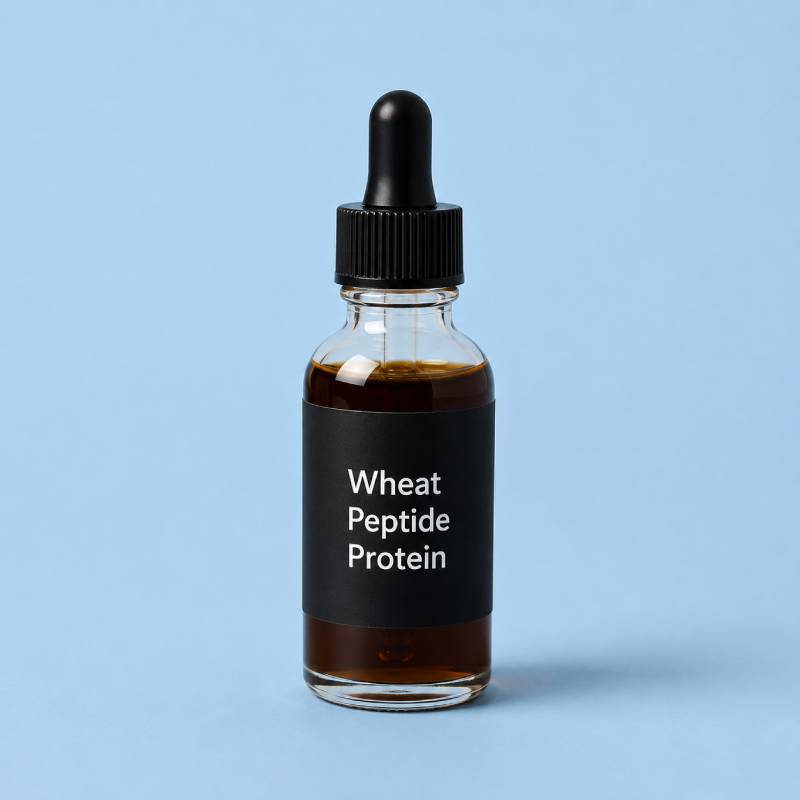
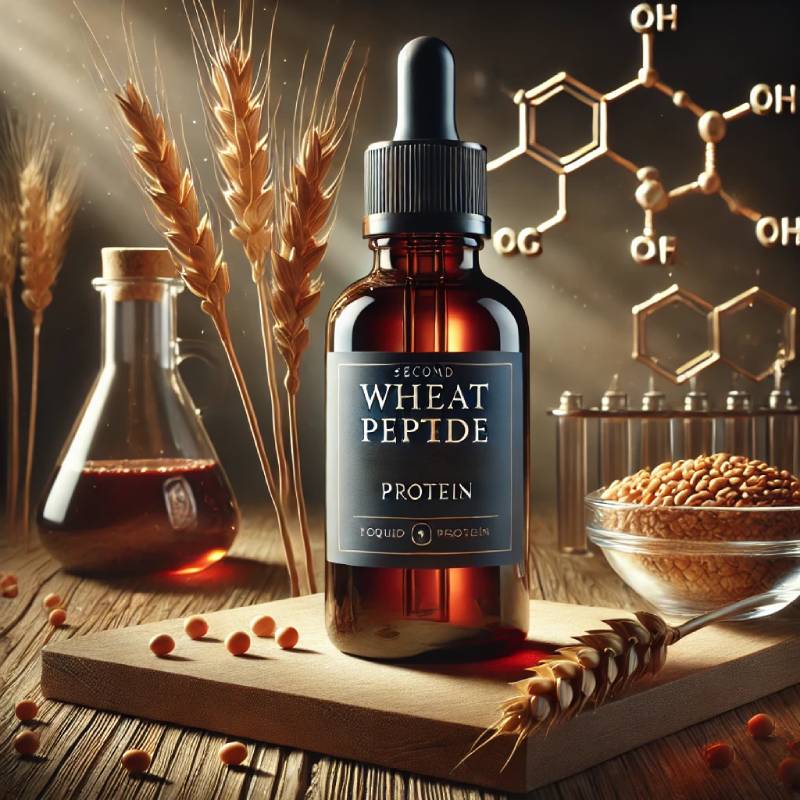
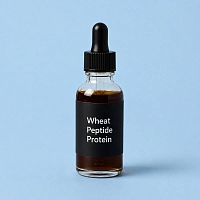
Hydrolyzed Wheat Protein Peptide belongs to the category of cosmetic peptides and can be found among other cosmetic actives. Those needing larger quantities may opt for the Wheat Peptide Protein 1 kg version while similar options include Biopeptide 10 g.
Wheat peptide should be added during the final, cool-down phase of production, at a temperature not exceeding 40 degrees, to avoid breaking down the protein chains. Recommended dosage for shampoos, conditioners and hair masks ranges from 1 to 3 grams per 100 grams of base, while for facial creams and serums it typically falls between 0.5 and 2 grams per 100 grams of finished product. The ingredient is compatible with most emulsifiers, plant oils, glycerin and other active additives, including other peptide complexes. For comprehensive anti-aging formulas it is often paired with Vialox Peptide, known for relaxing expression lines, while for products focused on firmness and skin density it works well alongside Thermostressine Peptide, developed specifically for dry mature skin. For formulas targeting visible signs of aging and skin rhythm correction, an interesting addition is Timecode Peptide.
The 10 gram packaging is convenient for home cosmetic making and small trial batches - this amount is sufficient for several experimental formulations of shampoos, masks or serums without risking spoilage of leftover material. Store the raw material in a cool, dry place, in tightly sealed packaging protected from direct sunlight and moisture, to preserve the activity of the amino acid chains throughout the shelf life.
Fortifying Leave-In Spray for Weak Hair
Distilled water 80 ml
Aloe vera juice 10 ml
Wheat peptide protein 2 g
Panthenol liquid 4 ml
Glycerin 2 ml
Broad-spectrum preservative 1 ml
Combine distilled water with aloe vera juice and glycerin in a clean container, mixing gently until fully blended. Warm the mixture slightly to about 35 degrees, then dissolve the wheat peptide protein into it while stirring continuously until no residue remains. Add the panthenol and preservative, stir again until homogeneous, then pour the finished liquid into a spray bottle. Apply to damp hair after washing and comb through evenly without rinsing out.
FAQ
What is the form of Wheat Peptide Protein?
It is supplied as a gelatinous mass.
What is the solubility of Wheat Peptide Protein?
It is poorly soluble in water.
What input percentage is recommended for Wheat Peptide Protein?
Wheat Peptide Protein in gelatinous mass form is used at the recommended input percentage of 0.5-4%.
How should Wheat Peptide Protein be stored?
Keep Wheat Peptide Protein in a cool dark place in a tightly closed container.