Why Laureth-7 remains a workhorse in household chemistry and liquid cosmetic formulas
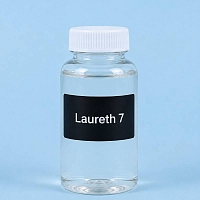
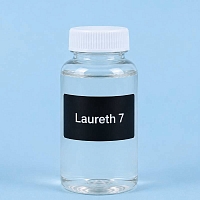
Laureth-7 is a non-ionic surfactant derived from lauryl alcohol, widely used in the production of shampoos, shower gels, dishwashing liquids and other liquid cleaning formulations. This ingredient belongs to the broad category of Surfactants, where it plays the role of a supporting emulsifier and thickener capable of gently adjusting the viscosity of the finished product without extra salt additions. Global demand for this component is driven mainly by household chemistry manufacturers and producers of body and hair care cosmetics, as well as by companies making technical cleaning liquids.
The main function of laureth-7 in a formula is to work alongside anionic surfactants such as sodium lauryl sulfate or sodium laureth sulfate. It reduces the irritating effect of aggressive cleaning agents, stabilizes foam, making it denser and finer-bubbled, and participates in thickening the final product. Recommended dosage usually ranges from 2 to 8 percent of the total mass, introduced during the mixing stage of the main surfactants at room temperature or with gentle heating up to 40-45 degrees for better dissolution. Overheating above 60 degrees is undesirable since it may affect the stability of foaming properties.
In shampoo and shower gel production, laureth-7 is often combined with mild plant-derived co-surfactants. A good partner is Decyl Glucoside 100 g, which further softens the formula and suits products marketed as gentle care. For sensitive skin formulations, RESASSOL ARGAN 25 g can be used - an argan-based surfactant that adds conditioning properties to the product. For natural-positioned formulas, an interesting addition is Resplanta MAIS 25 g, a corn-derived active surfactant that fits naturally into such product lines.
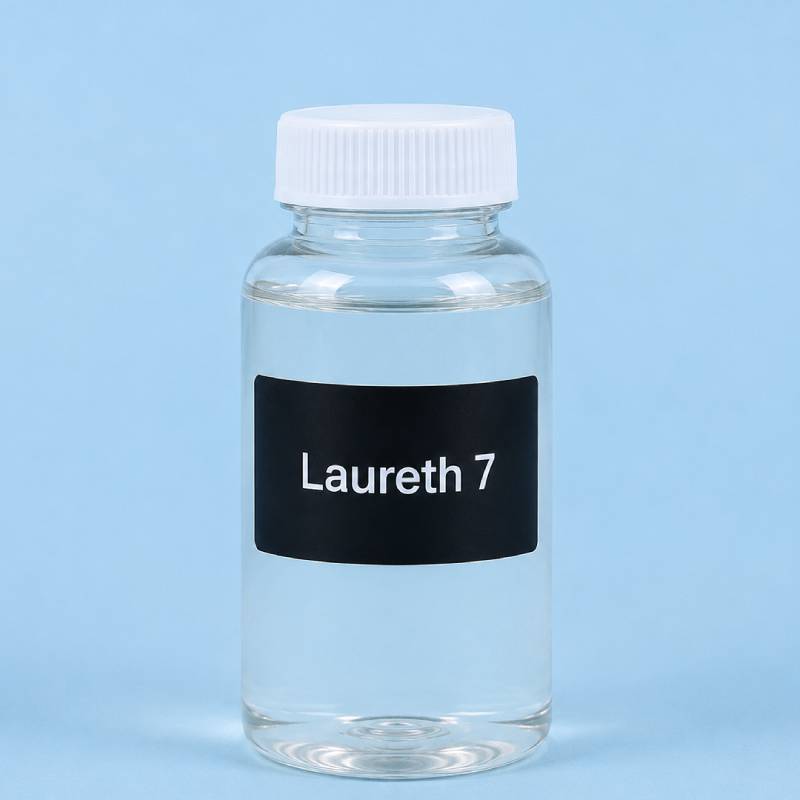
The 1 liter packaging is convenient for small cosmetic studios and workshops producing trial batches of shampoos, dishwashing liquids and liquid soap in volumes sufficient for testing formulas before scaling up production. This size allows fine-tuning of dosages, checking foam and viscosity stability, and testing compatibility with fragrances and preservatives without excessive raw material spending.
Laureth-7 should be stored in tightly closed containers, in a cool place away from direct sunlight, at temperatures between 5 and 25 degrees. During prolonged storage in cold conditions, the product may become cloudy or thicken - in this case, gently warming the container in a water bath restores a uniform consistency.
Gentle dishwashing gel based on Laureth-7
Distilled water 700 ml
Laureth-7 60 ml
Decyl Glucoside 40 ml
Citric acid 3 g
Table salt 10 g
Fragrance 5 ml
Preservative 3 ml
Gradually add laureth-7 and Decyl Glucoside into room temperature water, gently mixing until uniform without excessive whipping to avoid premature foam formation. Then add the preservative and fragrance, followed by citric acid to adjust the acidity to the desired level. Add salt in small portions to reach the desired thickness while stirring continuously, since too much salt can thin the mixture instead of thickening it. Let the finished gel rest for several hours before bottling into convenient containers.