Achieving a Consistent Chocolate Tone Across Beverages and Baked Goods
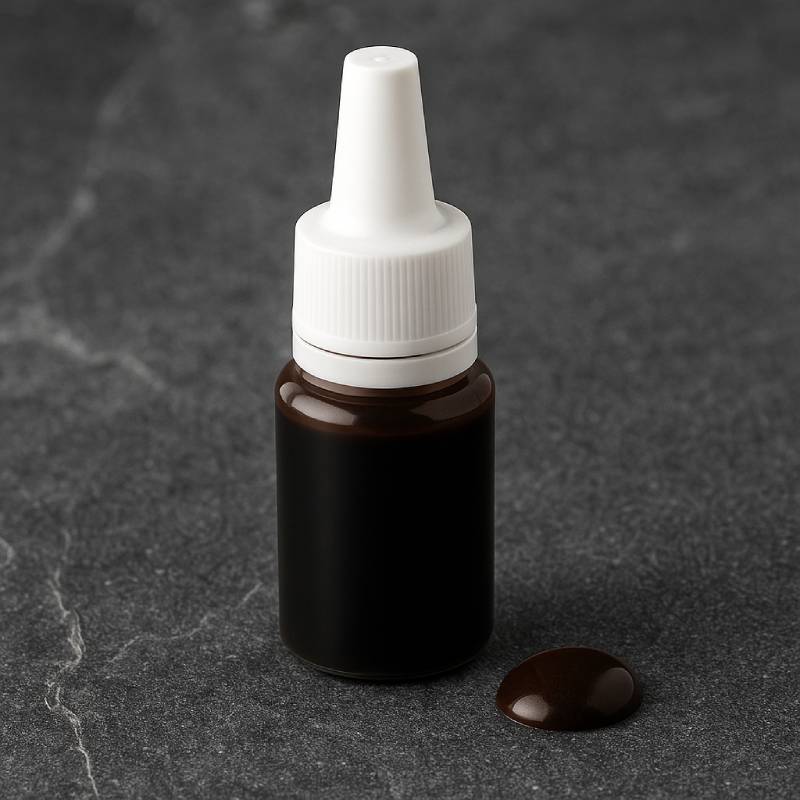
Brown food color in a 1 liter bottle is designed to deliver a stable chocolate, caramel, or coffee tone across a wide range of food products. This volume suits both confectionery studios producing small batches and semi-industrial manufacturing lines making beverages, creams, fillings, and sauces where consistent shade from batch to batch matters. The concentrated formula makes it economical even with regular use on a production floor. Explore more options in Liquid Migrating Dyes Wholesale.
The main area of application lies within the confectionery industry, where the colorant is used in chocolate glazes, buttercreams, fondant, marshmallow, gingerbread dough, wafer fillings, and decorative elements for cakes. In baking, brown food color is applied to tint crusts, imitate rye bread appearance, and achieve even coloring in enriched dough. Beverage manufacturers rely on it to create rich color in kvass, syrups, liqueurs, cola-style drinks, and coffee concentrates. The dairy and dessert sector uses it in yogurts, puddings, ice cream, and milkshakes with caramel or chocolate flavor profiles.
The colorant is compatible with water-based and mildly acidic systems, dissolves easily in syrups, gelatin, and pectin bases, and can be introduced into fat emulsions provided it is pre-dispersed in a small amount of water or alcohol. Recommended dosage typically ranges from 1 to 5 grams per kilogram of finished product, though the exact amount should be tested empirically depending on the desired intensity and specific formulation. It is best introduced during the mixing stage of liquid components at temperatures not exceeding 60-70 degrees Celsius to avoid degrading the pigments through prolonged heating.
When working with this colorant, compatibility with other additives matters: it pairs well with cocoa, vanilla, caramel, and coffee flavorings, as well as starch or gum-based thickeners. Mixing it with strong oxidizers or alkaline components without prior testing is not advisable, as this may alter the resulting shade. Store the product in a tightly sealed container, in a dry area away from direct sunlight, at room temperature, away from heat sources. Under proper storage conditions, the colorant retains stable properties throughout its stated shelf life. Pair the brown dye with Indigocarmine liquid dye 1 L for new tones. Check the full range under Liquid Water-Soluble Dyes.
The 1 liter volume makes the product practical both for testing new formulations in small trial batches and for supporting a regular production cycle in bakeries and confectionery workshops, making it a reliable choice for businesses working with a consistent lineup of chocolate and caramel items.
Caramel Coffee Glaze for Layered Cakes
Heavy cream 250 ml
Brown sugar 150 g
Butter 60 g
Cornstarch 20 g
Brewed coffee concentrate 30 ml
Brown food color 2 ml
Heavy cream is gently warmed in a saucepan, then brown sugar and cornstarch, pre-dissolved in a small amount of cold cream, are added gradually while stirring continuously over low heat until the mixture thickens. The butter, coffee concentrate, and food color are then stirred in until fully combined and evenly colored, after which the glaze is cooled slightly before pouring over layered cakes or pastries.
Frequently asked questions
How to add brown food color 1 L to glycerin?
Start with a small amount and mix thoroughly until the desired shade appears. This works well for testing in creams and fillings.
What is the shelf life of brown dye in 1 L pack?
The product remains usable until October 2028 when kept in a cool dark place in a tightly closed container. COA is available on request.
Which bases accept brown liquid dye for even color?
It dissolves in water, aqueous phases and glycerin for consistent results in syrups, puddings and sauces.
Who benefits from 1 liter of brown food color?
The pack suits small bakeries and beverage makers needing uniform batches of glazes and dough without extra processing.