Getting a True Blue Shade in Candle Wax Without Streaking
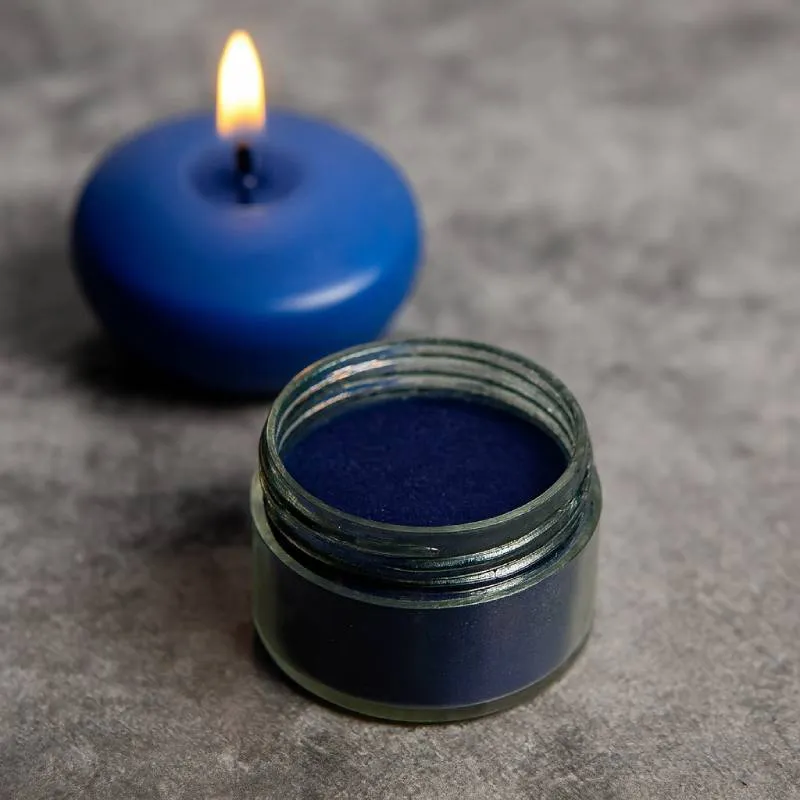
Candle making continues to grow worldwide both as a home craft hobby and as a small studio production business, and achieving stable, even coloring in wax remains one of the most common challenges makers face. Blue candle dye 10 g belongs to the section Candle colorants, which brings together concentrated pigments formulated specifically for paraffin, soy and palm wax, gel candles, and various wax blends. This blue pigment allows makers to achieve shades ranging from a soft sky blue to a deep sapphire tone depending on the amount of dye added.
The primary application of this dye is in decorative and interior candle production, as well as coloring technical wax used for floral arrangements, mold making, and various decorative elements. The dye dissolves well in melted wax at temperatures between 70 and 85 degrees Celsius, and it is important to add the pigment while the wax is fully liquid, stirring thoroughly until all granules dissolve to avoid streaks or uneven patches in the finished piece. Recommended dosage starts at 0.1 to 0.5 grams per 100 grams of wax, and for darker, more saturated tones the amount can be increased gradually while checking the color on a test sample before pouring the full batch.
Blue dye pairs well with other wax pigments, opening up possibilities for gradient effects and layered candles. For instance, combining it with Red Candle Dye 10 g produces violet and lilac tones, while adding a touch of Bright Orange Wax Dye for Candles 5 g allows for striking contrast compositions within a single candle. For softer, pastel results, pairing it with Bright Pink Wax Dye for Candles 5 g creates gentle lilac-blue transitions.
The 10 gram size is primarily suited for home candle making and small trial batches, when a maker wants to test a shade before ordering a larger quantity or launching a product line. With correct dosing, this amount is enough for a fairly large number of medium sized candles, making it an economical choice for regular hobby use. Beyond candle production, this dye also finds use in related fields such as coloring wax for decorative elements, wax seals, and certain types of craft work where a heat stable blue pigment is required.
Store the dye in a dry place at room temperature, away from direct sunlight and heat sources, and seal the packaging tightly after each use to prevent moisture and foreign particles from getting in. When stored properly, the pigment retains its coloring strength for a long time without losing intensity.
Ocean Drift Layered Candle
Soy wax 280 g
Paraffin wax 120 g
Blue candle dye 0.7 g
Ocean breeze fragrance oil 7 ml
Cotton wick 1 pc
Glass jar heat resistant 1 pc
Melt the wax over a double boiler until fully liquid at around 76 degrees Celsius, then divide it into two portions. Add a small amount of dye to the first portion for a lighter tone, pour it into the jar with the wick already secured, and let it set for about 15 minutes. Stir the remaining dye and the fragrance oil into the second portion, then pour it over the set layer to create a gradient effect. Allow the candle to cure at room temperature for at least four hours before trimming the wick and using it.