Sourcing and specification details
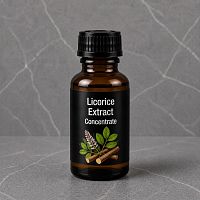
Licorice root CO2 extract is obtained in England via supercritical fluid extraction with natural carbon dioxide. The 100 g pack contains an oily liquid free of solvent residues. International buyers source the material through CO2 Extracts Wholesale for consistent quality across batches. This method preserves the full spectrum of plant compounds for reliable performance in multiple industries. The raw material originates from the root of Glycyrrhiza glabra and undergoes processing that leaves no traces of solvents or heavy metals, meeting demands from supplement manufacturers and cosmetic labs worldwide.
Technical parameters for formulation
INCI name Glycyrrhiza Glabra Root [CO2] Extract. The ingredient is fat-soluble and must be added below 35-45 °C. Cosmetic usage level 0,1-0,5 %. Supplement and food manufacturers incorporate it as botanical raw material at 0,6-2 %. Extracts Wholesale lots allow precise scaling from lab trials to production runs. Solubility characteristics restrict use to oil phases or emulsions, requiring careful phase selection during manufacturing to achieve uniform distribution without separation.
Applications in supplements and food production
Factories producing dietary supplements and functional beverages add the extract to herbal blends and confectionery bases. Private formulators and large manufacturers value the clean extraction profile for natural flavour contributions. Licorice root CO2 extract 1 kg supports volume buyers transitioning to bulk sourcing. The ingredient serves strictly as botanical raw material in drinks, functional foods and confectionery items where a mild sweet aromatic note enhances overall product character without altering core nutritional profiles.
Example supplement blend
Botanical mix: licorice CO2 extract 0,8 %, maltodextrin carrier 94,2 %, natural flavour 5 %. Blend at ambient temperature, package in airtight sachets. Suitable for dry dietary supplement formats and ready for stability testing. This approach works well for both small-batch home producers and industrial lines focused on plant-based compositions.
Compatibility in cosmetic laboratories
The extract integrates into serums, body butters and scalp treatments. It pairs with squalane, jojoba oil and panthenol. Labs test stability after incorporation into the cool-down phase. Formulators often combine it with other botanical ingredients to create balanced textures that support skin comfort and provide subtle aromatic qualities in finished creams or hair masks.
Storage and handling
Keep containers closed in a cool dark place. Shelf life until December 2028. Perform patch testing before large-scale use. Proper storage preserves the oily consistency and prevents oxidation that could affect colour or scent over extended periods.
Frequently asked questions
What extraction method is used?
Supercritical CO2 extraction with no residual solvents.
Is the product suitable for clean-label food applications?
Yes, it is used strictly as a botanical raw material in food and supplement formulations.
Can temperature exceed 45 °C during processing?
No, higher heat may degrade volatile fractions.