Sourcing origin and extraction method details
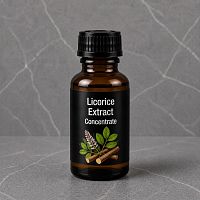
Licorice root CO2 extract 1 kg comes from England and is produced through supercritical carbon dioxide extraction of the root material. CO2 Extracts Wholesale of this specification delivers an oily liquid free from solvent residues or heavy metal traces. The 1 kg packaging targets industrial and laboratory buyers who scale formulations regularly. The method uses natural carbon dioxide as the extractant, resulting in a clean fraction distinct from water, glycol or oil-based alternatives.
Physical properties and handling specifications
The extract appears as a viscous oily liquid that remains fully fat-soluble. Introduction occurs exclusively in the active phase at temperatures not exceeding 35-45 °C to preserve the extracted compounds. Buyers must verify compatibility with chosen oils, emollients and emulsifiers according to the product specification before full production. Stability tests on color, odor, homogeneity and viscosity are required on finished prototypes.
Example formulation for a hair and scalp tonic
For a conditioning scalp tonic use 3 % polysorbate 80, 0,4 % of this CO2 extract, 5 % glycerin and water to 100 %. First disperse the extract into the polysorbate, then add the mixture to the aqueous phase at 35 °C while stirring until uniform. The finished tonic provides comfortable after-wash care for hair and scalp when applied regularly, with all parameters checked for long-term physical stability.
Applications in dietary supplements and food manufacturing
Supplement producers and food factories worldwide purchase the material as a botanical raw material for dietary supplements, functional beverages and confectionery flavor systems. Licorice root CO2 extract 100 g allows small-scale trials prior to bulk procurement. In drinks and sweets the ingredient serves solely as a flavor component within fat-based matrices where food-grade botanical raw material is required.
Comparison with alternative licorice extract forms
Unlike liquid, dry or oil-based extracts, the CO2 grade yields a different fraction without an additional carrier, therefore concentration, solubility and behavior in formulations demand separate calculation when switching raw material types. Extracts Wholesale CO2 grades are always treated as independent ingredients rather than direct substitutes for other forms.
Storage conditions and shelf life guidance
Store containers in a cool dark place with lids tightly closed. Shelf life extends to 12.2028 under these conditions. Always perform compatibility and stability testing on laboratory samples before introducing the extract into new commercial batches.
Frequently asked questions
Can the extract be added directly to clear water-based toners?
No, fat solubility requires prior dispersion in an oil phase or suitable emulsifier system to maintain product integrity.
What makes this CO2 grade different from glycolic extracts?
The extraction method produces a distinct fraction without water or glycol carriers, changing concentration and solubility profiles significantly.
Is heating above 45 °C acceptable during processing?
Exceeding 35-45 °C risks altering the extracted fraction and is not recommended for preserving product quality.
How should compatibility with surfactants be verified?
Compatibility must be confirmed through laboratory testing because the fat-soluble nature may affect overall system stability.