Why Melissa Oil Holds a Special Place in Fine Fragrance and Skincare Labs
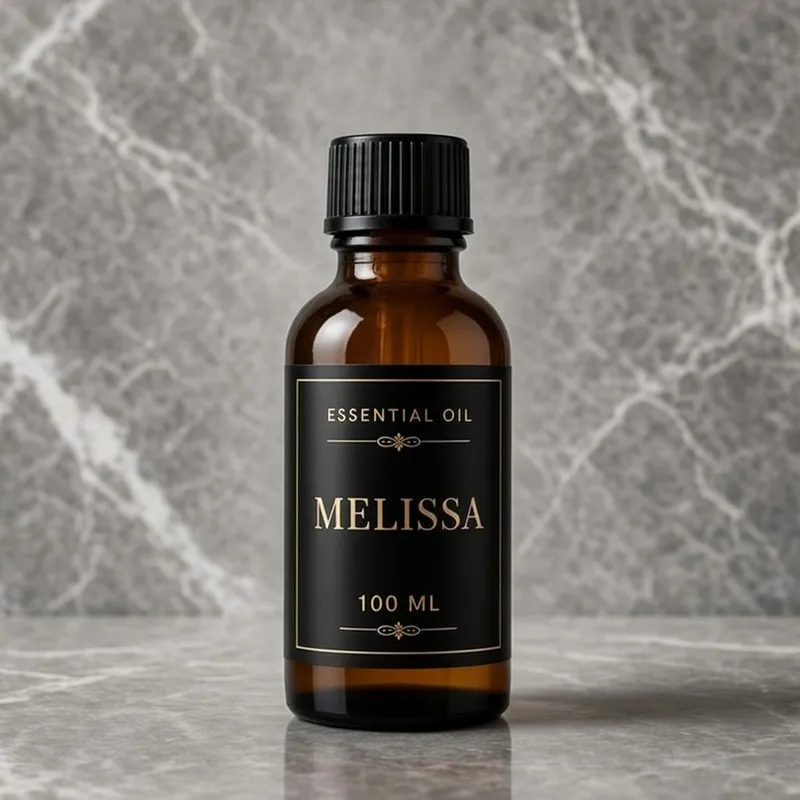
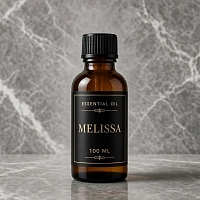
Melissa essential oil, distilled from the aerial parts of lemon balm, is known as one of the most precious raw materials in the fragrance world because an enormous amount of plant material is needed to obtain even a modest yield. This 100 ml bottle suits small-batch cosmetic studios and growing production lines that need a reliable, consistent supply for regular formulation runs rather than one-off testing. This oil belongs to the broader category of essential oils, where formulators can find ingredients for fragrance blends of various complexity.
The strongest global demand for melissa oil comes from perfumery: its fresh lemony, herbaceous character with a soft honeyed depth is prized in fine fragrance creation, eau de toilette compositions, and scenting for household chemistry and candle production. In skincare manufacturing, the oil is added to creams and serums targeting oily and congested skin, as well as to facial tonics and hair care formulas. The food industry uses lemon balm oil as a natural flavoring for beverages, confectionery, and herbal teas, always in very small quantities. Aromatherapy practices also rely heavily on this oil for diffusers, aroma lamps, and massage blends, valued for its calming effect on general wellbeing.
Melissa oil should be introduced at the final stage of a formulation, once the base has cooled below 40 degrees Celsius, to preserve its volatile aromatic compounds. Recommended dosage in cosmetic emulsions ranges from 0.1 to 0.5 percent of total mass, while in perfumery the amount depends on the composition and is typically tested starting from minimal trial drops. Due to its high concentration of active compounds, the oil is always diluted in carrier oils or emulsifiers before skin contact, never applied undiluted. Melissa pairs particularly well with floral and citrus notes, including Neroli essential oil, which softens its herbaceous sharpness and adds floral depth. Interesting herbal accords also emerge when combined with Sage essential oil or the spicier Thyme essential oil, blends often used in masculine fragrances and household scenting lines.
Store the oil in a tightly sealed dark glass bottle, away from direct light and heat sources, at a stable room temperature, avoiding humidity fluctuations. Proper storage keeps both the aroma and active compounds stable over an extended period. Soap making occasionally uses melissa oil for scenting cold and hot process bases, but the primary global demand for this raw material comes from perfumery, decorative cosmetics, and industrial fragrance production.
Calming Massage Oil Blend with Melissa
Sweet almond oil 85 ml
Jojoba oil 10 ml
Melissa essential oil 12 drops
Vitamin E 2 ml
Emulsifying wax 1 g
Warm
the almond and jojoba oils gently to around 35 degrees Celsius, then whisk in
the emulsifying wax until fully dissolved. Remove from heat and let the blend
cool to room temperature before adding vitamin E and melissa essential oil,
stirring slowly for even distribution. Pour the finished blend into a dark
glass bottle and store in a cool place, shaking gently before each use.