Why thyme oil earns its place in cleaning, skincare and fragrance formulas
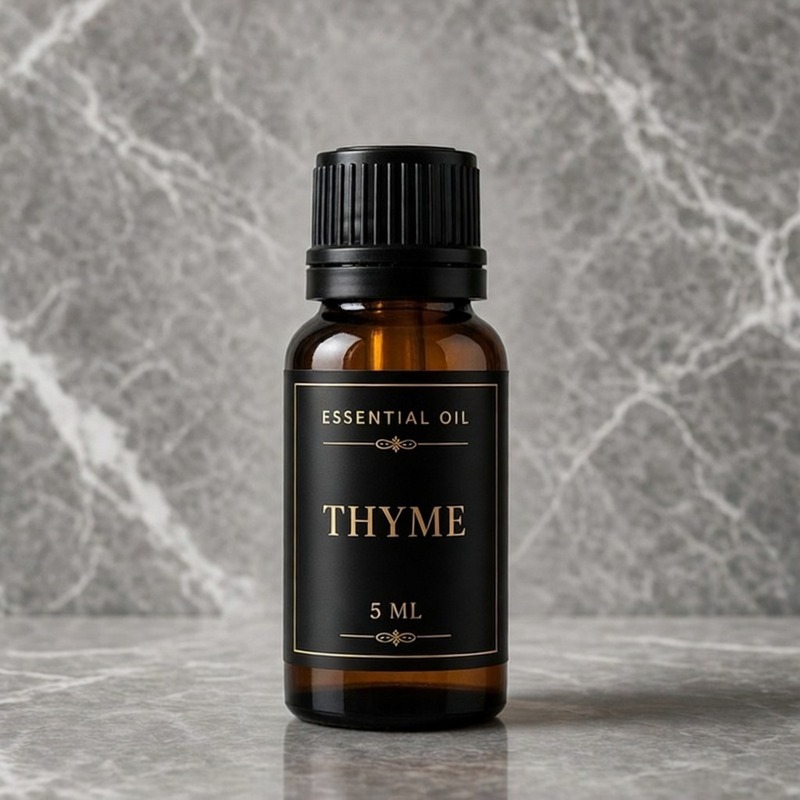
Thyme essential oil is steam distilled from the aerial parts of the plant and valued for its notable concentration of carvacrol and thymol, natural compounds known for strong purifying properties. This is why the product belongs to the Essential Oils section, which brings together concentrated botanical extracts used across fragrance, household chemistry and skin and hair care industries. The 5 ml bottle is a practical choice for testing formulations, sampling scent profiles or preparing small trial batches before scaling up production.
Across global markets, thyme oil is a common ingredient in natural household cleaning products such as disinfecting sprays, surface treatments and laundry fresheners, thanks to its sharp herbaceous scent and ability to neutralize unpleasant odors. In cosmetic formulations it is added in small percentages to products targeting blemish-prone skin, anti-dandruff shampoos and scalp-strengthening lotions, since it helps regulate sebum production. In perfumery, thyme contributes a spicy herbal note to masculine fragrances and home scent blends, often paired with softer herbal oils such as Rosemary Essential Oil, which reinforces the invigorating character of the blend.
In aromatherapy, a few drops in a diffuser or aroma lamp create a focused, energizing atmosphere, and in sauna or steam room settings it is used to freshen and disinfect the air. Recommended dosage in finished products usually stays within 0.3-1% of total weight, since the oil is quite potent and excessive amounts may irritate skin or mucous membranes. It should be added at the final stage of formulation, at temperatures not exceeding 40 degrees Celsius, to preserve its volatile compounds and prevent degradation from heat.
Thyme oil blends well with citrus, coniferous and other herbal oils, allowing for layered aromatic compositions. An interesting pairing forms with Myrtle Essential Oil, which softens the sharpness of thyme and adds a fresh camphor-like nuance, as well as with Palmarosa Essential Oil, which brings a light rosy warmth and balances the overall scent. Before use in cosmetic recipes, a patch test with a highly diluted solution on a small area of skin is recommended to check individual tolerance.
Thyme oil should be stored in a tightly closed dark glass bottle, in a cool dry place away from direct sunlight and heat sources, which helps preserve the activity of its components for a longer period and prevents oxidation.
Herbal disinfecting room spray
Distilled water 95 ml
Ethyl alcohol 96% 8 ml
Thyme essential oil 6 drops
Myrtle essential oil 4 drops
Polysorbate 20 1 ml
Dissolve the polysorbate in the alcohol, then add both essential oils and mix thoroughly until fully combined. Pour the mixture into the water, transfer the finished solution into a spray bottle and shake well before each use. Apply the spray to air spaces, textiles and hard surfaces, avoiding direct contact with varnished wood and polished stone.