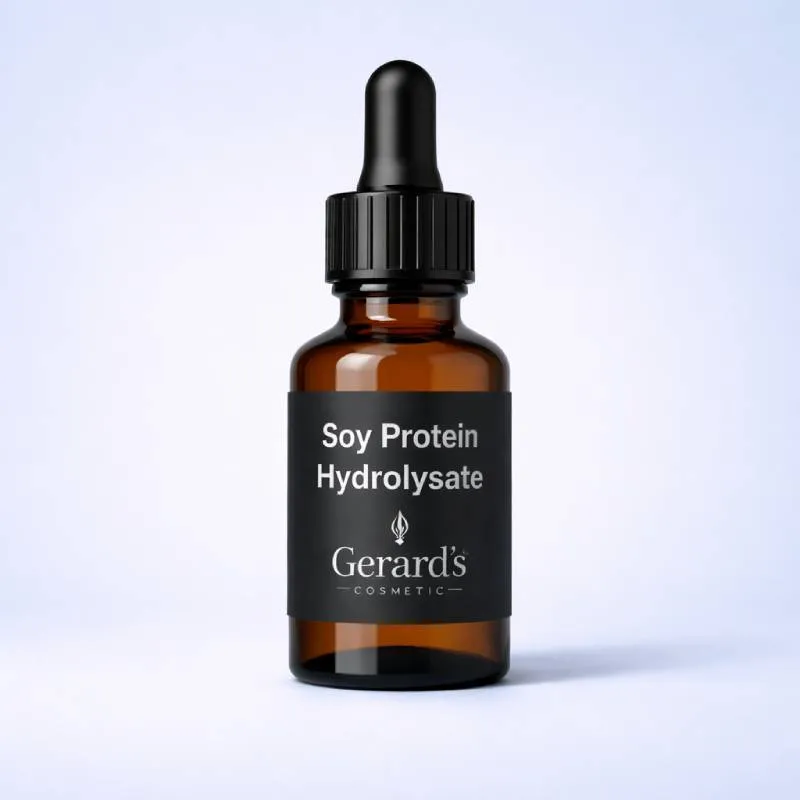
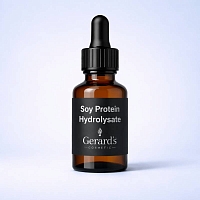
Italian Soy Protein Hydrolysate 50 ml with INCI Hydrolyzed Soy Protein is derived from soy seeds and used in hair and skin care at 1-5% (up to 10% in rinse-off products). Hydrolyzed Proteins of this type can be bought retail or wholesale with shipping from Ukraine.
Handling and specifications
The ingredient appears as a clear to slightly opalescent liquid. It remains stable when stored in a dry cool place in tightly closed containers away from light. Solubility is complete in water at any concentration. This property simplifies incorporation into multiple formula bases without separation risks.
Form and stability
Supplied in 50 ml retail packs suitable for small-batch production. For larger volumes the 1 L option supports consistent manufacturing. pH compatibility covers typical cosmetic ranges without adjustment.
Sample leave-in serum formulation
Distilled water 88% Glycerin 4% Italian Soy Protein Hydrolysate 50 ml 3% Panthenol 2% Preservative 1% Fragrance 2%. Add hydrolysate to the cooled aqueous phase below 40 degrees. The finished product gains a light texture suitable for daily application.
Applications in B2B production
Used in shampoos, masks, serums and creams. Italian Soy Protein Hydrolysate 1 L facilitates scaling for laboratories and small factories.
Compatibility considerations
The hydrolysate pairs reliably with panthenol, plant oils and other peptide ingredients, enabling balanced formulas. In small-batch trials combinations with cereal hydrolysates improved conditioning on porous hair. Professional users appreciate predictable behavior across different emulsion types. Hydrolyzed Proteins Wholesale batches arrive in containers suited for lab handling. Additional pairings with humectants enhance performance in dry-skin products without altering final feel.
Storage recommendations
Keep sealed in a cool dry area protected from direct light. Opened containers should be used within several months to maintain activity.
Performance across formula types
In rinse-off products the hydrolysate delivers noticeable surface smoothing at higher percentages while remaining gentle. Leave-in applications benefit from lower levels to avoid buildup. Laboratories report consistent results when combining it with standard thickeners and emulsifiers. Small factories value the ease of integration into existing production lines without additional processing steps. The ingredient supports a wide range of textures from lightweight serums to richer creams.
Frequently asked questions
What is the recommended input level for creams?
Between 2% and 5% depending on desired conditioning effect.
Does the hydrolysate affect emulsion viscosity?
It shows minimal impact on final texture.
Is it suitable for leave-in hair sprays?
Yes, at 1-3% it performs well in light formulas.
How should opened containers be handled?
Use within several months while avoiding contamination.