How a Bright Red Glow Pigment Powers Industrial and Craft Projects
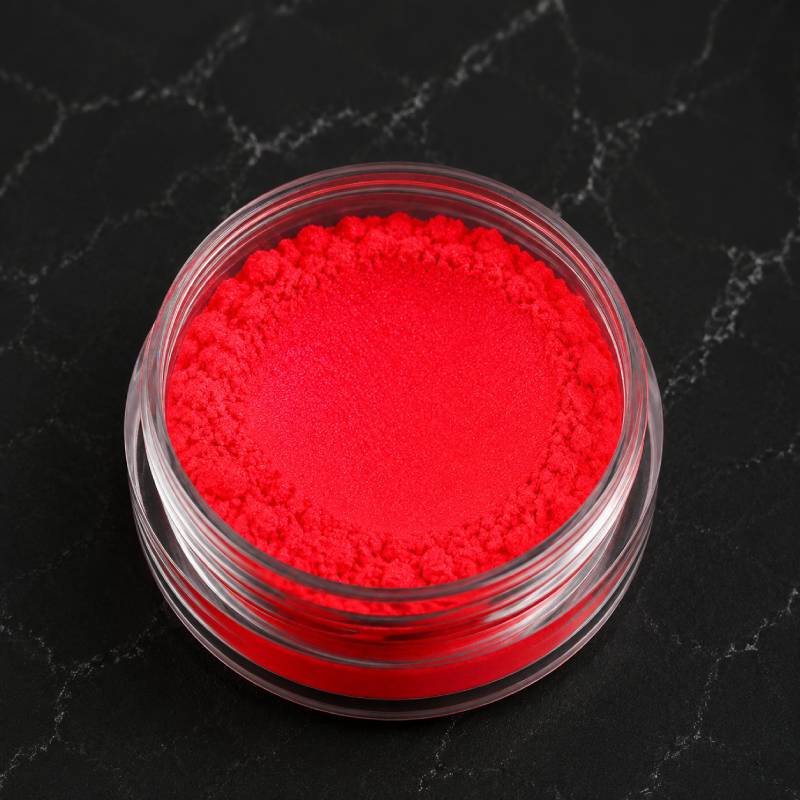
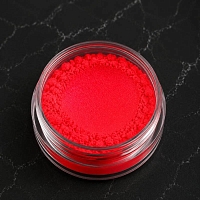
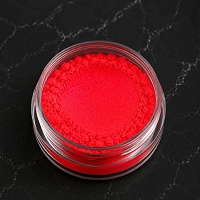
Fluorescent pigment in red, packed at 50 grams, belongs to the category of Fluorescent Pigments, powders that absorb light and re emit it as an intense daylight glow. Worldwide demand for this type of colorant comes primarily from the plastics industry, printing inks, safety and signage coatings, fishing tackle manufacturing and sporting goods, where high visibility and color saturation under both natural and ultraviolet light are essential.
Beyond industrial uses, the pigment is popular among resin artists, candle makers, nail technicians and hobbyists working with slime, polymer clay and epoxy castings, since it delivers a vivid neon look that ordinary dyes cannot replicate. In decorative cosmetics it is used to create bold neon accents in gel polishes, glitter blends and stage makeup, while in industrial coatings it improves the visibility of safety markings, road signs and packaging materials. This versatility explains why the pigment shows steady search interest across manufacturing, arts and crafts, and specialty cosmetics markets rather than being tied to a single niche.
The pigment is added to a cold or lightly warmed base, keeping the temperature under 60 degrees Celsius to avoid weakening the fluorescent effect. A typical usage rate ranges from 0.5 to 3 percent of the total batch weight, depending on the desired intensity and the type of carrier used. For an even dispersion it is best to pre mix the powder with a small amount of oil, glycerin or plasticizer before blending it into the main mass under constant stirring. This red shade pairs naturally with other tones from the same line, such as Fluorescent pigment Yellow Lemon HX 10 for layered gradient effects, or Fluorescent pigment Magenta HX 21 for deeper pink red transitions.
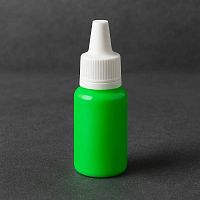
When working with resin, plastic or liquid coating systems, this powder can also be combined with liquid colorants like Pigment liquid fluorescent orange 10 ml to build smooth warm gradients across a project. The 50 gram size suits small batch production and studio scale work, giving makers a stable supply for repeated projects without the need for frequent reordering, while still being convenient to dose for one off pieces. Store the pigment in a tightly sealed container, away from direct sunlight and moisture, at room temperature, since humidity can cause the fine particles to clump together over time.
The pigment is intended for decorative and technical applications only and should not be applied directly to lips or mucous membranes. It remains compatible with most resin, wax, plasticizer and hydro alcoholic bases, making it a flexible tool for designers, formulators and small manufacturers working across several industries at once.
UV Reactive Fishing Lure Coating
Clear acrylic lacquer base 100 ml
Fluorescent pigment red 3 g
Fine glitter flakes 1 g
Pour
the lacquer base into a clean container and slowly sift in the pigment while
stirring continuously to prevent clumping, then fold in the glitter flakes for
extra shimmer. Apply the finished coating in thin layers over a primed lure body,
allowing each layer to dry for twenty minutes before adding the next, until the
desired glow intensity is reached.
Frequently asked questions
How to disperse Fluorescent pigment Red in paint coatings?
Incorporate the powder slowly while stirring until evenly distributed. Begin with a small amount and test the shade on a sample batch since the pigment colors without dissolving.
What is the shelf life of the 50 g pack of neon bright red pigment?
Store in a dry place away from sunlight. The mineral component remains usable until 12.2041. This size works well for trial batches or small runs.
Can I request COA for Fluorescent pigment Red 50 g?
A certificate of analysis is available on request. The pigment suits epoxy resins and polymer items where bright neon red is needed under normal or UV light.
Which bases accept the bright red fluorescent pigment without clumping?
It works in lacquers, resins and polymer products. Add gradually to the chosen base and adjust the quantity after checking a test mixture.