Product Description
Sourcing Bergenia CO2 Extract from Ukraine
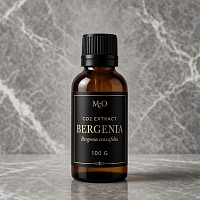
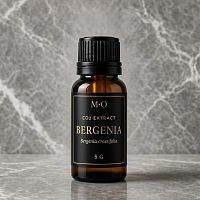
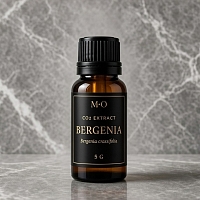
Bergenia crassifolia roots grown in Ukraine serve as the raw material for this CO2 extract. CO2 Extracts are produced via supercritical carbon dioxide extraction that yields an oily liquid containing bergenin, tannins and hydroquinone. Each 5 g pack comes in transport-grade containers suitable for both laboratory testing and small-scale production runs by cosmetic labs and supplement manufacturers.
Specification and quality parameters for B2B
International buyers receive material with consistent composition and documented origin from Ukraine. The oily liquid integrates well into lipid-based systems and offers stable sensory characteristics across batches. Large-scale manufacturers value the absence of residual solvents and the high concentration of natural compounds that simplify formulation work. Botanical Extracts are selected for their reliable performance in industrial settings.
Use in dietary supplements and food formulations
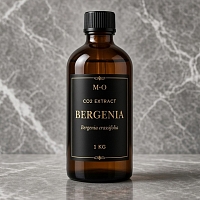
Supplement producers and food factories worldwide purchase the extract as a botanical raw material for functional beverages, confectionery items and nutritional complexes. Bergenia CO2 Extract 1 kg suits bulk production lines while smaller sizes serve formulation trials and pilot batches. Private formulators and factories order both wholesale and retail quantities depending on project scale.
Example hair and scalp serum formulation
Combine 82 g jojoba oil, 12 g squalane, 4 g extract and 2 g tocopherol. Warm the carrier oils gently to 35 degrees, add the extract and mix until uniform. The finished serum can be applied in small amounts to the scalp and hair ends for daily use.
Incorporation guidelines and solubility
Add the extract to the oil phase or during the final cooling stage below 40 degrees Celsius. It dissolves readily in vegetable oils, fatty alcohols and non-polar solvents, making it suitable for emulsions, anhydrous balms and serums. Pre-dispersion in a small amount of glycerin helps when working with predominantly aqueous systems.
Storage recommendations
Keep the product in tightly closed containers in a cool, dark place. Shelf life reaches at least two years from the production date when stored according to the stated conditions.
Frequently asked questions
What is the recommended input level in leave-on products?
Formulators typically test concentrations between 0,3 and 0,8 percent in serums and creams to achieve balanced performance.
Is the extract suitable for anhydrous balms?
Yes, it integrates well into oil-based systems without phase separation or texture issues.
Can it be combined with fermented extracts?
Compatibility testing shows positive results in mixed botanical complexes intended for dietary supplement applications.