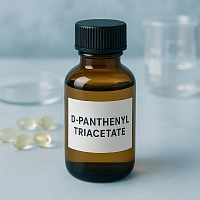
Product specifications and handling for B2B buyers
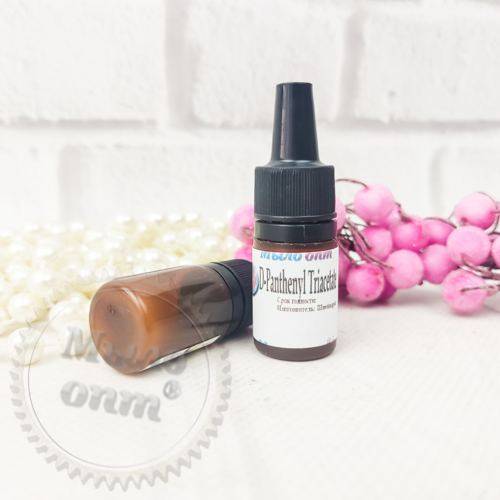
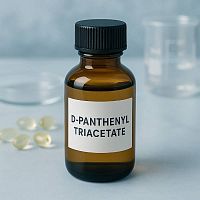
Panthenyl Triacetate arrives as a clear liquid in 5 g retail packs produced in Switzerland. Vitamins of this type are valued for their lipophilic nature and slower conversion to pantothenic acid, delivering a reservoir-type prolonged effect in finished formulas. The liquid state simplifies weighing and incorporation into lipid phases without additional heating steps or auxiliary solvents. This physical form also ensures consistent batch-to-batch reproducibility when scaling from laboratory trials to full production volumes.
Stability profile and performance in lipid systems
The ingredient shows markedly higher resistance to hydrolysis than standard panthenol. One percent of the substance equals approximately 0.6 percent D-panthenol in activity, allowing formulators to achieve equivalent results at lower concentrations while maintaining better skin penetration. Enhanced stability supports longer shelf life of finished cosmetics even under exposure to air and moderate temperature fluctuations. Such properties reduce the need for additional stabilizers in many anhydrous or emulsion-based recipes.
Integration into emulsions and anhydrous bases
Use the raw material in oil serums, lip balms, and mascaras where water-soluble forms cannot be incorporated. It supports skin comfort and helps maintain an even appearance of tone in leave-on products. product: D-Panthenyl Triacetate 100 g serves laboratories scaling up production. In emulsions the material resides primarily in the oil phase, contributing to improved texture and sensorial properties of the final batch. This placement also aids in achieving smoother application and reduced greasiness on the skin surface after absorption.
Example oil serum formulation
Carrier oils 92 percent, D-Panthenyl Triacetate 5 percent, tocopherol 2 percent, fragrance 1 percent. Blend at ambient temperature until uniform and package in airtight containers. The resulting serum spreads evenly and remains stable across typical storage temperature ranges. Additional gentle stirring for several minutes ensures complete homogeneity prior to filling operations.
Solubility, recommended percentages and process parameters
Dissolves readily in oils, lipids and glycols. Add at 1-5 percent in the lipid phase or during cooling below 40 °C at pH 5.0-8.0. section: Vitamins wholesale covers bulk requirements for cosmetic manufacturers. When working with glycol-containing systems, pre-blending with the carrier is advised to accelerate homogenization at production scale. Documentation of each production lot includes verification of input temperature and final pH to maintain consistent quality.
Storage conditions and shelf life
Keep in a cool, dark place in tightly closed containers until 10.2028. Protect opened material from light, moisture and excessive air exposure. Proper sealing preserves original viscosity and prevents oxidative changes throughout the declared shelf life. Production facilities commonly maintain records of opening dates to manage remaining inventory efficiently and avoid waste.
Frequently asked questions
Is the ingredient suitable for food supplement manufacturing?
It is purchased as a cosmetic raw material; any food-grade application must be validated separately by the buyer.
How does it behave in high-temperature processes?
Avoid prolonged heating above 50 °C to preserve stability.
Can it be used in clear oil blends?
Yes, it remains fully soluble and does not cloud lipid systems.