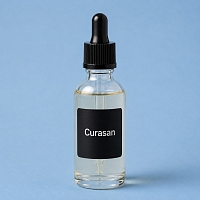
What Curasan 50 g represents
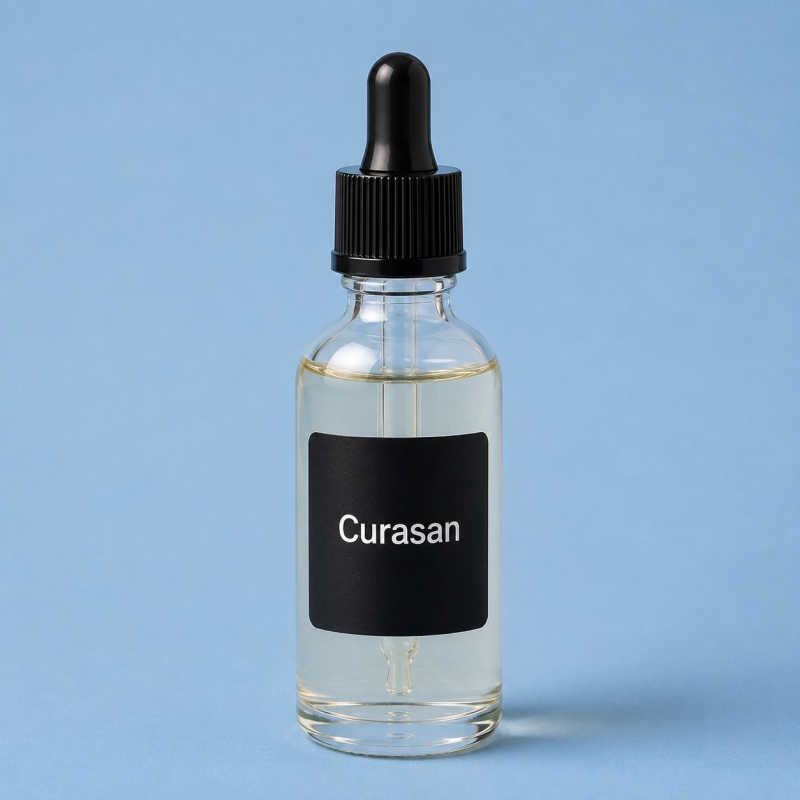
Curasan 50 g is a laboratory synthesized complex formulated as a viscous slightly turbid yellowish liquid. It functions as a moisturizing and protective ingredient suitable for skin and hair formulations in creams, lotions and gels. The product creates a thin elastic film on surfaces that allows breathability without causing clumping. It is supplied in 50 gram packaging and remains stable when stored in a cool dry place protected from light.
Formulators often incorporate this ingredient to improve texture and add a light protective layer against external factors. Its compatibility with water based systems makes it practical for daily use in personal care lines. Explore other moisturizing actives to compare options for similar projects.
Main properties
The INCI list includes Water, Decyl Glucoside, Panthenyl Ethyl Ether, Glyceryl Laurate, Tocopheryl Acetate, Phytantriol, Lactic Acid and Chitosan. The pH range stays between 5.0 and 5.8. Solubility occurs readily in water at recommended input levels of 2.0 to 5.0 percent. The material shows incompatibility with alcohols and requires patch testing on the inner elbow or behind the ear before full use.
Presence of chitosan and tocopherol supports film forming behavior that helps retain moisture and soften rough skin areas. The complex also strengthens nail surfaces after repeated applications according to available observations.
Applications
In skin care the ingredient appears in creams, lotions and gels where it supplies hydration and a subtle barrier. Hair care products such as shampoos, masks, hair creams and conditioners benefit from its role as a natural silicone alternative that improves manageability. Nail care items including hand creams receive added support for plate reinforcement.
Additional uses include light UV protection in leave on formulas. Review actives for hair to see complementary choices. The same approach applies to formulas targeting sensitive skin needs through dedicated sensitive skin actives.
How to use
Add Curasan 50 g during the cool down phase at 2.0 to 5.0 percent of total batch weight. Stir thoroughly until uniform distribution occurs. Avoid high temperatures and alcohol containing phases to maintain stability. Always perform preliminary sensitivity checks as noted in the product details.
Compatibility and technological features
The complex works well in water soluble bases and pairs effectively with common cosmetic thickeners and emulsifiers. It forms a breathable film that does not interfere with skin respiration. Storage recommendations specify a cool dry environment away from direct light to preserve quality until the indicated date.
Appearance and characteristics
The material presents as a yellowish viscous slightly turbid liquid. All technical information on the site serves reference purposes only and should be verified through internal testing for each specific formula.
Example application
A simple daily moisturizing emulsion can be prepared with the following quantities: 80 ml distilled water, 8 g emulsifying wax, 5 g vegetable oil, 4 g Curasan 50 g, 2 g glycerin and 1 g preservative. Heat the water and oil phases separately to 70 degrees Celsius, combine and emulsify for three minutes, then cool while stirring. Introduce Curasan 50 g at 40 degrees Celsius along with the preservative. Continue mixing until the mixture reaches room temperature and appears homogeneous.
FAQ
What is the recommended concentration range for Curasan 50 g?
The suggested input level stays between 2.0 and 5.0 percent of the total formulation weight depending on the desired film strength and hydration effect.
Can Curasan 50 g be combined with other actives?
Yes, it integrates readily into water based systems alongside typical cosmetic ingredients provided alcohol phases are avoided and proper testing is completed.
How should Curasan 50 g be stored?
Keep the container in a cool dry location shielded from light to maintain product integrity through the listed expiration period.
Is patch testing required before use?
Yes, preliminary application to the inner elbow or behind the ear remains mandatory to check for individual sensitivity reactions.