Why manufacturers scale almond butter into full production batches
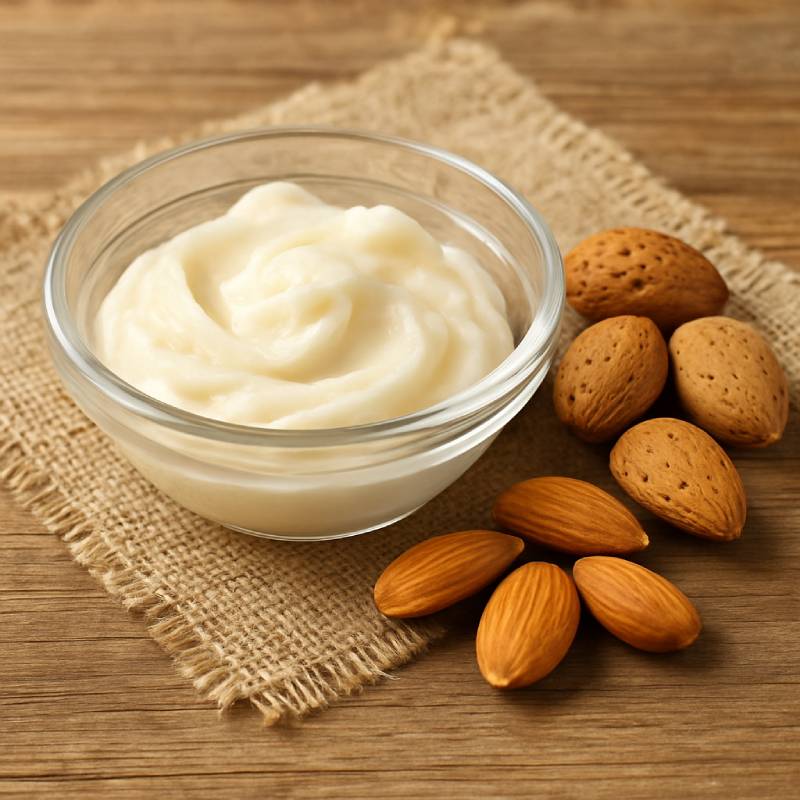
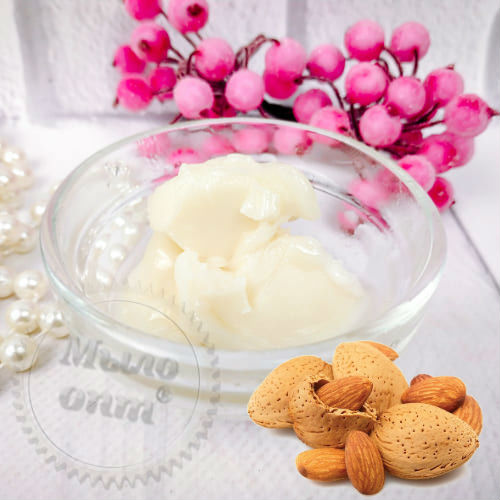
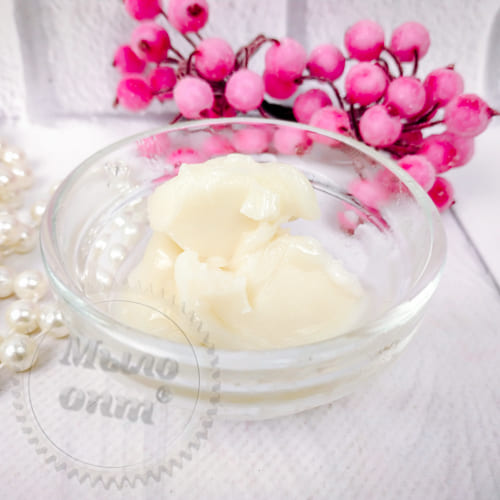
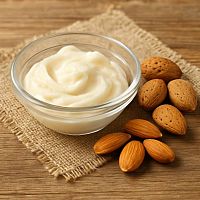
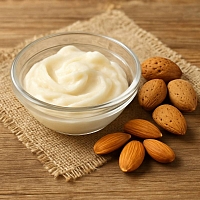
Almond butter in a 1 kg pack is built for real production volume rather than a single trial run — it suits both studio small-batch workshops and conveyor-line cosmetic manufacturing. This ingredient belongs to the Butters section, which brings together dense plant fats valued for their nourishing and texturizing role in finished formulas. At room temperature almond butter keeps a soft, semi-solid consistency, while gentle heating turns it into a smooth liquid that is easy to dose on automated filling lines.
The strongest global demand for this raw material comes from the skincare and haircare industry: face and body creams, lip balms, nourishing masks, hair conditioners, balms for dry ends, and solid sticks for rough skin areas. Formulators rely on almond butter for its ability to thicken a formula's structure without leaving a heavy greasy film, and for its broad compatibility with almost any plant oil or butter. In larger batches it is often blended with lighter oils such as Coconut Oil Refined 100 g, which balances the final density and improves spreadability on skin.
Almond butter belongs to the category of Solid Oils and Butters Wholesale. This ingredient helps give formulas a denser structure without leaving a greasy film on the skin.
Almond butter is valued for its moderate firmness and predictable melting point. It is used in hand creams and also serves as a carrier for solid perfumes and fragrance sticks, since it stays fairly neutral and does not distort top notes of a composition.
For production-scale formulas, the recommended dosage of almond butter ranges from 5 to 20 grams per 100 grams of total formula, depending on the desired firmness of the finished product. It should be introduced during the oil phase, at around 45–50 degrees Celsius, together with other solid oils and butters. Once fully melted, the blend should be cooled gradually to avoid temperature shocks that could disturb the crystal structure. Almond butter pairs well with smaller-format specialty butters such as Kokum Bater 10 g, which is typically used to fine-tune texture in trial batches before scaling a formula to full production volume.
Store almond butter in a sealed container, in a dry and cool place away from direct sunlight, at a temperature not exceeding 20–22 degrees Celsius. Under these conditions the product stays stable for a long time and keeps its texture intact, which matters when working with large raw material volumes on a production floor. For expanding the texture range in lab trials, formulators sometimes bring in smaller specialty butters like Poppy Seed Butter 25 g to test an alternative structure before committing to a full industrial batch.
Solid lip and cuticle balm for batch production
Almond butter 80 g
Refined coconut oil 40 g
Beeswax or plant wax 30 g
Liquid plant oil 50 g
Vitamin E oil 3 g
Flavor oil optional 2 ml
Melt the almond butter, coconut oil, wax and liquid oil together in a double boiler at around 55 degrees until fully liquid and smooth. Remove from heat, stir in the vitamin E oil and flavor oil, then pour the warm mixture into tins or tubes before it starts to set, letting it cool undisturbed at room temperature until fully solid.
FAQ
What extraction method is used for almond butter and how does it affect quality?
The product is supplied with the INCI and parameters listed in the characteristics. Details on the extraction method are available in the specification on request.
How much does color and odor of almond butter vary between lots?
The odor is described as characteristic.
What is the shelf life of almond butter, what are signs of rancidity and how to slow it?
The expiration date is 10.2028. Store in a dry cool place in a tightly closed container away from light. Signs of rancidity are checked by sensory evaluation or lab tests.
What is the recommended input percentage for almond butter and in which phase is it added?
Input percentage is 5-100%. Addition phase and exact dosage are determined during formula development.